Get email alerts on the Sports Broadcasting Access topic
No spam. Unsubscribe anytime.
Senate Commerce Hearing Examines Sports Streaming Fragmentation, Local Blackouts
Summary
League executives, a consumer advocate and senators debated whether streaming fragmentation and exclusive deals are making it harder and costlier for fans to watch games and whether leagues’ special legal and public subsidies should carry access obligations.
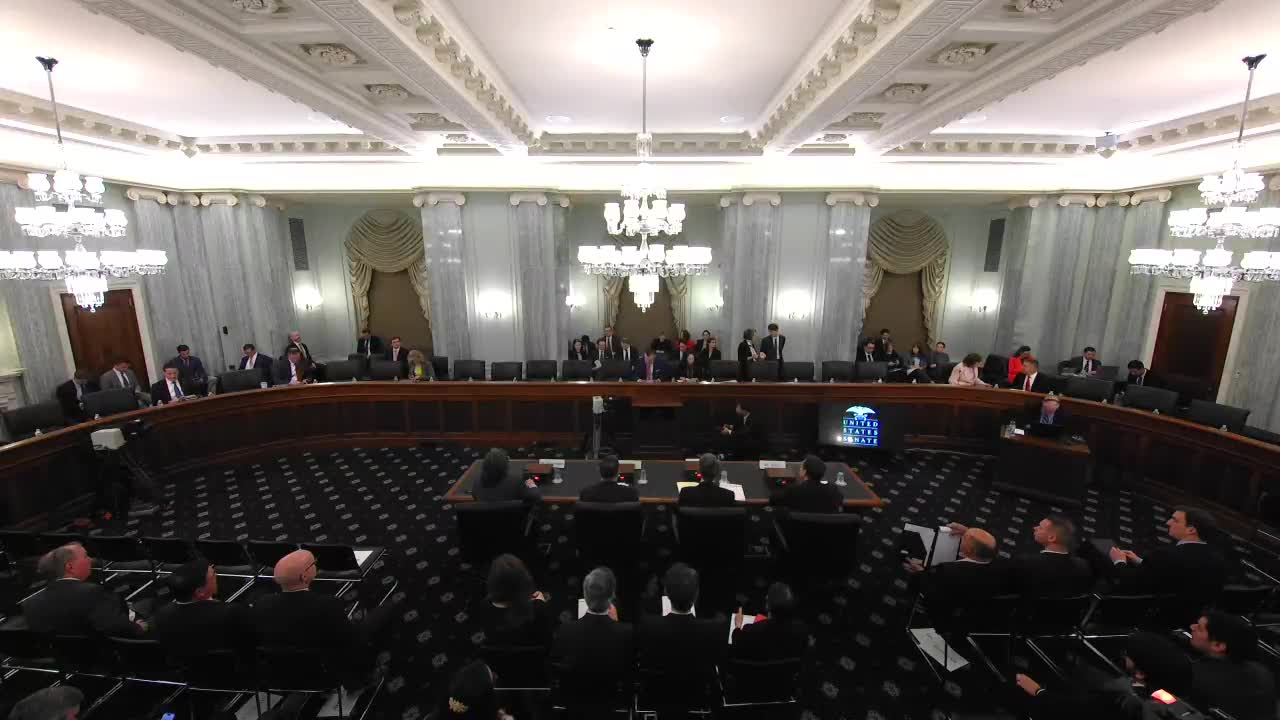
At a hearing of the U.S. Senate Committee on Commerce, Science, and Transportation, executives from Major League Baseball, the NBA and the NHL, together with a public-interest lawyer, defended recent media deals while acknowledging disruptions that have made some games harder or more expensive for fans to find.
The committee focused on how streaming, regional sports network (RSN) disruptions and exclusive platform agreements affect fans’ access. Witnesses described a rapidly changing distribution system but differed on how to address local blackouts, subscription fragmentation and the public-interest obligations that accompany taxpayer support and limited antitrust exceptions.
Kenny Gersh, executive vice president of media and business development for Major League Baseball, told senators MLB distributes games nationally, locally and out of market and has been expanding direct-to-consumer options so “29 of our 30 MLB clubs are now accessible throughout their home television territory via direct to consumer offering, virtually eliminating the problem of local blackouts.” He also said MLB.tv streamed “over 14000000000 minutes of live game action” in 2024. Bill Koenig, president of global content and media distribution for the NBA, said new national agreements with Disney, NBCUniversal and Amazon will make “more than 300 nationally televised games” available and increase the number of regular-season games on free, over-the-air television. David Propper, senior executive vice president for the NHL, said the market is “in a state of flux” and the league is testing multiple regional and direct-to-consumer strategies.
John Bergmeier, legal director at Public Knowledge, described the consumer perspective: “The transition to streaming hasn't been smooth. The proliferation of services and fragmentation of content means costs are rising,” and he urged leagues and policymakers to prioritize local-market access given leagues’ public benefits and antitrust exemptions. Bergmeier recommended that publicly subsidized teams “commit to making games available free of charge in their local market, either on broadcast or free streaming,” and pointed to proposals such as the Stop Sports Blackouts Act to require refunds when channels disappear due to carriage disputes.
Senators pressed witnesses on the Sports Broadcasting Act of 1961, which grants leagues limited antitrust immunity for collective negotiation of broadcast rights. Witnesses said the statute enabled pooled digital innovation — MLB cited league-level digital scale that allowed MLB Advanced Media and early streaming — but senators questioned whether that exemption should come with conditions to protect local consumers and competition on streaming platforms. Ranking Member Cantwell and other senators argued leagues’ collective bargaining of streaming and broadcast rights can limit competition and raise costs for consumers.
Panelists and senators also discussed specific technical and market problems: RSNs moving to higher tiers or disappearing on pay-TV platforms, local blackouts tied to territorial rights, the burden of multiple subscriptions and inconsistent apps, and piracy’s revenue impact. Leagues described several mitigation steps: increasing free over-the-air games, expanding direct-to-consumer services, partnering with broad streaming platforms for national packages, and experimenting with free ad-supported streams on platforms such as Roku.
The committee closed by inviting written questions; senators were given a deadline to submit questions for the record and witnesses were asked to respond to those questions by the dates stated from the dais.
AI generated
The text on this page is AI generated. Summaries, highlights, analysis, and video transcripts are all produced from the original source material.
AI can make mistakes, so if you spot one, and we will fix it for everyone.
Note: the source content is unaltered by us. Any content source we link to, be it a video, an audio recording, or a document, is presented exactly as its publisher released it. That publisher is usually a government body, sometimes an individual official or another organisation.