Get email alerts on the Counter Uas Testing topic
No spam. Unsubscribe anytime.
Senators press nominee on counter-drone authority and potential ATEC workforce cuts affecting electronic-warfare testing
Summary
Senators raised concerns about possible cuts to the Army Test and Evaluation Command (ATEC) workforce and the effect on electronic warfare and counter-small-UAS capabilities. Nominee pledged to gather data and advise the secretary before decisions.
Senators raised pointed questions about counter-small-unmanned-aircraft systems (counter-sUAS), electronic-warfare testing and potential reductions at the Army Test and Evaluation Command (ATEC) during the Senate Armed Services Committee hearing.
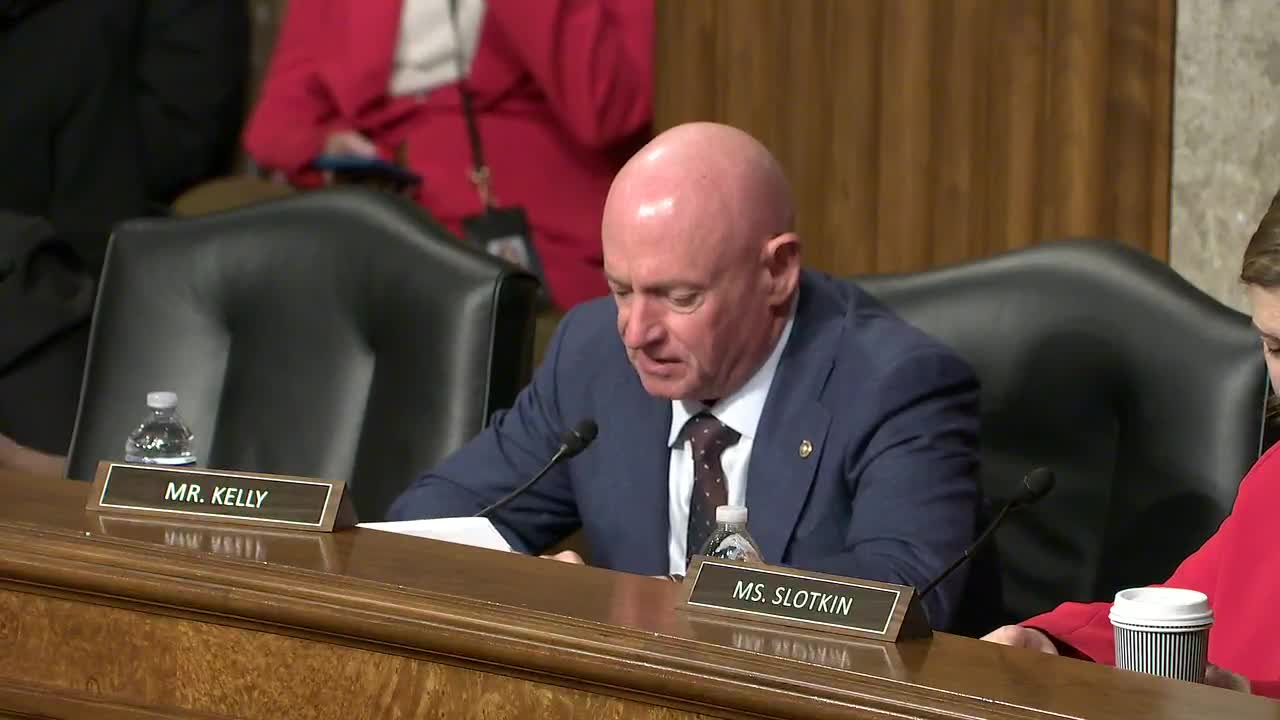
Senator Kelly told the nominee to be vigilant about any reduction in ATEC’s specialized civilian workforce, citing the Arctic and Tropic Regions Test Centers, the Yuma Test Center and the electronic proving ground at Fort Huachuca as assets whose loss would be “hard to reverse.” Kelly said ATEC “provides critical test and evaluation capabilities to the US Army” and asked how the nominee would ensure the Army prepares for advanced electronic-warfare threats.
Mr. Oberdahl acknowledged the value of ATEC and the facilities mentioned and said the strategic direction provided in the Army Transformation Initiative will require “the coming months, and couple of years of the second level of detail” to determine how to streamline organizations while preserving necessary testing capacity. He told Senator Kelly, “ATEC certainly is one of those,” and later when pressed said he did not have enough information to make an assessment and would “pull together the right data and the right experts and be able to advise the secretary.”
Senator Gillibrand framed the counter-drone issue as “defense of the homeland” and said authorities — as much as technical capability — are a major challenge because responses to incursions in the United States involve state and local authorities as well as Department of Defense, the Federal Aviation Administration and the Department of Justice. Gillibrand said public reports of incursions over bases were “shocking” and urged clearer authorities to allow the Defense Department to counter and investigate incursions when they threaten installations.
Nominees emphasized that technical layering of sensors and effectors must be combined with clearer interagency authority. Oberdahl said the acquisition community and industry can supply technical options but that “we have to turn the attention of army leadership to, across the inter agency and down into our our local governments to ensure that we're layering, all of those authorities to their maximum effect.”
Discussion versus decision: senators urged careful review and asked nominees to provide data and recommendations; no formal actions or approvals were taken during the hearing.
AI generated
The text on this page is AI generated. Summaries, highlights, analysis, and video transcripts are all produced from the original source material.
AI can make mistakes, so if you spot one, and we will fix it for everyone.
Note: the source content is unaltered by us. Any content source we link to, be it a video, an audio recording, or a document, is presented exactly as its publisher released it. That publisher is usually a government body, sometimes an individual official or another organisation.