Witnesses warn AI expansion will strain power grids, call for faster permitting and more generation

Get AI-powered insights, summaries, and transcripts

Subscribe
AI-Generated Content: All content on this page was generated by AI to highlight key points from the meeting. For complete details and context, we recommend watching the full video. so we can fix them.

Summary

Executives from CoreWeave, Microsoft and AMD told senators that rapid AI growth needs abundant, affordable electricity and faster permitting; they urged federal reforms to speed transmission and construction while protecting communities.

Executives for AI data center operators and chipmakers told the Senate Commerce Committee that building large AI facilities will require large, reliable supplies of electricity and faster permitting to connect those projects to the grid.

Michael Entrader, chief executive officer of CoreWeave, said the company operates more than 30 data centers across 15 states and “manages more than 250,000 GPUs currently using about 360 megawatts of power,” testimony the company provided to the committee said. He urged stable policy frameworks, streamlined permitting and faster interconnection to grid capacity so companies can scale without years‑long delays.

Brad Smith of Microsoft described the company’s extensive permitting work and highlighted a consistent, concrete bottleneck: federal wetlands permits administered by the U.S. Army Corps of Engineers. “We can typically get our local and state permits done in about six to nine months. The national wetlands permit is taking off in 18 to 24 months,” Smith told the committee, calling faster federal permitting a way to accelerate electricity delivery for large facilities.

AMD chair and CEO Lisa Su emphasized that compute is foundational to AI and said U.S. leadership depends on having more domestic compute capacity and supportive permitting. Witnesses repeatedly said that the cost and availability of electricity will be a limiting factor for large training facilities and that energy strategy should include a diversity of sources—natural gas, renewables and advanced nuclear—rather than relying on a single approach.

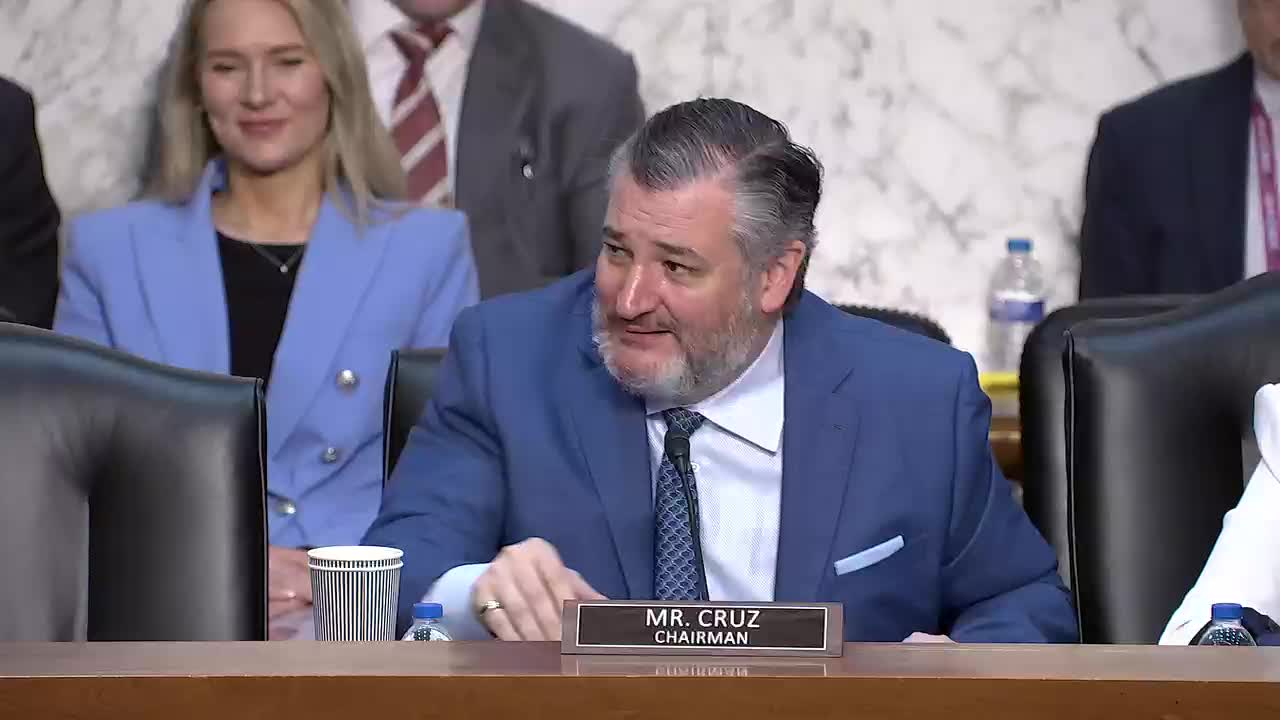
Sen. Ted Cruz pushed back on aspects of the nation’s recent energy mix during questioning, saying “90% of new power generation in this country last year was windmills and solar panels,” and argued that the U.S. should also rely on other supplies. Witnesses did not endorse a single energy source; they described the overall need for more generation, faster interconnection, and a permitting regime that does not trap capital or delay projects for years.

Several senators said projects should be constructed without shifting disproportionate new costs onto local electricity customers. Brad Smith described Microsoft’s approach of investing with utilities and agreeing to rate structures so that grid improvements are paid for without raising disproportionate costs on neighbors. Michael Entrader urged reforms to accelerate transmission and interconnection and said data‑center scale requirements will increase as AI workloads grow.

Discussion at the hearing also touched on workforce needs—large data centers require electricians, cooling technicians and other skilled trades to build and operate facilities—and on local environmental considerations such as water use and heat management.

Ending: Witnesses and senators agreed that federal attention to permitting, transmission planning and diversified power generation is needed to support large‑scale AI infrastructure deployment without unduly burdening local communities. No legislative action was taken at the hearing; senators signaled intent to pursue permitting reforms and coordination with federal agencies.