Architect of the Capitol requests $1.3 billion to address life‑safety, security and deferred maintenance
Loading...
Summary
The Architect of the Capitol told a Senate subcommittee that a $1.3 billion FY2026 request would fund life‑safety, physical security and critical infrastructure projects, hire roughly 57 positions and help address an extensive deferred‑maintenance backlog across the Capitol campus.
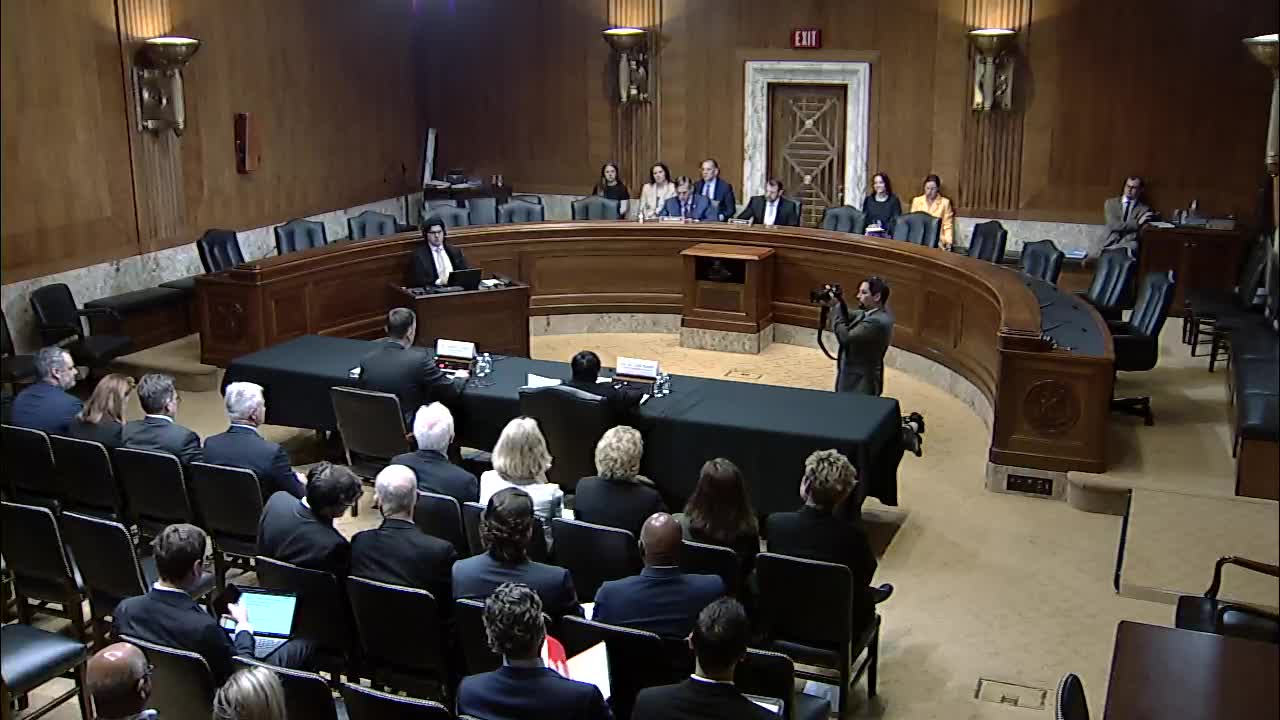
Mr. Austin, Architect of the Capitol, told the Senate Appropriations Subcommittee on the Legislative Branch that the agency’s FY2026 request totals $1.3 billion and focuses on life safety, physical security and critical infrastructure needs across the Capitol campus.
The request matters because the Architect oversees the maintenance and long‑term preservation of an 18.5 million square‑foot historic campus that serves about 20,000 daily occupants and roughly 3 million annual visitors; committee members said delayed projects increase risk and future costs.
Mr. Austin said the FY2026 request reflects both predesign work for long‑term renovations (for example, Rayburn Building work cited as predesign) and immediate infrastructure investments, and that some requested funding would support staff needed for planning and project management. He told senators the request represents an increase of roughly $506.3 million over the full‑year continuing resolution level—an increase Mr. Austin characterized as addressing delayed or phased projects.
He described the agency’s recent operational statistics: the Capitol Visitor Center welcomed its 30 millionth visitor since opening in 2008; the AOC completed more than 495,000 work orders across the campus in FY2024 and 77,000 work orders for the Senate community with a 96% on‑time completion rate; and the agency has reduced its vacancy rate from 11% to 8% through recruitment.
Mr. Austin said the AOC is requesting 57 additional positions for FY2026—positions that span electricians, plumbers, HR specialists and visitor guides—and estimated that the additional full‑time equivalents would add close to $10 million to the agency budget. He described specific infrastructure risks such as original air‑handling units in the Rayburn Building that are roughly 60 years old, citing component lifecycle and lead‑time challenges for replacement parts.
On workforce issues, Mr. Austin said roughly 70% of the AOC workforce are tradespeople (hourly/wage grade), about 15% are professional staff (engineers, architects, legal, safety), and that the agency typically runs at about 92% staffing under current metrics; he reported turnover near 4–5% for the agency overall and said AOC is completing a wage‑grade study comparing pay to other federal entities and private markets.
Mr. Austin described work to develop an enterprise asset management system to improve data‑driven prioritization of projects and to inform a long‑range master plan—the first comprehensive update since 2012. He told the committee the agency must do a better job communicating facility condition assessments and long‑term needs to Congress to support a coordinated, multiyear approach to facility revitalization.
Committee members asked for additional detail on project selection and prioritization, staffing needs and wage comparability; Mr. Austin said he would provide further information and noted ongoing coordination with committee staff, the Senate Rules Committee and other stakeholders. He said security remains a key priority and that AOC is coordinating with the U.S. Capitol Police on security improvements.
Mr. Austin said: “We have too much deferred maintenance, and some of our facilities are in desperate need of a full renovation,” and he emphasized a holistic, long‑term approach to campus facilities management. The subcommittee did not take a formal vote; it left the record open for additional written questions and asked the agency to submit follow‑up material for the record.