Citizen Portal

Senators, industry leaders press U.S. to ‘win’ AI race with light-touch rules, standards and export clarity

Get AI-powered insights, summaries, and transcripts

Subscribe
AI-Generated Content: All content on this page was generated by AI to highlight key points from the meeting. For complete details and context, we recommend watching the full video. so we can fix them.

Summary

At a Senate Commerce, Science and Transportation hearing, lawmakers and AI industry leaders urged policies that protect U.S. leadership—favoring fast deployment, standards coordination and calibrated export controls over heavy pre‑approval regulation.

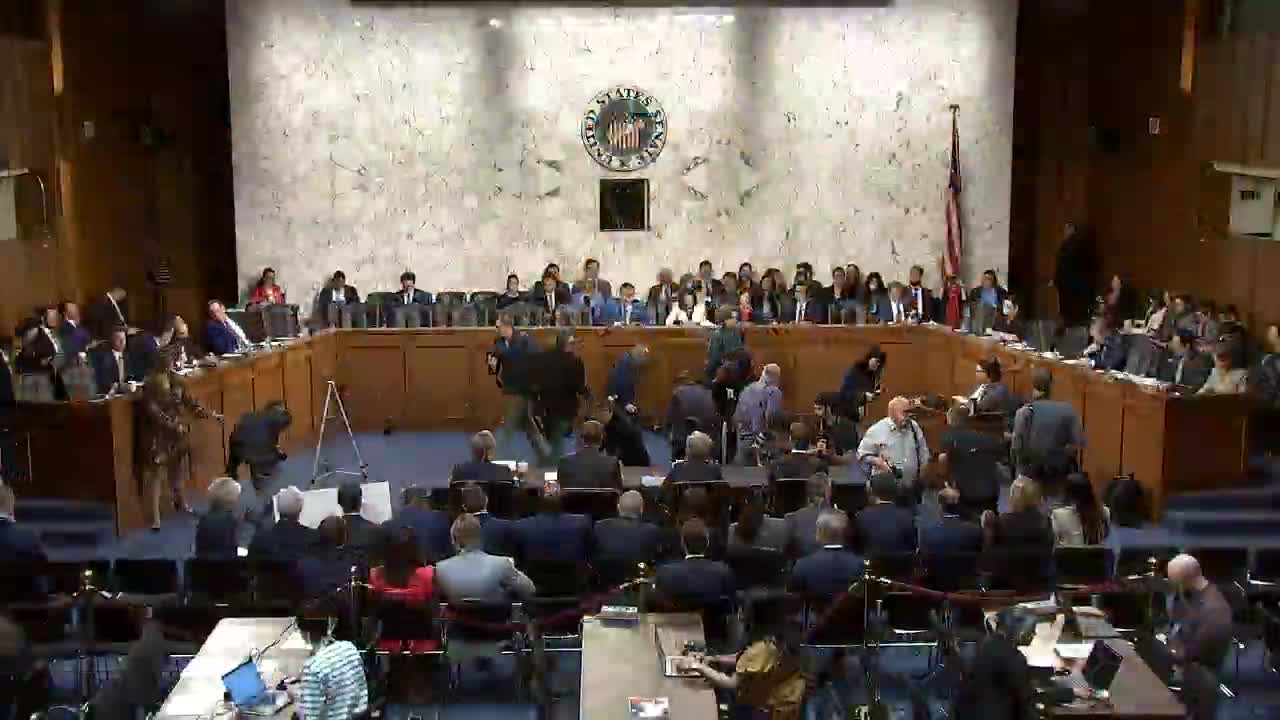
Senate Commerce, Science and Transportation Committee members and four leading AI executives said at a committee hearing that the United States must preserve a competitive edge in artificial intelligence through rapid innovation, broad adoption and clearer export rules.

The witnesses—Sam Altman, cofounder and CEO of OpenAI; Lisa Su, chair and CEO of Advanced Micro Devices (AMD); Michael Entrader, CEO and cofounder of CoreWeave; and Brad Smith, vice chair and president of Microsoft—told senators that compute, chips, data, energy and talent together determine whether the U.S. keeps its lead.

The discussion matters because senators framed AI as both an economic and national security priority and debated whether U.S. policy should follow a “light touch” approach like the early Internet era or impose stronger pre‑market approvals like some European rules.

Committee chairman Sen. Ted Cruz opened the hearing by urging a light regulatory approach and saying, “America has to beat China in the AI race.” He argued that heavy-handed rules could slow adoption and innovation, pointing to the Internet era as a cautionary example. Several senators pressed witnesses on how to balance national‑security export controls against U.S. commercial influence overseas.

Industry witnesses generally agreed the U.S. leads now but described that lead as fragile. “We are leading the world in AI,” Sam Altman said in his opening remarks, adding that the coming decade will be about “abundant intelligence and abundant energy.” Lisa Su urged continued investment across the technology stack and said the CHIPS and Science Act has helped but must be followed by additional manufacturing and talent investments. Brad Smith emphasized the need not only to invent but to have the world adopt U.S. technology, calling broad global adoption a critical component of strategic influence.

On export policy, witnesses and senators criticized prior complex quantitative restrictions and welcomed recent administration moves to rescind parts of the so‑called AI diffusion rule, while urging a replacement approach that protects national security without blocking international adoption of U.S. platforms. Smith said the crucial question is which countries and providers the rest of the world will trust to run their AI infrastructure, arguing that “the number 1 factor that will define whether the United States or China wins this race is whose technology is most broadly adopted in the rest of the world.”

Lawmakers also returned repeatedly to standards and coordination. Several senators asked whether NIST or other U.S. entities should play a role in setting technical standards; witnesses said industry will develop many practical protocols but that U.S. leadership in standards setting and an “even playing field” from federal action would help international adoption. Senator Amy Klobuchar and others advocated a risk‑based approach to guardrails for high‑impact use cases; Altman said he supported a risk‑based framework.

The hearing produced no formal committee votes. Chairman Cruz said he plans to propose a regulatory sandbox bill intended to accelerate deployment while preserving federal authorities; several senators announced staff‑level follow‑ups and said they will push for coordinated federal action to avoid a state‑by‑state patchwork. The committee set deadlines for post‑hearing follow‑up: senators may submit questions through the committee record and witnesses were given time to respond.

As the world’s largest platform developers and hardware suppliers testified, senators stressed that policy choices now—from export controls to standards and permitting—will influence whether U.S. products and services remain the dominant global choice.

Ending: Committee members and witnesses agreed on the broad policy goals—protect national security, boost U.S. manufacturing and speed adoption worldwide—but differed on the means. The hearing closed with senators promising follow‑up legislation and oversight as administration and industry officials continue to negotiate export and standards details.