Get Full Government Meeting Transcripts, Videos, & Alerts Forever!
Get email alerts on the Usda Budget Fy26 topic
No spam. Unsubscribe anytime.
USDA budget proposal trims research, prompts questions about food-aid and nutrition programs
Summary
Secretary of Agriculture Brooke Rollins told the Senate Appropriations Subcommittee on Agriculture that the administration's fiscal year 2026 discretionary budget identifies priorities and trims spending on some research programs and other initiatives.
Secretary of Agriculture Brooke Rollins told the Senate Appropriations Subcommittee on Agriculture that the administration's fiscal year 2026 discretionary budget identifies priorities and trims spending on some research programs and other initiatives.
“None of that will be compromised,” Rollins said of core research priorities while describing targeted reductions; she later told senators the Agricultural Research Service budget would fall from about $2.1 billion to about $1.9 billion in the proposal, a decline she described as focused on “outdated facilities.”
Ranking Member Senator Jean Shaheen said the top-line proposal “falls well short of the president's purported commitments to farmers and rural communities,” warning that cuts to research, rural development and nutrition programs would harm producers and households.
Why it matters: The discretionary portion of the USDA budget funds research, conservation, rural development and many nutrition and assistance programs that state agencies and producers rely on. Changes to those accounts can affect long‑term crop and livestock research, emergency responses and programs that move food to domestic and international recipients.
Major points from the hearing
- Research: Rollins described the FY2026 request as a “prudent” reprioritization and said the proposed change to ARS funding is aimed at closing or consolidating outdated facilities while preserving high‑priority science. She said the administration remains focused on “high priority” research but acknowledged a roughly 7% decrease in the ARS discretionary figure in the materials released Friday.
- International food aid: Rollins said the administration is “reapproaching” programs such as McGovern‑Dole and Food for Peace to align spending with what she characterized as the “best and highest use” of taxpayer dollars. She said the McGovern‑Dole program’s commodity component is relatively small compared with total program dollars and noted a review of program effectiveness.
- Domestic nutrition programs: Committee members sought clarity about WIC and SNAP. Rollins told the committee, “WIC is fully funded,” but other senators noted that the slimmed‑down FY2026 materials transmitted Friday did not include line items some members expected. Members asked USDA to provide clear, written confirmation of program funding levels.
- Administration rationale: Rollins framed the changes as part of a broader effort to reduce overhead and improve efficiency, saying USDA teams are “seeking to eliminate waste, fraud, and abuse” while protecting frontline services such as farm loan and conservation offices.
Committee requests and next steps
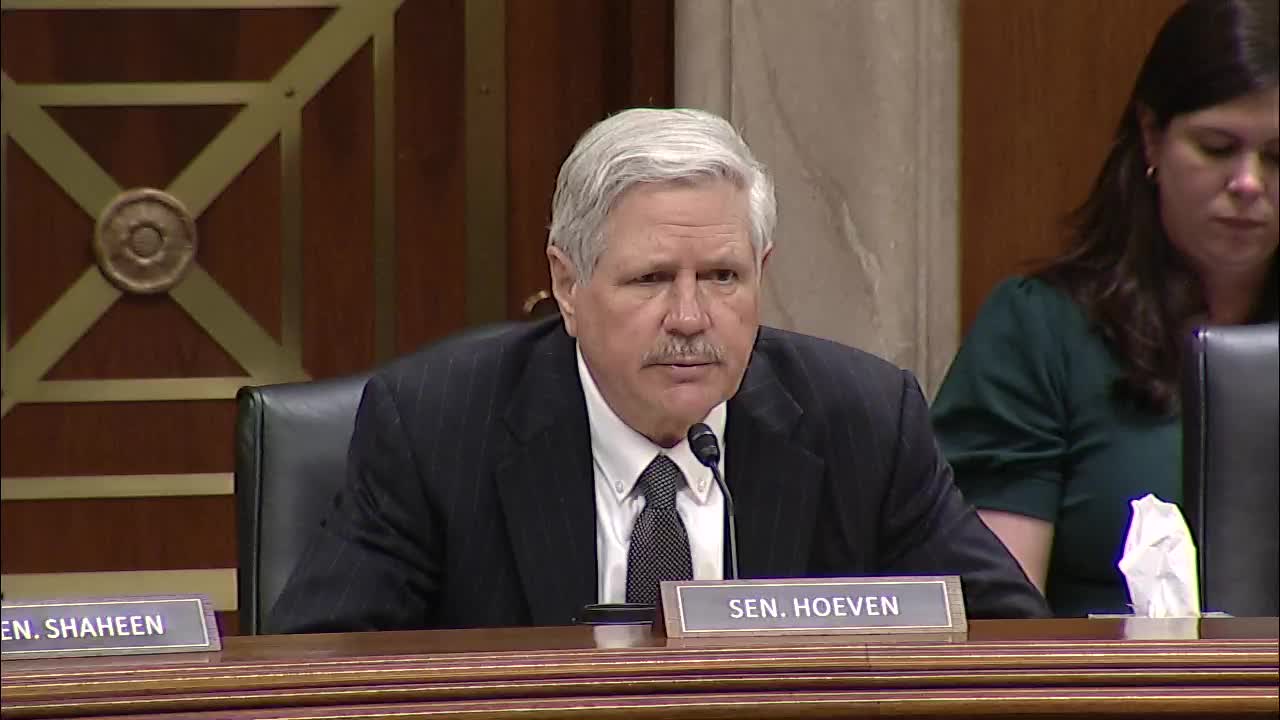
Senators on both sides requested detailed budget documents and justifications. Chairman Hoeven and members set deadlines: written questions for the record were due by the committee’s stated date and Rollins agreed to provide written responses. Multiple senators said they would continue to press for program detail before appropriations language is finalized.
Ending
The hearing closed with Rollins reiterating her availability to members and the committee requesting more detailed budget documentation and program‑level explanations in the coming weeks.