Get Full Government Meeting Transcripts, Videos, & Alerts Forever!
Get email alerts on the Zoning topic
No spam. Unsubscribe anytime.
Council approves variance to allow woodworking shop at 118 Randy Road with fence and drainage conditions after neighbor objections
Summary
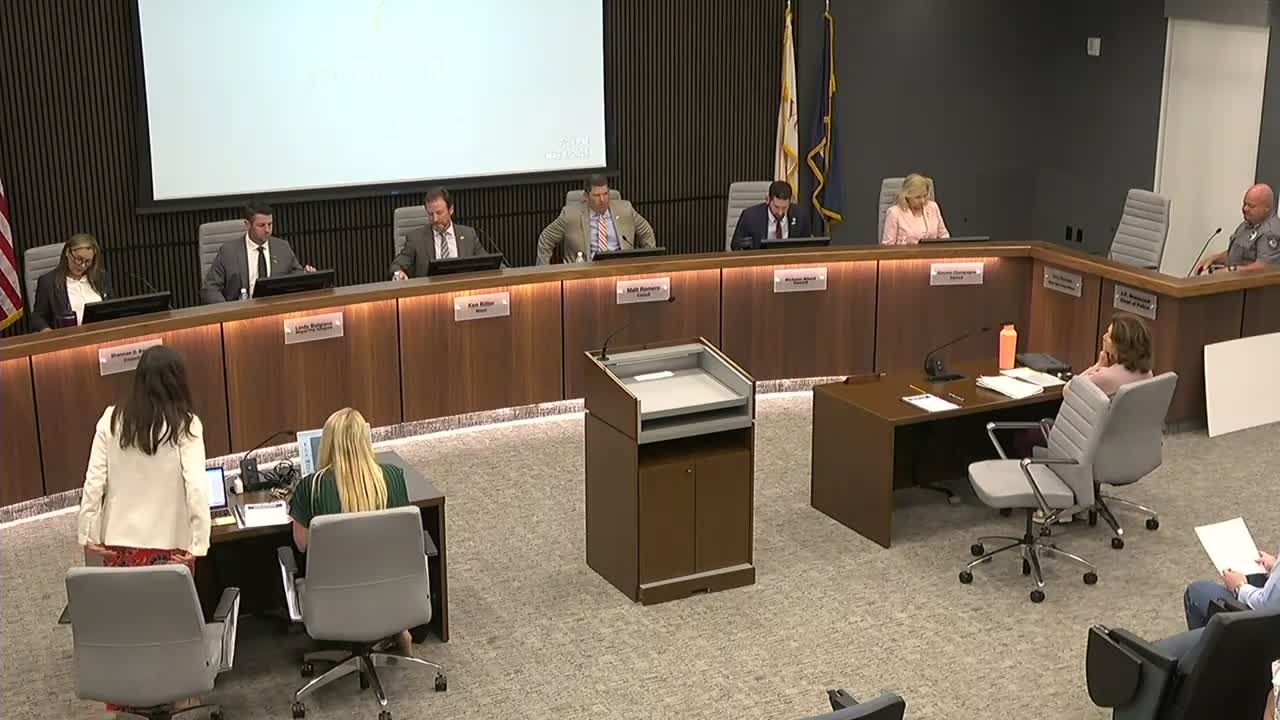
Youngsville — The City Council on May 8 approved a variance to allow an existing metal building at 118 Randy Road to be used as a woodworking shop, reduce the green‑belt requirement to five feet and require a fence between the building and an adjacent residence.
Youngsville — The City Council on May 8 approved a variance to the land‑use regulations that allows an existing metal building at 118 Randy Road to be used as a woodworking shop, reduces the green‑belt requirement to five feet for that lot and requires a fence between the shop and the adjacent residential parcel.
Applicants Miles Crader and partner Dakota Bartles said the building would be used by a local craftsman who operates a storefront elsewhere in Youngsville; they told council the operation would be primarily indoor production and that they have connected the site to city water and sewer.
Councilmember Champine moved to approve the variance subject to a fence being installed along the northern property line between the metal building and the adjacent residence; the motion passed (yes: Barres; yes: Bolgiano; no: Romero; yes: Nyland; yes: Schonpine). The council did not accept a substitute motion to require more extensive fencing across the rear of the property.
Neighbor Wayne Jones, whose property borders the site, told the council that residents opposed a commercial operation opening next to existing homes and voiced concerns about sawdust and noise: “No one in the neighborhood wants a business coming into the neighborhood,” Jones said. The applicants said finished furniture and products would be moved to an existing storefront and that they did not intend to store inventory outdoors.
City staff confirmed the property owners already secured a connection to city water and sewer and that site drainage remains the owners’ responsibility; staff noted any additional building or outdoor storage would be reviewed under the city’s permitting and nuisance rules. Councilmembers debated whether to require fencing only between adjacent lots or across the rear; the final, approved condition requires the side (northern) fence described in the motion.
Why it matters: The action changes the land‑use buffer for one lot and allows light industrial or production activity next to a residential area under conditions. The decision illustrates how the council balances small business activity with neighborhood concerns and relies on post‑approval permitting to enforce drainage and operational limits.
What was not changed: The council did not permit outdoor fabrication or storage as part of the motion; the motion approved indoor woodworking with the specified fence condition and required compliance with the city’s drainage and permitting rules.
Next steps: The owner must meet city permitting, drainage and any code requirements for the woodworking use. Neighbors were advised to use the city’s “Report a Problem” portal for ongoing property issues, and staff said they will follow up on specific concerns about vegetation and maintenance raised during the hearing.