Get Full Government Meeting Transcripts, Videos, & Alerts Forever!
Get email alerts on the Comprehensive Plan topic
No spam. Unsubscribe anytime.
Residents urge pause to Ann Arbor comprehensive plan over data, outreach, affordability and infrastructure
Summary
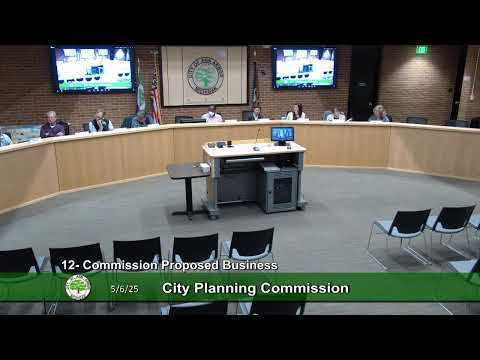
Dozens of residents at the May 6 Ann Arbor Planning Commission meeting urged commissioners to pause the draft comprehensive plan, saying the document relies on unsupported population and jobs projections, lacks a clear infrastructure funding plan and failed to conduct robust public outreach.
Dozens of residents urged the Ann Arbor Planning Commission on Tuesday to pause work on the city’s draft comprehensive land use plan, saying the plan’s underlying numbers, public engagement and cost assumptions are unreliable.
Speakers from across the city told the commission the draft uses growth estimates that diverge sharply from Southeast Michigan Council of Governments (SEMCOG) forecasts and lacks a documented methodology for population and jobs projections. Several commenters also said the plan fails to show how the city would pay for needed water, sewer and roadway upgrades that would accompany the higher-density growth in the draft.
The concern surfaced in a series of public comments. One speaker who handed the commission a written memo told the panel: “We spent many hours on the research that's in that memo because we care about our community like you do. We want a plan for our city that starts with correctly sourced data and accurate numbers.” (Mr. Berry) Several other speakers explicitly cited SEMCOG as a benchmark and said the draft’s growth assumptions — which some described as roughly a 60% population increase by 2050 — conflict with SEMCOG’s forecast of modest growth.
Commenters also raised job-growth assumptions. “The plan claims that employment in the city will increase by 30,000 to 50,000 jobs by 2050,” resident Irma Mayer said, and asked the commission to pause the process because the claim, she said, is not supported by evidence. Multiple speakers urged that the plan adopt a transparent population-and-employment methodology and to explicitly reference SEMCOG projections where the city is relying on external forecasts.
Infrastructure and cost were recurring themes. One participant summarized a study used by commenters and told the commission that, under the plan’s highest-growth scenarios, the city could face a multi‑billion‑dollar infrastructure funding gap over 25 years for water, sewer, roads and stormwater. Resident John Godfrey said the draft “says almost nothing about how we’ll support the growth,” and asked where the money would come from.
Public engagement and notice also drew criticism. Several speakers said they had not received clear notices or that the city’s surveys and “meeting-in-a-box” tools did not ask about zoning or potential rezonings, limiting meaningful responses. Nancy Villabreich said many residents “don’t even know [the plan] exists” and called for broader, neighborhood‑level outreach.
Other commenters urged the commission not to assume that adding market-rate housing alone will solve affordability. “The plan does not define what ‘affordable’ means or explain how it will help moderate‑income people,” Anne Arbaugh said. Multiple speakers asked the commission to tie any housing targets to explicit plans for affordable units, funding sources and measures to limit displacement.
Commissioners and staff acknowledged the range of concerns during the meeting. Councilmember Disch noted that household formation — not raw population — is an important metric for housing demand and described it as a data element staff will examine further. Staff also told the commission that the Southeast Michigan Council of Governments and other external analyses are being reviewed and that public‑facing technical appendices and references will be added to the plan drafts.
Members of the public urged concrete next steps: pause the public review until staff and consultants provide a clear methodology for population and employment projections; publish the memos and technical reviews cited by commenters on the plan website; and produce a public accounting of likely infrastructure costs and proposed funding mechanisms. Several residents also asked the commission to expand outreach: mail notice to every household and use targeted neighborhood engagement tools so residents can review how draft land‑use changes would affect specific blocks.
The commission did not take a vote to pause the process during the meeting. Staff told the commission it will compile the comments and work with the consultant team on revisions; commissioners directed staff to return with updated materials for the next review cycle.
Why this matters: The comprehensive plan will guide zoning and capital investments for decades. Residents at the meeting said the draft’s large-scale housing and job targets should be justified by transparent methods and linked to a funding plan for utility, transportation and park improvements. Many speakers said they want clearer, more localized engagement so neighborhoods understand how land‑use changes and proposed transition areas would affect daily life.
What’s next: Staff said the commission will receive updated materials and technical appendices in the next draft. Commissioners and residents may still request further refinement or a temporary pause if the plan’s revisions do not address the outstanding methodological and infrastructure questions.
Ending: Several speakers asked the planning commission to delay adoption until the city publishes a clear, data‑driven methodology for the plan’s population and job forecasts and a credible financial plan for infrastructure. Planning staff said it will continue to gather comments and return to the commission with edits.