Get Full Government Meeting Transcripts, Videos, & Alerts Forever!
Get email alerts on the Municipal Finance Policy topic
No spam. Unsubscribe anytime.
Council urges Michigan delegation to preserve tax-exempt municipal bonds, warns of higher local costs
Summary
City staff said making municipal bonds taxable would raise borrowing costs and force project scope reductions or higher taxpayer burdens; council approved a resolution urging Michigan's congressional delegation to maintain tax-exempt status for municipal bonds.
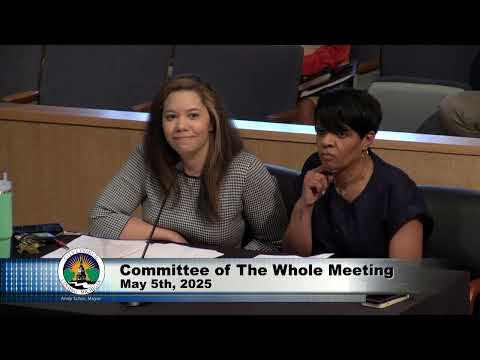
City staff warned the Committee of the Whole on May 5 that a change in federal tax treatment of municipal bonds would increase borrowing costs for Lansing and could require reduced project scope, additional borrowing or higher costs passed to taxpayers.
Jake, a city budget staff member, told council the consequence of making municipal bonds taxable would be “additional cost to the city” that could force the city to “borrow more to cover the cost of various projects,” reduce the scope of projects or shift costs to taxpayers. He referenced the city’s planned $175,000,000 public-safety facility as an example of a project that would be significantly more expensive if municipal debt were taxable.
Why it matters: Municipal bonds finance capital projects such as sewer separation, public-safety facilities and infrastructure. The resolution asks Michigan's congressional delegation to support preserving the tax-exempt status of municipal bonds to avoid increased local borrowing costs.
Action: Councilman Garza moved the resolution; council approved the resolution during the meeting.
Ending: City staff said exact cost estimates could be produced if requested; the resolution passed without further amendment at the May 5 session.