Get Full Government Meeting Transcripts, Videos, & Alerts Forever!
Get email alerts on the Public Safety Fire topic
No spam. Unsubscribe anytime.
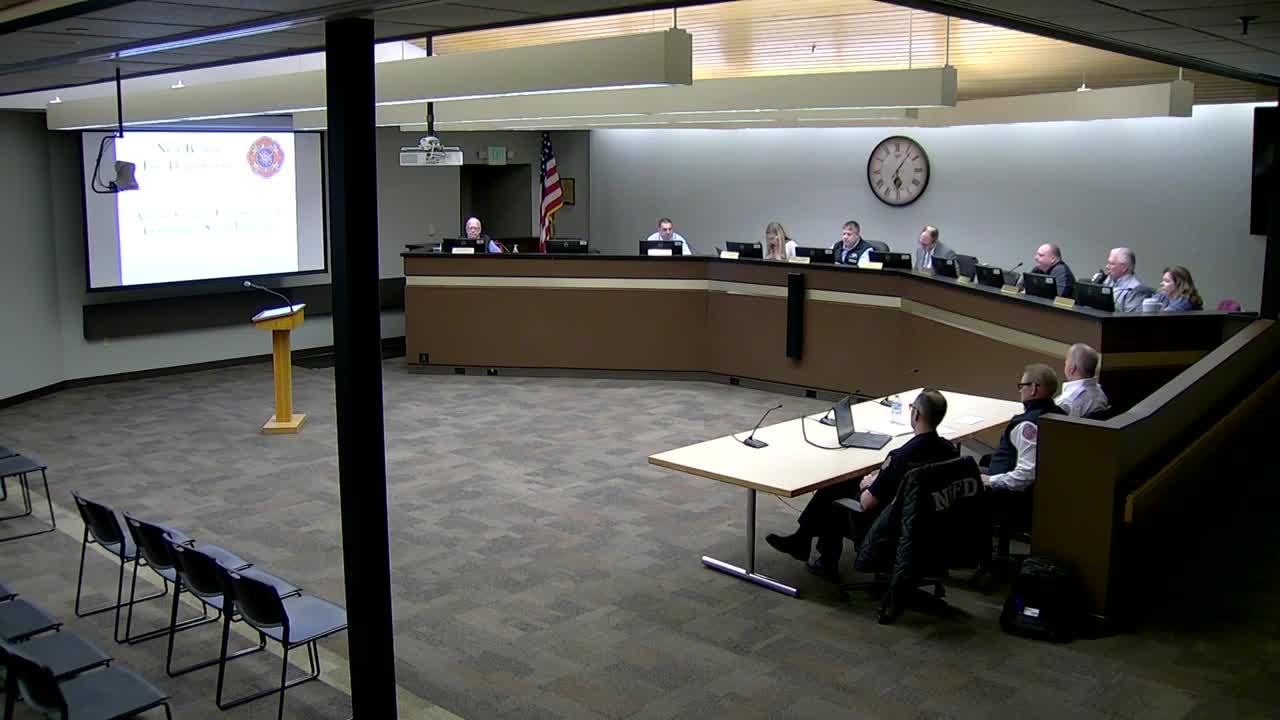
New Berlin fire chiefs outline rising call volume, training and prevention push
Summary
Fire Chief Mark Polzin and Division Chief Mark O'Connor told the Committee of the Whole that emergency medical calls make up roughly 74% of the department's workload, described steps to improve training and recordkeeping, and outlined new community risk reduction efforts including station open houses and a citizens academy.
Chief Mark Polzin, New Berlin fire chief, told the Committee of the Whole on April 22 that the fire department responded to 5,201 calls in 2024 and that 3,848 of those — about 74% — were emergency medical services calls.
Polzin said the department added a Division Chief of Community Risk Reduction and has refocused some roles (renaming the former assistant chief as battalion chief) to better reflect shift-command responsibilities. "Our mission is to provide exceptional services while building a safer community," he said.
The chief and Division Chief Mark O'Connor described operational pressures shared by many U.S. departments: rising call volume, turnover at entry level despite a SAFER grant, and difficulty meeting benchmarks tied to NFPA recommendations and Insurance Services Office (ISO) ratings. Polzin noted the department’s split ISO rating (a 3 in much of the city and a 10 in an upper northwest portion), and said relocation of the truck company and improved recordkeeping are intended to address those gaps.
"We have 5 that are in recruit school right now," Polzin said, describing current staffing and training efforts. He added the department expects to fill one remaining opening and hopes that will improve daily staffing figures that feed into ISO scoring.
O'Connor, who said he has been in the community risk reduction role about five weeks, described steps to increase departmental presence with other city units and the public. "I've been attending regular committee meetings," he said, and listed coordination with building inspection, planning, police, the chamber of commerce and the Fourth of July committee.
The division chief described specific prevention and outreach work: hands-only CPR training (54 people this year), fire extinguisher training (41 people), senior outreach (95 seniors contacted), smoke alarm installations (5 installed this year), station tours and other public events. He also said the department completed about 2,800 fire inspections in the prior year.
Council members asked about the planned training tower and whether other departments would be allowed to use it; Polzin said buildings and grounds is managing the construction bid process and that department personnel would have priority use. He also discussed recurring "lift assist" calls at assisted-living facilities, noting the department has been educating facilities about responsibilities and that other jurisdictions have used fees to discourage nonemergency calls.
Polzin and O'Connor closed by inviting council members and the public to upcoming station open houses and the department’s citizens academy. "The best call that we go on is the one that never happens," O'Connor said, summarizing the prevention emphasis.