Get Full Government Meeting Transcripts, Videos, & Alerts Forever!
Get email alerts on the Air Quality topic
No spam. Unsubscribe anytime.
Council recognizes Air Quality Awareness Week and World Asthma Day after residents press for truck routes, buffers and stronger enforcement
Summary
Detroit City Council approved two resolutions recognizing Air Quality Awareness Week and World Asthma Day after multiple residents and advocacy groups urged action on industrial pollution, truck routes and cumulative impacts; council directed staff to follow up on related reports.
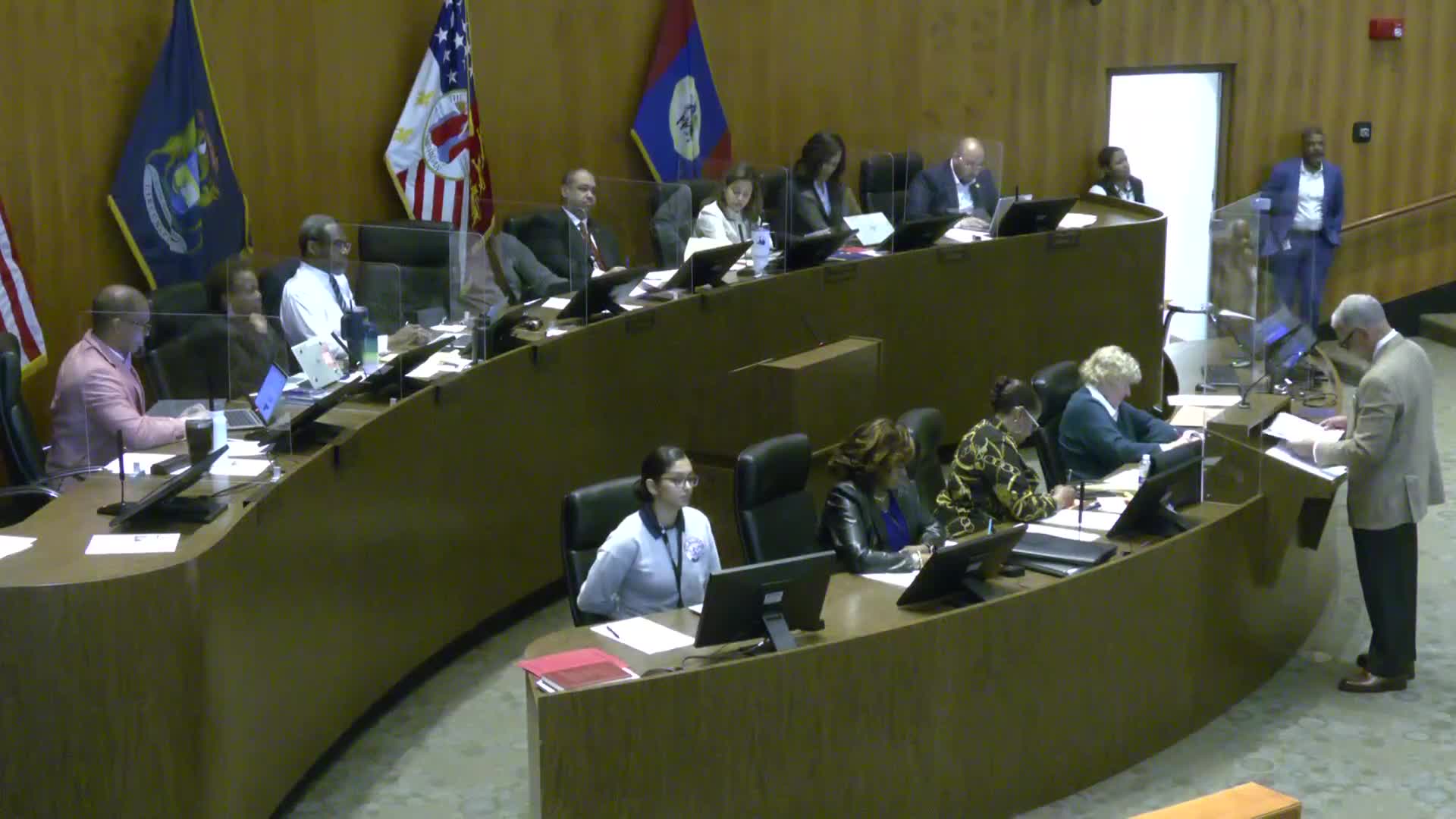
Detroit City Council on Tuesday adopted resolutions recognizing Air Quality Awareness Week and designating May 6, 2025, as World Asthma Day, after a string of public comments from residents, youth groups and environmental organizations urging more local action on air pollution, truck routes and cumulative industrial impacts.
Councilmember Leticia Johnson introduced the two resolutions and the council approved both without objection; Johnson used remarks to summarize national and local asthma statistics and to call for policy attention to cumulative pollution and environmental justice.
Why it matters: Residents and public-health advocates told the council that Detroit neighborhoods face concentrated industrial pollution and that local policy must do more to assess cumulative impacts, regulate truck routes and require buffering between industry and homes — measures they said would reduce asthma rates and improve public health.
What council approved: Councilmember Leticia Johnson read the resolutions on the council floor, noting that Air Quality Awareness Week promotes public education and that World Asthma Day highlights the burden of asthma, especially in underserved communities. She cited an Asthma and Allergy Foundation of America report that placed Detroit among the most challenging U.S. cities for people with asthma and urged support for community events and outreach.
Public testimony and requests: Advocacy groups and residents made several specific asks during public comment: Catherine Savoy of the Ecology Center asked the council to “help us hold industrial polluters accountable” and to pass a designated truck ordinance and cumulative-impact policies. Simone Sacovac, a 34-year Southwest Detroit resident, said: “Detroit and our neighbor communities host most polluting industries in Michigan…we host these for all of Michigan’s benefit and beyond, but we bear the concentrated pollution.”
Other callers and speakers asked for a range of actions that included truck-route restrictions, health-impact assessments, buffer zones between heavy industry and homes, funding targeted to impacted neighborhoods and stronger enforcement of existing laws. A coalition representative asked the city to "allocate more home repair resources to protect people from Detroit’s polluted air."
Council directions and next steps: During public comment and later discussion, Councilmember Scott Benson asked the administration to generate a report identifying any correlation between air pollution and speed humps. The request was made from the floor and the council recorded a motion asking for that report; the chair called for the motion, there were no objections, and the council instructed staff to produce the analysis.
Advocates’ framing and council response: Speakers framed air quality as a public-health and equity issue. Several cited local hotspots — including industrial operations and refineries — and urged the council to use zoning, truck-route designations and revenue from corporate polluters to fund community health and mitigation. Councilmembers thanked the speakers and asked administration staff to coordinate follow-up.
Formal actions: The council unanimously approved the two resolutions recognizing Air Quality Awareness Week and World Asthma Day; the council also accepted a motion to request a report on the connection between speed-hump placements and particulate pollution, to be produced by relevant city departments.
Ending: Council members asked the administration to remain engaged with environmental advocates and neighborhood groups to translate residents’ requests into concrete policy options, including targeted enforcement, specialized funding for impacted neighborhoods and consideration of truck-route and zoning changes.