Get Full Government Meeting Transcripts, Videos, & Alerts Forever!
Simsbury commission keeps public hearing open on McLean’s 52-unit ‘Meadows’ plan after hours of expert testimony
Summary
After hours of expert testimony for and against McLean Affiliates Inc.’s proposal to add 52 residential units at its Great Pond Road campus, the Simsbury Conservation Commission voted to continue the public hearing to a special meeting May 7 to allow more documents and responses on stormwater, wildlife and wetlands impacts.
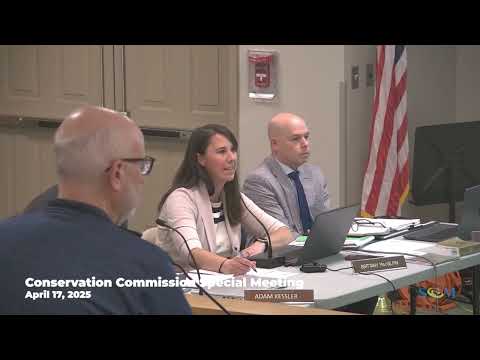
The Simsbury Conservation Commission voted April 17 to keep open the public hearing on McLean Affiliates Inc.’s application to build 52 residential units at 75 Great Pond Road and continued the hearing to a special meeting on May 7.
The decision followed more than four hours of testimony from the applicant’s legal and technical team, independent interveners’ experts and a long list of residents who spoke for and against the project, known in McLean’s materials as “The Meadows.” The applicant described design revisions it said reduce direct wetland impacts and improve stormwater performance; opponents and independent reviewers raised questions about infiltration testing, pollutant removal calculations and impacts to wildlife, including the eastern box turtle.
Why it matters: The application concerns wetlands and upland review areas on roughly a 110-acre McLean campus and touches state wetlands law, local conservation recommendations and neighborhood drainage concerns. The commission’s open hearing and its May 7 continuation give members time to review additional drainage plans, the applicant’s revised materials and supplemental letters from intervening parties.
What the applicant told the commission
Shipman & Goodwin attorney Joseph Williams framed the legal standard for the commission: an inland wetlands agency must find “substantial evidence of a likely adverse impact to wetlands or watercourses” before denying an application, and it may consider impacts from activities in the upland review area only where those…
Already have an account? Log in
Subscribe to keep reading
Unlock the rest of this article — and every article on Citizen Portal.
- Unlimited articles
- AI-powered breakdowns of topics, speakers, decisions, and budgets
- Instant alerts when your location has a new meeting
- Follow topics and more locations
- 1,000 AI Insights / month, plus AI Chat