Get Full Government Meeting Transcripts, Videos, & Alerts Forever!
Get email alerts on the Land Use Wetlands topic
No spam. Unsubscribe anytime.
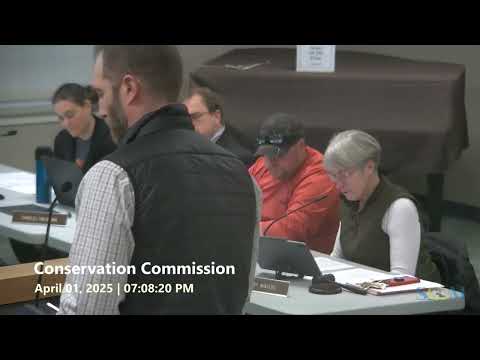
Simsbury panel continues McLean retirement-community hearing after contested wetland, wildlife and stormwater debate
Summary
A continuation of a public hearing on a proposed 52-unit residential expansion at McLean retirement community, 75 Great Pond Road, drew technical testimony, intervenor challenges and extensive public comment before the Simsbury Conservation and Inland Wetlands Agency agreed to continue the hearing to a special meeting on April 17.
A continuation of a public hearing on a proposed 52-unit residential expansion at McLean retirement community, 75 Great Pond Road, drew technical testimony, intervenor challenges and extensive public comment before the Simsbury Conservation and Inland Wetlands Agency agreed to continue the hearing to a special meeting on April 17.
Why it matters: The proposal would place roads and two wetland crossings in Upland Review and wetland soils on a 112-acre property that contains about 1.85 acres of the wetlands targeted by this application. Interveners and several town and outside experts urged the commission to treat the record as incomplete and to require further study of hydrology, stormwater treatment and species-specific protections — including for the eastern box turtle — before any decision.
Applicant engineers and scientists from SLR said the updated plans meet Connecticut DEP guidance for water quality and erosion control. “We do believe that it’s adequate,” said Ryan McEvoy, a licensed professional engineer with SLR, summarizing the team’s view of the erosion- and sediment-control and stormwater treatments. McLean’s team described site changes since earlier hearings: consolidation of two basins, unit relocations that removed buildings from the Upland Review area, reductions in tree clearing and increases in the distance between grading and Hop Brook.
Interveners and independent reviewers disputed those conclusions. Engineer Steve Trinkas, testifying for interveners, criticized the proposed use of hay bales and conventional silt fence and said the proposed basins and separators would not reach DEP water-quality reduction goals. “Hay bales need to go to the dump and stay in the dump,” Trinkas said. He estimated the combined proposed practices would remove roughly 37% of total suspended solids — far below a 90% target cited in DEP guidance for comprehensive pollutant removal. Soil scientist and intervenor George Logan and ecologist Sigrun Gadwan said the site’s soils and hydrology increase the risk that fines and turbidity could reach Hop Brook and the Farmington River downstream.
Wildlife concerns centered on a substantial local population of eastern box turtles. SLR’s Megan Raymond, a professional wetland scientist and registered soil scientist, said the project team has engaged a herpetologist (Dennis Quinn) and proposed monitoring, exclusion fencing and seasonal work windows to reduce impacts; she also said the project’s remaining wetlands and habitat mosaic would continue to support the species. Intervener ecologists and others countered that in the glaciated Northeast box turtles may use wetland seep edges for hibernation and forage within seasonally saturated pockets, and that reducing hydrologic inputs could alter wetland vegetation and habitat function.
Design alternatives were debated. SLR presented a preferred oversized box culvert with a natural substrate and wildlife shelf (a 6x3-foot box culvert with a roughly 47-foot-length crossing and an openness ratio of about 0.39). The applicant said spanning the wetlands with a bridge would increase cost and construction time and would not reduce wetland disturbance because of needed abutments and utilities. Interveners and some experts said bottomless culverts, single-span bridges and directional boring for utilities are feasible and would avoid in-wetland excavation and footings.
Stormwater and soils: SLR reported additional geotechnical testing in late March that altered basin bottom elevations (for example, raising Basin 440 to elevation 263 after field data showed seasonal groundwater at about elevation 257.5–259). The applicant stated they are sizing basins to retain the water-quality (retention) volume specified in the February 2024 DEP water-quality manual — the “1.3-inch” water-quality volume for impervious runoff — and said they used a conservative 0.5 inches-per-hour infiltration rate for basin bottoms. Interveners noted the DEP manual requires field infiltration testing and argued the proposed basins and hydrodynamic separators do not provide proven pollutant renovation under local conditions.
Public comment: More than a dozen residents and civic stakeholders addressed the commission, raising concerns about downstream flooding, light and noise, loss of open space and the intent of the McLean charitable trust. Several speakers described the meadow and riparian corridor as locally valued open space; one speaker noted photographs used in McLean marketing show the meadow that residents want preserved. A land-use attorney representing interveners submitted a written compliance analysis and argued the record lacks required biological assessments and a rigorous demonstration that no feasible and prudent alternative exists.
Outcome and next steps: After the applicant agreed to an extension of statutory review time, the commission voted to continue the hearing to a special meeting on April 17. Commissioners said they expect supplemental materials and responses before the next session and reminded parties that procedural fairness allows the applicant to respond in writing and by presentation prior to final deliberation.
What remains open: the commission must determine whether the record satisfies the town’s regulations for a finding of no feasible and prudent alternative, whether proposed stormwater measures demonstrate pollutant removal under site-specific conditions, and whether the proposed wildlife protections and construction phasing sufficiently avoid or mitigate impacts to wetland functions and species of concern.
Votes at a glance: The commission voted to continue the public hearing to April 17 (voice vote; motion passed).