Get Full Government Meeting Transcripts, Videos, & Alerts Forever!
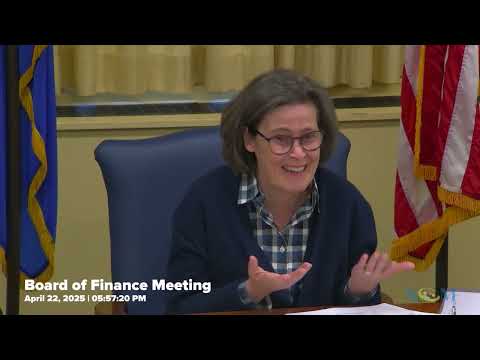
Simsbury Board of Finance approves operating and capital budgets and sets May 9 referendum
Summary
The Board of Finance voted April 22 to approve town operating, special‑revenue, capital and debt appropriations and to submit four budget questions to a May 9, 2025 referendum.
The Board of Finance voted unanimously April 22 to approve the town’s operating and capital budgets and to place four referendum questions before voters on May 9, 2025.
Finance presenter Amy (identified in the meeting as a member of the finance team) told the board the town expects an operating-year revenue surplus of about $2,300,000, driven by stronger tax collections, supplemental motor-vehicle revenues and higher interest and permit receipts. Amy said the expected surplus is net of an anticipated special-education overage from the Board of Education and other line‑item variances.
The surplus and operating projections informed a series of motions the board approved. The board also agreed to use a portion of the town’s self‑insured health plan reserves to offset major medical cost increases rather than drawing general fund reserves. The finance director confirmed the use of health reserves follows the recommendations from the town’s benefits adviser and is within the consultant’s suggested limits.
Why it matters: The votes authorize the town to proceed to referendum on a set of operating, special‑revenue, capital and debt questions that, if approved by voters, will determine final tax and spending levels for fiscal 2025–26. The board’s decision to apply health fund reserves to near‑term medical cost pressures reduces immediate pressure on the general fund balances but uses a portion of the town’s insurance reserves.
Key details and context - Revenue outperformance: The tax department’s collections and supplemental motor‑vehicle receipts were cited as the largest single contributors to the projected revenue surplus; Amy reported a tax collection rate near 98.5‑99 percent and additional motor‑vehicle revenue of roughly $600,000. The finance presenter also cited higher spring permit activity and elevated interest income from investments placed earlier in the fiscal year. - Expenditure drivers: Salary savings from vacancies produced town-side savings; the remaining projected budget variance is an anticipated Board of Education overage driven by special‑education tuition and transportation costs. The presenter listed a worst‑case special‑education overage of roughly $424,000 for the year and noted the Board of Education may use its non‑lapsing fund to cover that amount. - Reserves: The board approved using designated health‑insurance reserves to cover certain major medical budget items rather than using general fund reserves; finance staff confirmed the planned use is consistent with the town’s reserve policy and the health consultant’s…
Already have an account? Log in
Subscribe to keep reading
Unlock the rest of this article — and every article on Citizen Portal.
- Unlimited articles
- AI-powered breakdowns of topics, speakers, decisions, and budgets
- Instant alerts when your location has a new meeting
- Follow topics and more locations
- 1,000 AI Insights / month, plus AI Chat