Get Full Government Meeting Transcripts, Videos, & Alerts Forever!
Get email alerts on the Wetlands Development topic
No spam. Unsubscribe anytime.
Simsbury hearing closed on McLean expansion after months of debate over wetlands, stormwater and wildlife
Summary
The Simsbury Inland Wetlands and Watercourses Agency closed public comment on a long-running proposal by McLean Affiliates Inc. to build 52 residences at the McLean Retirement Community, following hours of testimony and sharply divergent technical opinions over wetlands impact, stormwater design and wildlife.
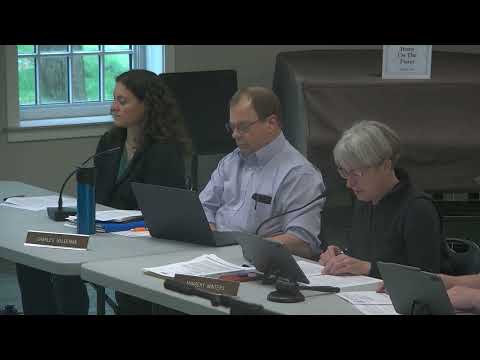
The Simsbury Inland Wetlands and Watercourses Agency closed public comment Wednesday on a contentious application from McLean Affiliates Inc. to build 52 residential units and associated infrastructure on the southern portion of the McLean Retirement Community campus, leaving final permit decisions for a later meeting.
The hearing on the proposal centered on whether the project’s revised design would avoid or materially harm regulated wetlands and downstream watercourses. The applicant’s engineering team described changes that would reduce direct wetland disturbance at two crossing locations to small footprints and offer wetland enhancement; interveners and independent experts said the record is incomplete, especially on wildlife and hydrology.
Why it matters: the McLean campus is a long-established institutional campus and conservation land in Simsbury; the proposal would alter open meadow and upland areas near wetlands and Hop Meadow/Hop Brook and set a precedent for large institutional in-fill on sensitive parcels. Agency members heard competing technical evidence and legal argument before closing the hearing to begin deliberations.
What the applicant presented first
Attorney T. J. Donahue, representing McLean, and Tom Daley, the applicant’s engineer with SLR Consulting, reviewed a package of revisions the team said were made in response to earlier public comment and commission requests. Daley said the team moved from an embedded concrete box culvert to an open-span structure and then to the largest commercially available clear-span unit for the two crossings. “We reduced the direct, wetland soil impact by over 90%,” Daley said, giving figures that the crossing footprints would be roughly 95 and 25 square feet respectively after the change to 30-foot spans.
Megan Raymond, principal wetland scientist for SLR, told the commission the project’s wetland impact assessment and the additional letters and reports on the record together document the site’s soils, vegetation classes and functions for the wetlands in the southern campus. She said the engineering and stormwater design were developed to avoid adverse effects and to include mitigation and enhancement: the application proposes more than 17,000 square feet of wetland enhancement in a wetland system McLean’s team described as roughly 55,000 square feet on the southern parcel.
Applicant leadership and commitment
Lisa Clark, president of McLean, told the commission the trustees and leadership back the application and the environmental commitments in the record. Clark said McLean will follow the integrated pest management approach and the other operational commitments included in the application materials and subsequent filings.
Interveners and independent experts
Intervener counsel John Parks urged the commission to treat the application as incomplete, saying the regulations require a biological assessment that “describes ecological communities and the effects of the proposed activity.” Experts hired by interveners — including ecologist George Logan and engineer Stephen Trinkas — said SLR’s materials omitted seasonal, full-season biological inventories and that hydrologic uncertainty (soil compaction during grading and the use of extended dry detention basins) left open the possibility of longer-term reductions in wetland function or water quality reaching Hop Meadow Brook.
Oxbow Associates and other third-party ecologists reviewed the record and recommended completion of targeted seasonal studies, and several interveners pushed for more detail about the planned construction phasing and post-construction monitoring.
Town staff and technical notes
Deputy Town Engineer Adam Kessler provided a written memo that appears in the record and that the commission discussed at length. Kessler’s April 28 memo recommended five design and phasing items and stated that the revised plan “achieves the water quality volume as defined in the Connecticut DEEP Stormwater Quality Manual (2024).” Daley and Raymond told the commission those recommendations were incorporated in the most recent plan set.
Stormwater, infiltration and basins
Applicant engineers said the project’s stormwater approach uses a treatment train (catch-basin sumps, hydrodynamic separators and extended-detention basins sized to the DEEP water-quality volume) plus stone infiltration elements and dry wells to promote groundwater recharge. Interveners disputed whether the proposed basins will deliver the pollutant reductions claimed, pointing to guidance language in the DEEP manual about limited water-quality benefits from extended dry detention and to field uncertainty about infiltration in glacial tills once construction compacts soils.
Wildlife focus — eastern box turtle and other species
The record includes letters and testimony about the eastern box turtle. Dennis Quinn and other field experts have been engaged to study the species on campus; McLean hired independent contractors and said the study will inform construction‑period protections (temporary exclusion fencing, seasonal timing restrictions and other mitigation). Opponents said the formal biological assessment called for in the commission’s regulations has not been filed in a single, compiled format and that essential seasonal inventories and functions-and-values analysis were missing.
What the commission did Wednesday
After several hours of testimony and cross-examination-style questioning from commissioners and staff, the agency voted to close the public hearing; commissioners will meet next as an agency to deliberate on the application using the complete record. No permit was granted or denied at the May 7 meeting.
Next steps
If the commission decides the application is complete and meets the standards in the Inland Wetlands and Watercourses regulations, it could move to approve, deny or approve with conditions. Additional approvals will also be required from other agencies and commissions — notably planning/zoning and the Farmington Valley Health District for private wells and septic fields. The applicant emphasized it has preserved a portion of the campus as permanent conservation land and added planting and low-maintenance meadow prescriptions to the plans.
Community reaction
Speakers from nearby neighborhoods, Hartford Audubon and other local groups urged the commission either to deny the application or to require a fuller biological inventory and additional hydrologic monitoring and post-construction controls. Applicant representatives said they had revised plans substantially to reduce impacts and to accept monitoring and maintenance commitments once the development is built.
Tapered ending
The commission’s formal record for its next action will be the formal hearing transcript and the bundle of reports, plans and memos submitted to date. Agency members said they will review the full record, town staff memos (including the April 28 memorandum from the deputy town engineer) and the new material produced during the hearing before taking any formal vote.