
Secretary of State briefs committee on 2025 election‑law changes and presidential executive order on election integrity
Get AI-powered insights, summaries, and transcripts
Subscribe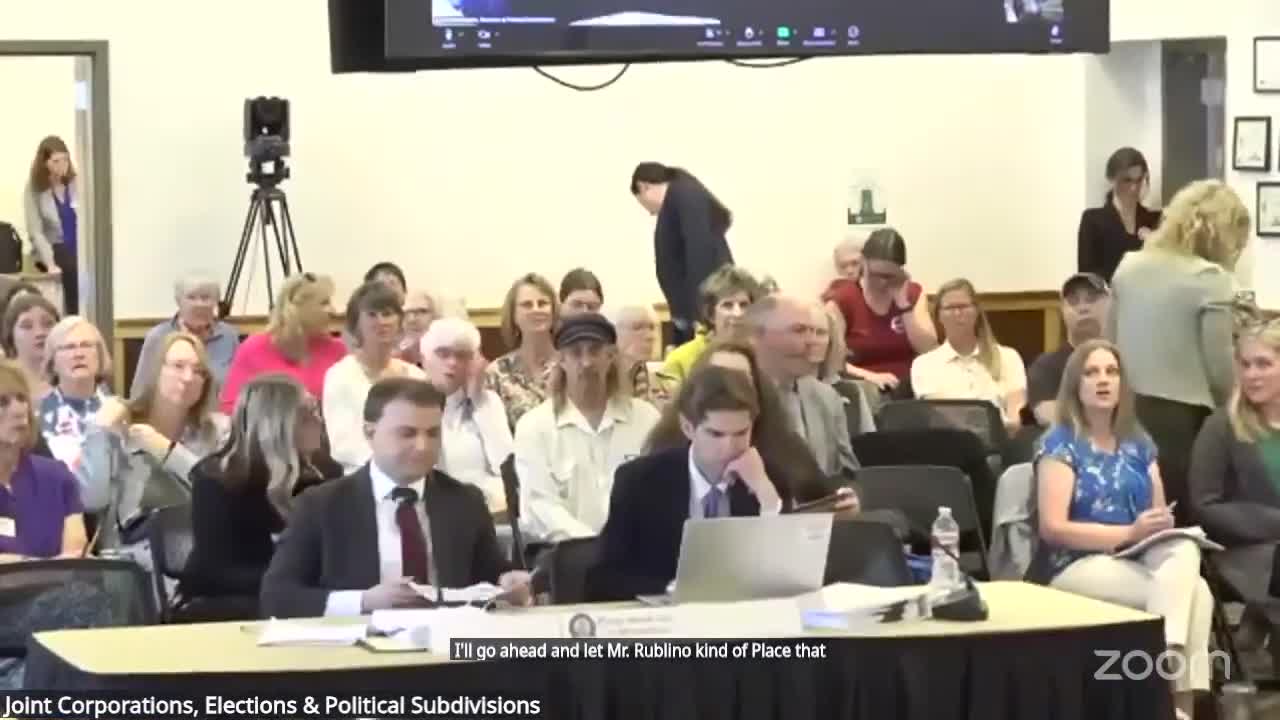
Summary
The Wyoming Secretary of State’s office briefed the Joint Corporations, Elections & Political Subdivisions Committee on May 8 about implementing 2025 election laws and on President Trump’s March 25, 2025, executive order addressing election integrity.
The Wyoming Secretary of State’s office briefed the Joint Corporations, Elections & Political Subdivisions Committee on May 8 about implementing key 2025 election laws and on President Donald J. Trump’s March 25, 2025, executive order addressing election integrity.
The secretary’s presentation summarized implementation work on multiple measures enacted in the 2025 session, including the law requiring documentation to prove U.S. citizenship and state residency to register (House Bill 156/HEA 157), a prohibition on foreign funding of statewide ballot measures (House Bill 337/HEA 61), a ban on private funding for conducting elections (House Bill 228/HEA 65), a prohibition on ranked‑choice voting (HEA 71), updates to voter‑list maintenance procedures that enable the state to use Department of Transportation data (House Bill 318/HEA 62), and a restriction on unsolicited mailings of absentee ballot request forms (Senate File 78/SEA 10).
On the citizenship and residency law, the secretary said Wyoming’s statutory framework and its exemption from the federal National Voter Registration Act permit the state to require proof of citizenship for all races on state registration forms. The office has promulgated rules to specify acceptable proof of residency and will continue to publish guidance on implementation. The office is also updating the state’s campaign‑finance system (YCIFS) to support HEA 61’s new certifications and reporting requirements for organizations that back or oppose statewide initiatives; the new reporting regime requires an affirmative certification that the group did not receive or use funds from prohibited foreign sources and retention of relevant records for enforcement.
The secretary reviewed the content of President Trump’s executive order and its practical implications. The order directs the Election Assistance Commission (EAC) to amend the Voluntary Voting System Guidelines (VVSG) and recommends standards that would discourage using barcodes or QR codes as the primary ballot‑counting mechanism except where necessary to accommodate voters with disabilities; the order also calls for federal agencies to work with states on voter‑list maintenance data sharing and directs executive‑branch attorneys to pursue election crimes. The secretary said the administration’s priorities on barcode use and vendor escrow of source code align with concerns the committee has discussed.
The office described a statewide enforcement and oversight role that includes ensuring vendors seeking certification provide escrowed source code and that county clerks comply with state rules on testing and audits. The secretary also recounted the office’s involvement in the Weston County post‑election review: the secretary’s office said it received results late on election night that suggested an unusually high undervote and subsequently worked with the county and vendor to review ballots and the cast‑vote record; the county canvass and a hand‑examination later confirmed misalignments on ballot designs that produced incorrect tallies in some contests.
Why this matters: the laws passed in 2025 and the executive order direct technical, reporting and oversight changes that the Secretary of State plans to implement over the interim. Committee members asked about technical specifics—how vendor USBs are handled; whether files are hashed; certification processes for vendors and software updates—and the secretary offered to supply more detailed written follow‑up and to coordinate with clerks and vendors.
The office said it will continue rulemaking where authorized, update state systems (YCIFS and the voter registration system) to reflect new reporting and documentation duties, and work with county clerks and vendors on implementing the EAC guidelines if and when they change. The secretary told the committee he will forward formal written responses to technical questions and coordinate an interagency approach to voter‑list maintenance and vendor oversight.
Sources: Secretary of State’s presentation to the Joint Corporations, Elections & Political Subdivisions Committee, May 8, 2025; referenced statutes and enacted bills.