Get Full Government Meeting Transcripts, Videos, & Alerts Forever!
Get email alerts on the School Consolidation topic
No spam. Unsubscribe anytime.
Local officials outline process, timeline and incentives for consolidating Arrowhead UHS with feeder districts
Summary
Superintendent Ron Ross and other presenters described the statutory steps, referendum requirements and state incentives for district consolidation and urged local boards to consider feasibility studies and return positions at a follow‑up meeting planned for early August.
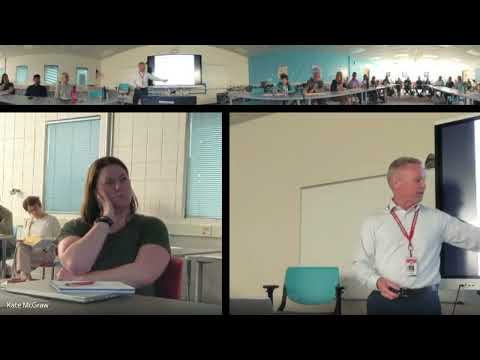
“I am not here to sell, to promote. I am here to inform about what the process is,” Ron Ross told attendees as he opened a discussion of school‑district consolidation and the statutory procedures that would apply if Arrowhead Union High School and nearby feeder districts pursue a union‑to‑K‑12 reorganization.
Ross, who identified himself as a market superintendent with leadership responsibilities in the area, described the state’s reorganization path: school boards first openly consider consolidation, adopt a resolution of intent, and may either require a referendum or face a citizen petition. If a referendum is required or petitioned, it must be held separately in each affected district; a separate majority in each elementary (feeder) district is required for some forms of union‑to‑K‑12 reorganization described in state statute. Ross and presenters repeatedly emphasized that the statutory process is multiple steps and that any board can stop at several points.
Key takeaways Ross and staff highlighted:
- Timeline: statutory timelines commonly run about 18 months from notice of consideration to an effective reorganization date (commonly July 1 following the process). Ross recommended boards treat the process as an extended, public, stepwise review with feasibility work done well before asking electors to vote.
- Referendums and petitions: each affected school district holds its own referendum; if a petition (10% of electors) forces a referendum, that also triggers a vote. Ross emphasized that in the union high‑to‑K‑12 pathway, elementary districts that together own at least 55% of the union high school tax base must follow the statutory notification process described in statute.
- Financial incentives and guarantees: state statute includes a temporary consolidation incentive (presenters summarized it as about $150 per pupil added to the combined per‑pupil revenue limit for five years, then stepped down in years six and seven). Ross also said state law guarantees a district will not receive less state aid through the formal consolidation process (he characterized this as a statutory protection explained in statutes and WASB guidance).
- Practical impacts: if consolidation proceeds, all assets, liabilities, contracts and obligations transfer to the new entity; existing vendor contracts and long‑term debts remain in effect until managed under the reorganization plan. Presenters flagged that combining tax bases will create winners and losers among property owners — a political barrier Ross said state legislators are aware of and have discussed addressing.
Ross and other presenters urged practical, early work: boards should request feasibility studies (financial and educational), examine building and program implications, and consult legal counsel (Ross named WASB legal counsel Bob Butler as a frequent resource). Baird and other financial advisory firms were mentioned as vendors that have performed feasibility work for other consolidations.
No formal motions or votes were taken at the meeting. Organizers suggested a follow‑up meeting in early August to review feedback from individual boards; superintendents were asked to bring the topic back to their boards and report whether their board wants to continue discussions or not.
Ending: Ross closed by reminding attendees that consolidation is one option among many and that it requires careful public engagement and legal/financial analysis. He asked board members to return with a clear position to the next meeting so the group can decide whether to proceed with feasibility studies or to suspend discussions.