Get Full Government Meeting Transcripts, Videos, & Alerts Forever!
Get email alerts on the Public Works Infrastructure topic
No spam. Unsubscribe anytime.
County ratifies emergency order for Indian River Drive stabilization amid disputes over private property access and potential litigation
Summary
The board ratified an emergency order authorizing county entry onto private lands to stabilize Indian River Drive. Staff warned of potential inverse condemnation claims, non‑reimbursable legal costs and the need to balance federal funding requirements with property owners’ objections.
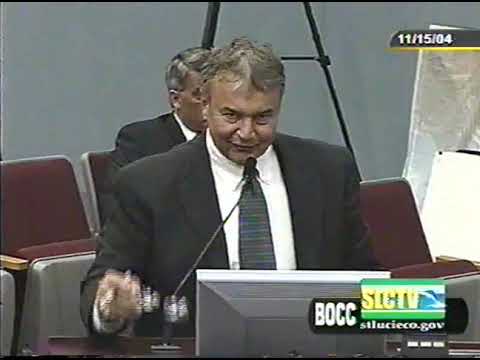
The St. Lucie County Commission on Nov. 15 ratified an emergency order by the county administrator directing county staff to enter private property as needed to stabilize the bed and roadside of Indian River Drive following repeated storm damage.
County Attorney Dan McIntyre and County Engineer Mike Powley briefed the board on the program: the county has secured emergency permits from the U.S. Army Corps of Engineers and an emergency permitting stream from the South Florida Water Management District and has Federal Highway Administration (FHWA) participation for design and construction funding. Approximately 260 property owners had signed temporary license agreements allowing construction; staff reported a smaller number (roughly 20) had objected and some had notified the county through counsel that they would oppose the project.
McIntyre warned the board that if the county must enter private property without consent there is a material risk of inverse condemnation claims, which could expose the county to damages, attorney fees and costs that the FHWA will not reimburse. He said the county will attempt to negotiate alternate plans if a property owner prefers to install privately funded protection measures; staff will also attempt case‑by‑case design adjustments to reduce impacts to private yards or trees where feasible.
Powley described the engineering tradeoffs: in some shoreline locations native vegetation and existing soils may provide stable banks, but other sections require engineered stabilization. He cautioned that skipping properties could leave a ‘‘checkerboard’’ of protected and unprotected segments that would continue to fail under future storms; FHWA expects durable, contiguous stabilization for its funding. Commissioners pressed for more technical documentation and examples where natural vegetation had withstood storms, and staff said they would continue to analyze individual parcels and seek additional coordination with water control districts and property owners.
The board voted to ratify the emergency order. Staff also reported they were pursuing additional FHWA coordination and possible time extensions and reiterated that the county’s legal exposure for any takings damages or attorney fees would not be reimbursed by federal partners.