Get Full Government Meeting Transcripts, Videos, & Alerts Forever!
Get email alerts on the 287g Transparency topic
No spam. Unsubscribe anytime.
Residents press Rockingham County commissioners for transparency on sheriff's 287(g) agreement and potential costs
Summary
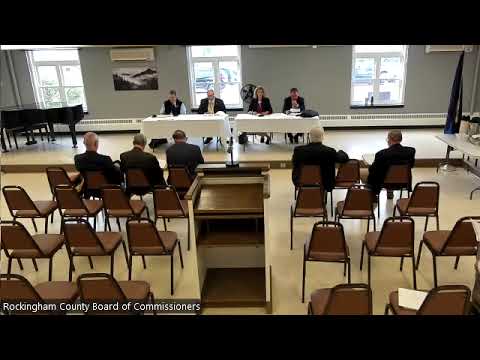
Several Rockingham County residents used the May 8 budget public hearing to demand details about a 287(g) task-force agreement between the sheriff's office and federal immigration authorities and to ask whether county taxpayers could be liable for related costs.
Several Rockingham County residents used the May 8 budget public hearing to demand information about a 287(g) task-force agreement involving the Rockingham County Sheriff's Office and federal immigration authorities, pressing commissioners for clarity about costs, oversight and liability.
Neil Raven of Hampton asked whether appropriations in the county budget would support cooperation between local law enforcement and U.S. Immigration and Customs Enforcement (ICE). "If the appropriations that you're talking about going between ICE and Rockingham County, would they be used to buy our officers such materials, so masks and stuff like that?" Raven asked. Senior Director of Finance Chuck Negerson responded that there is no line item in the county budget to fund ICE operations and that the commissioners had only learned the sheriff had executed an agreement with ICE that day.
Richard Sawyer, identified in the hearing as a county law-enforcement official, told listeners the sheriff had authority to sign agreements under the sheriff's statutory authority and said the 287(g)-type arrangement is an agreement similar to other intergovernmental agreements for dispatch and services. "It is an agreement," Sawyer said. "We sign agreements all the time under the authority of the duly elected high sheriff of the county." Sawyer said the county does not intend to provide specialized equipment tied to ICE operations and that the arrangement is meant to protect deputies' liability in certain administrative detainer situations.
Resident Catherine Haraghi told the commission the agreement had little public input and asked who would be financially liable "if mistakes are made" — citing training, lawsuits and liability-insurance concerns. Daniel Grove and other residents asked whether independent oversight and public reporting would be part of the arrangement and whether the county had a memorandum or contract specifying responsibilities and costs.
Major Chris Pashock of the Rockingham County Sheriff's Office told the hearing that sheriff personnel will continue wearing the same on-duty equipment and that the primary budget impact asserted by the sheriff's office is related to training and payroll items the department was already incurring. "This training will take care of most of that for us," Pashock said, describing required annual training hours for officers and saying the training could be beneficial.
Commissioners and staff said they did not have a full accounting of the agreement's terms in the public record during the hearing. Commissioners emphasized they learned of the executed agreement only recently and asked the sheriff's office to provide documentation and answers. The public record from the hearing does not include the 287(g) agreement or a cost estimate tied to it; officials present said they would follow up with the sheriff's office for details.
Speakers on all sides emphasized the distinction between a county budget appropriation and separate operational agreements the sheriff may execute under his statutory authority. County staff and at least one county law-enforcement official said there was no line item in the budget for ICE operations at the time of the hearing.