Get Full Government Meeting Transcripts, Videos, & Alerts Forever!
Get email alerts on the County Budget topic
No spam. Unsubscribe anytime.
Rockingham County approves near-$106 million fiscal 2026 budget after debate over fund balance and sheriff costs
Summary
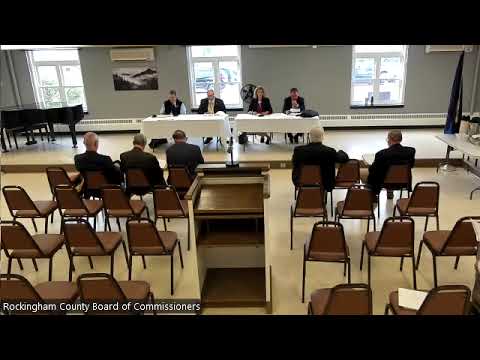
Rockingham County commissioners approved the proposed fiscal 2026 budget at a public hearing May 8 in Brentwood, adopting roughly $106 million in appropriations amid debate over use of fund balance and a 9.4% increase in the sheriff's office budget.
Rockingham County commissioners approved the proposed fiscal 2026 budget at a public hearing May 8 in Brentwood, adopting roughly $106 million in appropriations amid debate over use of fund balance and a 9.4% increase in the sheriff's office budget.
Senior Director of Finance Chuck Negerson said the overall appropriation shows a 4.89% increase but that a one-time $2 million transfer to the county capital fund — to support completion of a new county building — is being paid from $3 million in federal tax credits generated by a county solar array project rather than property taxes or unrestricted fund balance. "If you take out that $2,000,000, then you're looking at more of an increase that's well below that 4% figure," Negerson said.
Negerson outlined revenue and spending composition: about 41.69% of appropriations for wages, 14% for payroll-related benefits, roughly 27% operating expenses and 17% categorical assistance; the county estimates an appropriation total near $106,000,000. He said the solar project — a multi‑megawatt array — is expected to generate about $3,000,000 in federal tax credits and produce both electricity and renewable energy credits the county can sell.
Public commenters and commissioners pressed officials on fiscal sustainability. Resident Kevin Coyle told the board the county has spent about $9.4 million in fund balance over the last two years and that projected use of fund balance for the next year is between $6 million and $8 million, calling that trajectory "unsustainable." Another resident, Catherine Haraghi, asked the commissioners to investigate potential downstream fiscal liabilities tied to agreements the sheriff's office has entered.
Major Chris Pashock of the Rockingham County Sheriff's Office described the sheriff's 9.4% budget increase as largely tied to pay and payroll-related items intended to make deputy compensation more competitive with neighboring municipalities. "Payroll salaries and payroll related expenses account for 7% of that 9.4% because [deputies] have been waiting to get caught up with the rest of the county," Pashock said, adding that outside details and contract changes also affect revenue projections.
Commission discussion focused on whether the county can sustain continued withdrawals from the undesignated fund balance. Negerson said undesignated fund balance moved from about $13.6 million to roughly $15.1 million in the current budget presentation. Commissioners also noted departmental variance: the sheriff's office at about 9.4% increase, facilities at 5.95% (to staff and maintain the new building), and other departments largely near the 4% target requested by commissioners.
After public comment and deliberation, commissioners moved to approve the proposed fiscal 2026 budget. The transcript indicates at least two commissioners voted in favor and one opposed; the board approved the appropriation, though the final roll-call tally is not fully legible in the public transcript. The commission asked that officials continue to track fund balance use and suggested further conversation about longer-term revenue or expense adjustments.
The budget now proceeds to whatever statutory review or county-delegation process follows a commissioner-level adoption (the county delegation or other statutory body was not specified in the hearing record). The board also noted the solar array is expected to come online before the end of the current fiscal year and that the county expects first‑year electricity savings and credits to materially offset electricity expenses.