
Will County board debates removing county-level public hearings for land-use cases
Get AI-powered insights, summaries, and transcripts
Subscribe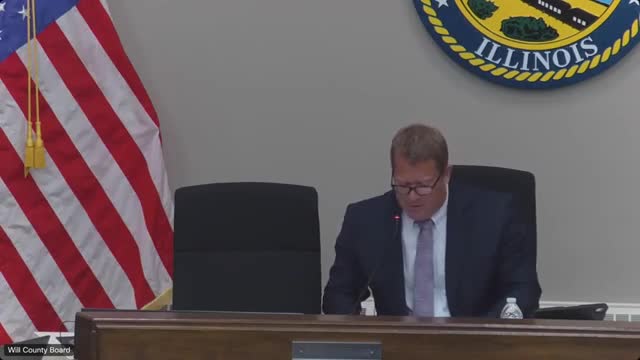
Summary
County officials and staff debated a proposal to eliminate the county board public hearing for zoning and land‑use matters and rely on the Planning and Zoning Commission record; no vote was taken and the item was scheduled for deeper training and review.
A proposal to eliminate county board public hearings for land‑use cases and rely on the Planning and Zoning Commission (PCC) record prompted an extended debate at the Will County Board Executive Committee meeting, with no final policy change decided and a committee‑of‑the‑whole training scheduled for May 14.
Supporters of limiting hearings to the PCC said state statute requires a hearing before the PCC and that relying on a single adjudicatory record could reduce duplicative procedures and legal exposure. An attorney from the State’s Attorney’s Office told members the statute requires at least one hearing before the PCC and that the county board’s second hearing is a policy choice rather than a legal requirement.
Opponents said removing the county‑level public hearing would reduce opportunities for residents to be heard before the elected body that casts the final vote and could undermine public trust. Multiple county board members said they attend PCC or land‑use meetings now but noted many residents cannot easily attend evening PCC meetings. Several members argued the full board’s hearing gives the entire governing body a chance to hear testimony directly.
Committee discussion covered process and legal issues, including: - The statutory baseline: the attorney advised the PCC hearing is required by statute and that relying on the administrative record is a recognized administrative‑law practice, but that whether to hold a separate county board hearing is a policy choice. - Evidence and due process: legal staff said only evidence introduced and admitted in the public hearing may be relied on in adjudicatory decisions; extraneous conversations, emails or site visits cannot be the basis of a land‑use ruling. - Practical concerns: members said duplicative hearings can increase meeting length and public burden, while others said removing the county hearing would make residents feel shut out.
The committee did not vote on any ordinance change. The State’s Attorney’s Office will lead a training on May 14 for the full board to explain the land‑use flow (PCC, land‑use committee, and full board), evidentiary limits, FOIA/deposition risk and how committee recommendations translate into final votes. Committee members were asked to submit specific questions ahead of that session.
The discussion will continue at the committee of the whole training; no procedural changes were adopted at this meeting.