
Union County says it will draft commercial solar ordinance amid project inquiries
Get AI-powered insights, summaries, and transcripts
Subscribe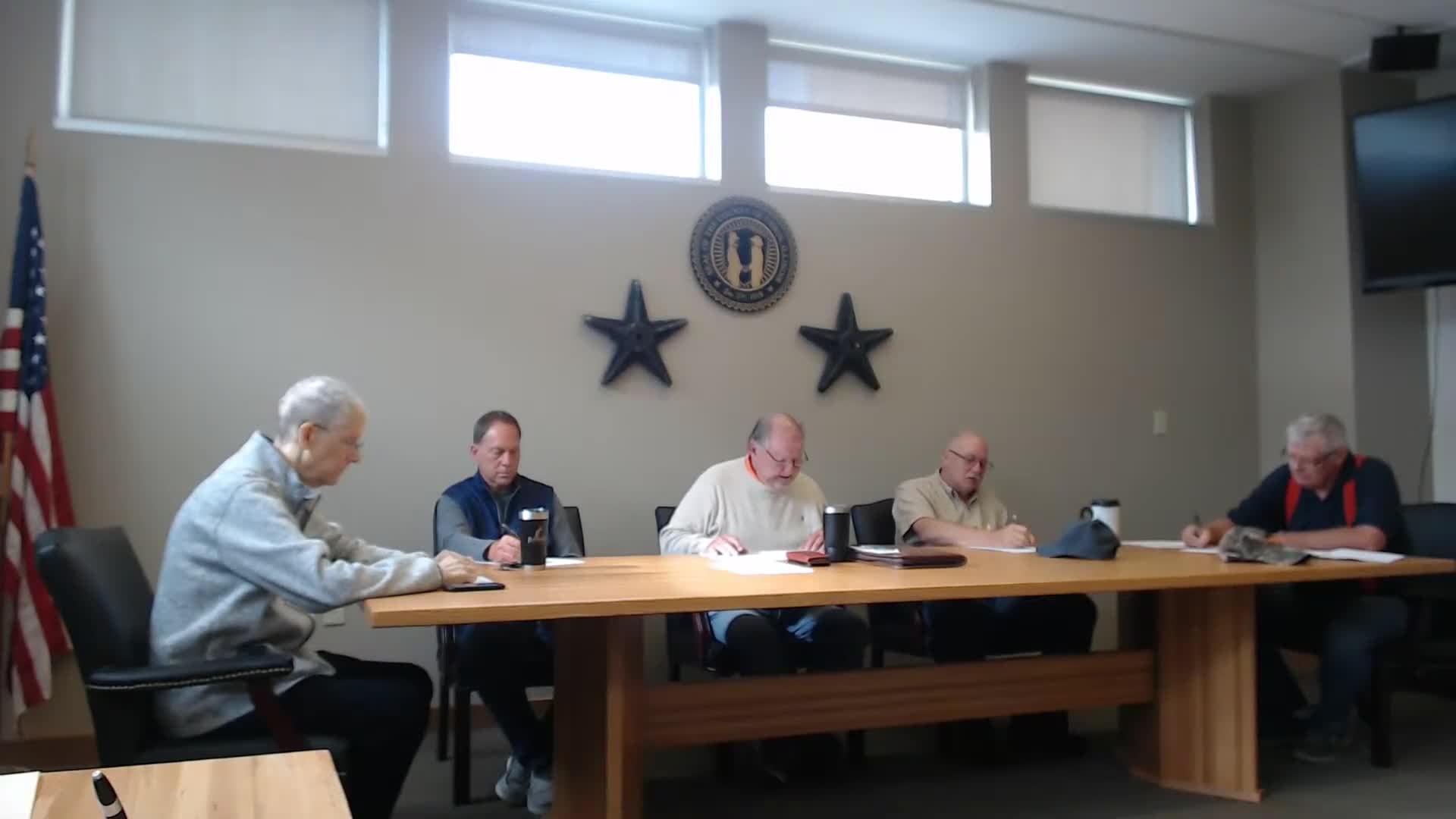
Summary
County commissioners discussed creating a countywide ordinance to regulate commercial solar farms, including permitting, insurance, grading and traffic review, and said staff will present a draft at the next meeting.
A commissioner at the Union County Board of Commissioners meeting on May 9 said the county will draft a commercial solar ordinance after multiple inquiries about solar farms.
The commissioner told colleagues the draft would set building-permit requirements, insurance minimums and other construction standards for commercial solar projects and that staff expect to present a proposed ordinance at the board’s next meeting so developers and landowners have a framework to follow.
The board member said inquiries ranged from what they described as a roughly 1-acre project to news reports of very large developments elsewhere — including a project the speaker described as roughly 2,500 acres in southeastern Missouri — and that the county needs rules scaled to both small and very large proposals. "I expect we'll have a proposed ordinance, draft for the board to consider at the next meeting," the commissioner said.
County staff described several topics they intend to address: whether a traffic evaluation is required for a proposed site, potential impacts to agricultural operations and wildlife, glare and runoff concerns, and a graduated fee schedule for permitting. The speaker said the county is looking at examples from other Illinois counties, naming Johnson, Massac and Randolph as reference points.
Staff said permit fees under consideration would be graduated by scale; the speaker described a base permit figure "about $2,500" for smaller projects and said costs would rise incrementally for projects larger than 1 megawatt. The board member said there is a separate property-tax treatment that applies to commercial solar farms but that the county would not be the assessor of that tax.
No ordinance was adopted at the meeting. The board member characterized the item as a staff-directed ordinance-drafting effort and not a final policy decision. The board did not vote on regulatory language, tax treatment or permit fees at the meeting.
If the board adopts an ordinance later, it would set local construction and permitting rules; staff cautioned commissioners that technical and scientific questions — for example, on hydrology or localized climate effects cited in some literature — may require outside expertise or state-level guidance.
The board asked staff to continue research and to return with a draft ordinance at the next regular meeting for formal consideration and possible introduction.