Tag approves replacement rules for existing buildings, tightens 'in-kind' replacement exception
May 10, 2025 | Building Code Council, Governor's Office - Boards & Commissions, Executive, Washington
This article was created by AI summarizing key points discussed. AI makes mistakes, so for full details and context, please refer to the video of the full meeting. Please report any errors so we can fix them. Report an error »
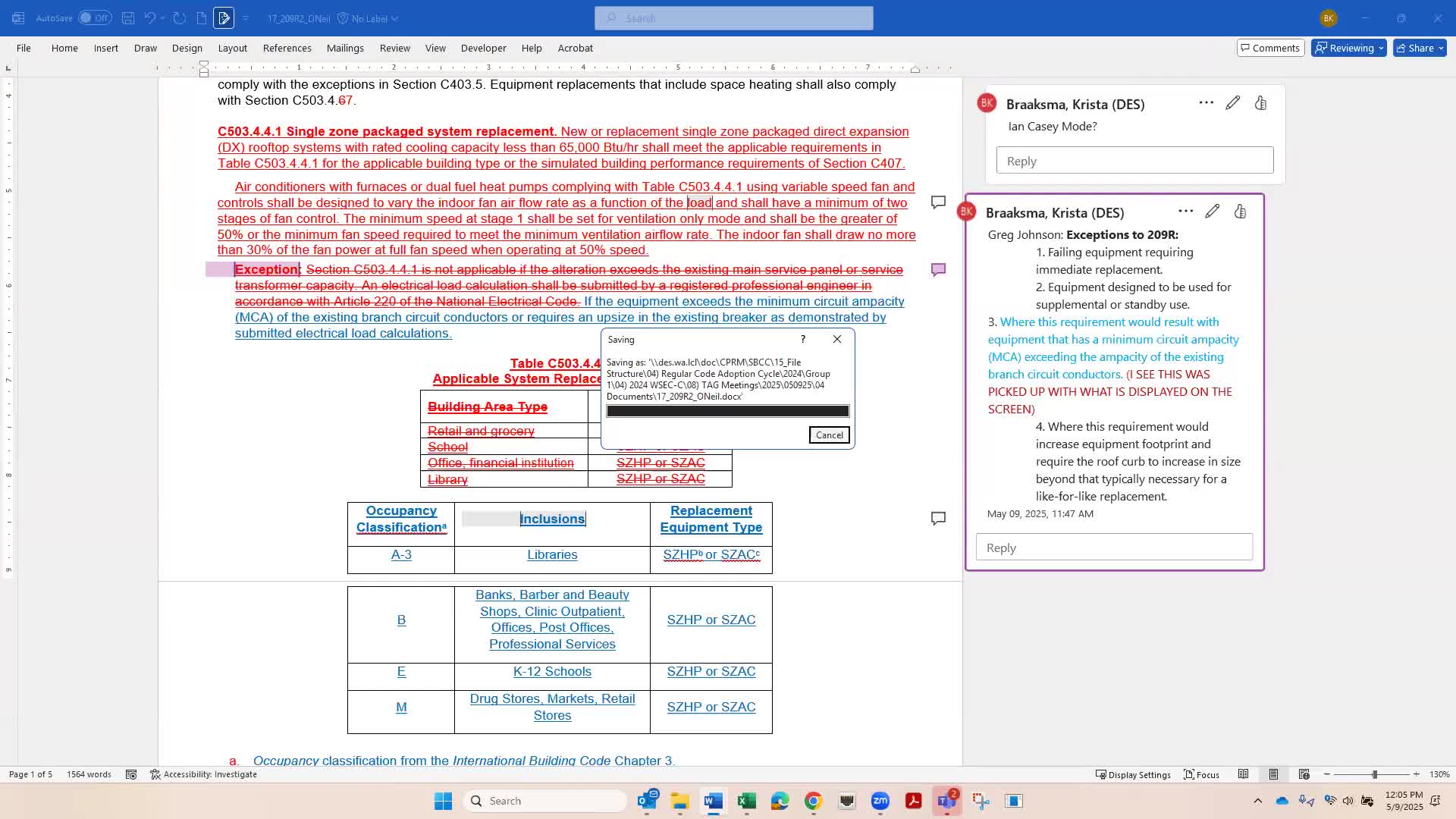
The approved changes (proposal 2-67, as amended) require building owners to use the occasion of equipment failure or replacement to upgrade to higher-efficiency mechanical and service-water-heating systems unless one of several specific exemptions applies. The tag approved the motion, and the measure passed by roll call.
Key features of the approved language include:
- An end to unlimited, automatic "replace like for like" exceptions for space and water heating equipment; replacements must meet applicable upgraded requirements or qualify for a listed exemption.
- Specific exemptions for true emergencies (e.g., a single-piece-of-equipment failure that leaves a building without heat), situations where an electrical or utility service upgrade would be disproportionate, and where the building is served by exempt systems (steam systems, certain industrial process systems, nonprofit facility exemptions as listed). The tag retained a mechanism for temporary, limited replacements where the owner shows a plan to meet upgraded requirements within a defined period.
- Cross-references to related proposals affecting service water heating and alteration rules; the tag asked proponents to reconcile language across chapters and to coordinate with other approved items (including 2-93 and 2-70 series proposals) so that the final code text is consistent.
During debate some tag members and attendees warned of legal and practical risks. Member Greg Johnson raised concerns about potential conflict with federal standards (EPCA) and said overly strict language could tip some owners toward demolition rather than retrofit. Others, including members who represent permit jurisdictions, argued that the change encourages long-term energy goals and brings the code into alignment with the state’s energy policy objectives.
The tag voted and approved the measure. The motion (moved by Dwayne Johnlin) passed on a roll-call vote (9–4 with recorded yes/no votes). The tag instructed staff to fold the approved changes into the related service-water-heating and existing-buildings items for the public-comment package and to coordinate drafting changes to ensure consistency across chapters 4 and 5.
What the tag decided: to limit routine in-kind replacements and to require upgrades except for narrowly defined exceptions, with additional drafting and cross-checking assigned to staff and the work group.
Why it matters: For owners of existing commercial buildings, the change makes it more likely that equipment replacements will be opportunities for energy-efficiency upgrades rather than chances to maintain older-fuel systems in perpetuity. Jurisdictions will need to adopt review guidance and owners should expect more upfront code review in those replacement cases.
Speakers quoted in this article come from the meeting transcript; quotes have been attributed only where the transcript provided names and roles.
Don't Miss a Word: See the Full Meeting!
Go beyond summaries. Unlock every video, transcript, and key insight with a Founder Membership.
30-day money-back guarantee
Sponsors
Proudly supported by sponsors who keep Washington articles free in 2025

