Building Code Council narrows commercial energy code options, adopts Greg Johnson structure for 2-79
May 10, 2025 | Building Code Council, Governor's Office - Boards & Commissions, Executive, Washington
This article was created by AI summarizing key points discussed. AI makes mistakes, so for full details and context, please refer to the video of the full meeting. Please report any errors so we can fix them. Report an error »
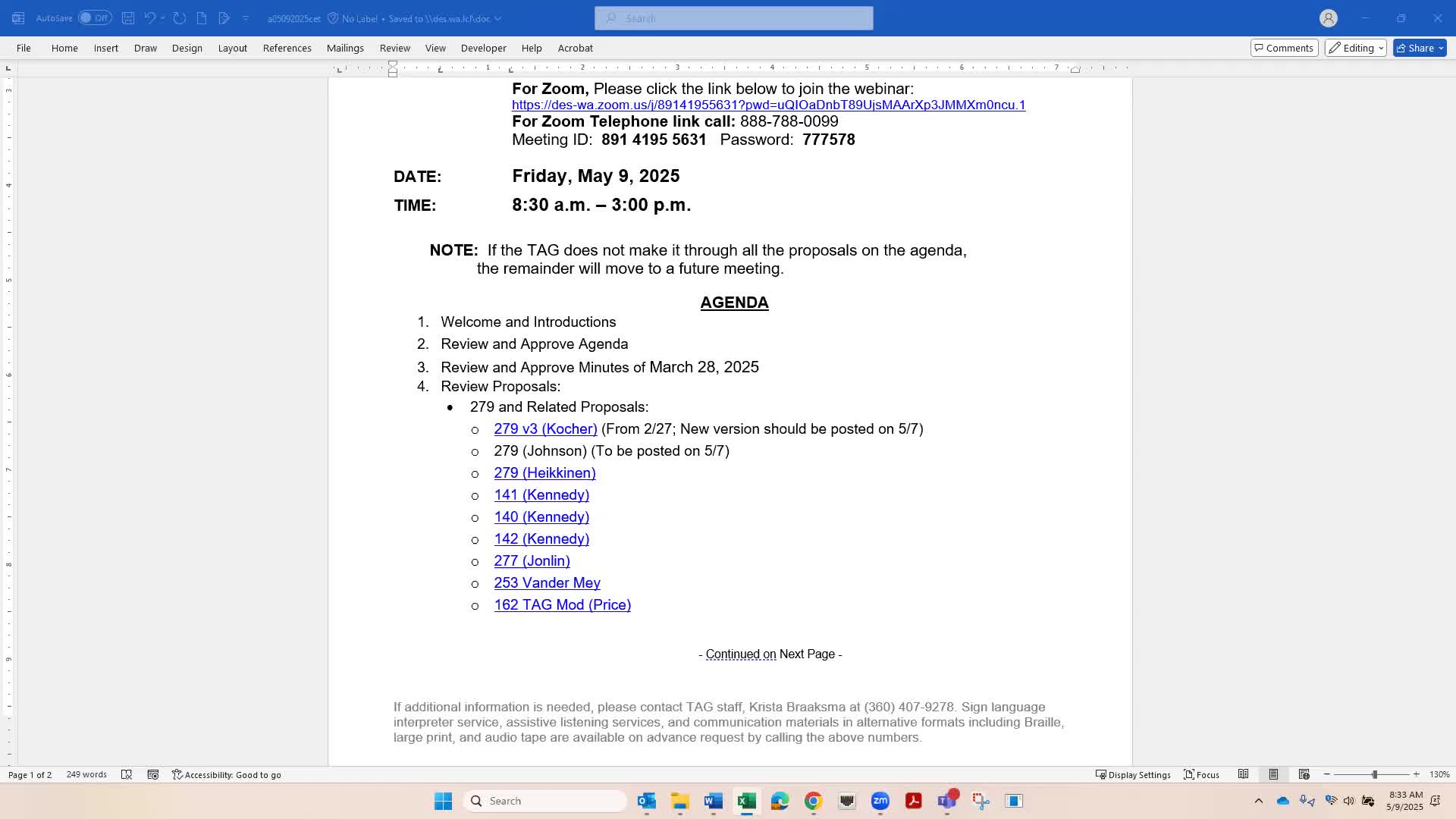
The tag’s action followed a lengthy technical discussion about two alternative ways to restructure the commercial energy code’s compliance path for heating, service water heating and efficiency credits. The chosen approach consolidates credits into a single C406 table with interactive-effect math for mixed heating systems and a single equation for heating credits; the tag asked PNNL to complete modeling to populate the credit values.
The vote came after proponents and a work group spent months drafting parallel approaches. Greg Johnson described his version as a tabular, credit-based structure that captures interactive effects between lighting, envelope and mechanical measures and scales requirements by occupancy and climate zone. “The goal was to make the code much simpler for the code user while increasing accuracy,” Johnson told the tag, noting the approach relies on lookup tables and spreadsheet tools for permit reviewers and designers.
Proponents of the alternative structure — described as closer to the 2021 code’s mechanics and advanced by Johnny Coker — said their format would feel familiar to code users and to jurisdictions that have already implemented similar equations. Coker said his version kept existing equations but reorganized the fossil-fuel pathway into C406; he later withdrew one closely related draft in favor of a different proposal (see related actions).
Several tag members and jurisdictional reviewers said Greg’s tables appeared easier for plan reviewers and permit applicants to use, especially for mixed-system buildings. Jurisdiction representatives said they wanted an enforcement-friendly approach and a transparent spreadsheet tool to validate calculations.
The tag approved a motion to adopt Johnson’s structure for proposal 2-79 and to disapprove the competing Johnson/Coker branch that had been presented that morning. The motion was moved by Dwayne Johnlin and seconded by Marcus Verta; a roll-call vote followed and the motion passed.
The tag directed the 2-79 work group and PNNL (the Department of Energy Pacific Northwest National Laboratory modeling team) to: (1) complete and publish the spreadsheet/calculator used to derive credit values; (2) finalize interactive-effect denominators/adjustment factors; (3) provide modeling that shows the credit equivalencies PNNL will use to populate the new C406 tables and demonstrate compliance with any statutory constraints; and (4) reconcile TSPR/TSPR-like measures and fan/economizer interactions in the final table set. The tag also flagged an unresolved issue about how to treat primary service water heating capacity language so the proposal aligns with EPCA/RCW compliance and recommended the work group resolve the drafting point before the next tag meeting.
What the tag did: selected a single structure for 2-79 (Greg Johnson’s tabular-interactive approach), asked PNNL and the work group to finish modeling and publish a spreadsheet tool, and returned competing drafts as disapproved. The tag left open several drafting items — notably final wording on primary service-water-heating capacity and how TSPR measures coexist with the new tables — for subsequent work-group refinement.
Why it matters: The chosen structure changes how commercial buildings earn efficiency credits for mixed heating systems and is intended to simplify permit review while capturing realistic interactive savings across lighting, envelope and HVAC measures. The tag’s decision will shape the final C406 credit tables and the public comment package the council reviews in the coming weeks.
Details and next steps: PNNL staff said they had bandwidth to run the modeling if funding and scope were confirmed; the tag asked proponents to submit modeling requirements and asked the work group to produce a draft spreadsheet that stakeholders can test before the council’s public comment stage. The tag will review updated material at the next meeting and the MVPEC/public-comment milestone.
Speakers quoted in this article are limited to the meeting transcript and include the chair and proponents; all other remarks are summarized without attribution.
Don't Miss a Word: See the Full Meeting!
Go beyond summaries. Unlock every video, transcript, and key insight with a Founder Membership.
30-day money-back guarantee
Sponsors
Proudly supported by sponsors who keep Washington articles free in 2025

