Get Full Government Meeting Transcripts, Videos, & Alerts Forever!
Get email alerts on the Environment Water Management topic
No spam. Unsubscribe anytime.
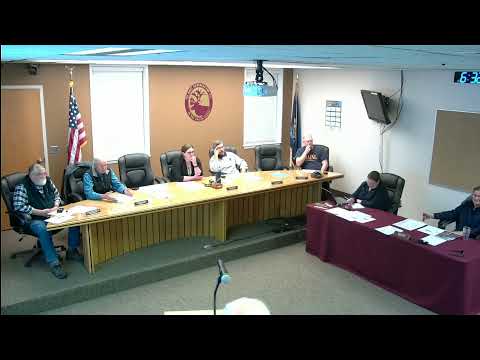
Caribou officials briefed on Mill Pond restoration plan, dredging and fishway proposal
Summary
AVS Engineering presented a plan to rebuild Mill Pond dam, dredge sediment and add a fishway; permitting and use of dredged material will drive timing and method.
SHANE MCDOUGALL, AVS Engineering, told the Caribou Planning Board on Thursday night that the city has funding and a consultant team in place to restore Mill Pond, repair the breached dam and add a fishway to reestablish upstream fish passage.
The proposal calls for dredging the shallow, sediment-filled pond, restoring the dam to its previous elevation with sheet pile and constructing a nature-style fishway; McDougall said the firm has estimated removal of about "40,000 cubic feet" of material and is targeting roughly 2 feet of dredging in the areas of exposed dry land.
The plan matters because the pond has been breached since 2018 and the project would re-create a wetland and fish passage while restoring migratory bird habitat, McDougall said. The city has federal funding for the work and staff and engineers described a permitting calendar that could stretch into late 2025 or 2026.
McDougall said the project scope has three elements: dredge the pond, repair the dam "back to its original height" and install a fishway. He described the fishway concept as a rock-and-pool, nature-style design rather than a concrete ladder, noting the site has about a 20-foot head difference from the dam to downstream valley and that a rock-style fishway would reduce cost if the designer can make it functional.
Permitting will be the primary task before construction. McDougall told the board the project will require a National Environmental Policy Act (NEPA) review because of federal funding, state Department of Environmental Protection (DEP) permits including an NRPA (Natural Resources Protection Act) permit-by-rule if Inland Fisheries & Wildlife signs on as sponsor, a U.S. Army Corps permit for in-water work, and a beneficial-use permit for dredged material. He said the beneficial-use permit often requires a documented, near-term use for dredged material rather than long-term stockpiling.
Board members questioned target dredge depth and habitat outcomes. One board member said, "fish aren't gonna survive in 2 feet of water," and McDougall replied the fishway's purpose is to permit upstream passage; the pond functions as a short stop while fish continue to find cooler, deeper holes upstream.
On the dam, McDougall said the team plans to use steel sheet pile to re-create 2 to 3 feet of the previous crest and to re-place boulders. He said earlier geotechnical work and FEMA data indicate bedrock is relatively shallow and that sampling to date found mostly clean clay and no drums or tires in the test pits.
McDougall outlined a tentative schedule: contract award in May, HUD (NEPA) review by July, DEP and Army Corps permitting through August, final design late in the year and possible construction in a following season. He said the HUD-funded award has flexible spending timelines (the project team stated the grant can be extended to 2030 if needed).
Several board members and staff raised recreation and reuse questions: park access and kayak programming were described as likely follow-on uses, and staff said they will explore wharf-style viewing decks and other low-impact amenities. McDougall and other presenters noted the project is eligible for brownfields and other redevelopment grant programs and said additional grant rounds are being watched.
The board provided general input and requested that the design and permit applications address shoreland vegetation protection, floodplain impacts and access routes for construction mats and equipment. No formal action was required of the planning board Thursday; the team said it will seek the council's endorsement and continue permitting work.
Ending: The city and its consultants said they will return with permit applications and design documents; timeline depends on permitting outcomes and chosen contractors, and the board asked to be kept informed as NEPA and DEP reviews progress.