Get Full Government Meeting Transcripts, Videos, & Alerts Forever!
Get email alerts on the Public Comment topic
No spam. Unsubscribe anytime.
Sequim resident tells planning commission he wants better street connections, more independent planning and answers about past property loss
Summary
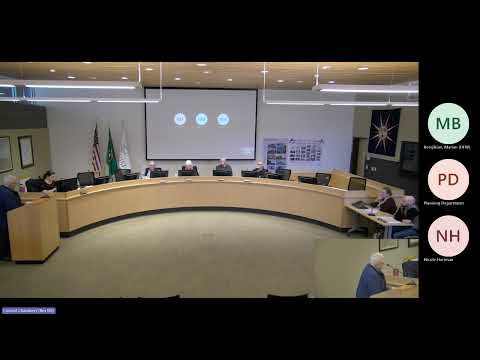
Long-time Sequim resident Ronald Dale Faircloth used the March 18 Planning Commission public-comment period to press for better street connectivity, urge the commission to lead planning rather than follow council direction, and to raise unresolved disputes about past property losses and alleged arson.
Ronald Dale Faircloth, a Sequim resident of more than 50 years, used the March 18 public-comment period at the Planning Commission meeting to press commissioners on local street connectivity, the commission’s role vis-à-vis the City Council and several long-running personal property problems.
Faircloth told the commission he had tried for decades to assemble several lots near City Hall to build a dental clinic and described a 2008 purchase for $140,000 of a parcel he said he intended to use in that plan. He said the city provided monetary compensation for lots he owned in past transactions but that he remained dissatisfied with how “things have turned out.” He told the commission that “the police department knows who set my place on fire” and that a suspected arson suspect had left the area; he attributed part of his difficulties to how decisions and planning had been handled in the city.
On local street planning, Faircloth asked why Maple Street is not connected through Fourth, Fifth and Seventh and urged the commission to take a stronger leadership role in long-term planning: “The planning commission should be the outfit that is making the plans for what’s going to happen in the city,” he said. He also suggested the commission engage youth in civic education and planning exercises so that future generations help decide the town’s direction.
Planning staff responded briefly that the planning department is run by the city and that staff were available for follow-up questions. The meeting record shows commissioners thanked Faircloth for his comments but did not take formal action on the matters he raised during public comment.
Because his remarks contained allegations about criminal conduct and property disputes, the commission did not make factual findings during the meeting; the transcript attributes those claims directly to Faircloth.