Get Full Government Meeting Transcripts, Videos, & Alerts Forever!
Get email alerts on the Comprehensive Plan topic
No spam. Unsubscribe anytime.
Sequim planning commission votes to pursue a full rewrite of comprehensive plan, accepts delay
Summary
The Sequim Planning Commission voted April 15 to pursue a comprehensive rewrite of the city's 2016 plan rather than a quick "dust-off," saying consultant deliverables did not reflect public input and that state requirements and environmental review make the December adoption deadline unlikely.
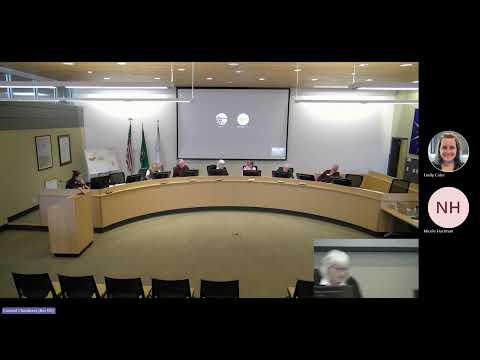
SEQUIM, Wash. ' The Sequim Planning Commission voted April 15 to pursue a comprehensive rewrite of the city's comprehensive plan for 2025'2045 rather than accept a condensed refresh of the existing 2016 plan, and commissioners acknowledged the decision will likely delay final adoption past the city's December target.
Commissioners and staff said the consulting team (SCJ) submitted tables that largely restated current goals and policies rather than incorporating the public engagement results or new policy options; after extensive discussion the commission approved a motion to take more time to produce a thorough update that keeps policies that work and revises or replaces the parts that do not. "What I noticed was, there weren't a lot of changes," planner Travis said during the meeting, summarizing concerns about the consultant draft. Nicole, a member of the public who spoke during the meeting, said she "really appreciate[d] the planning commission having these difficult conversations." The motion passed on a hand vote with no recorded oppositions in the meeting transcript.
Why it matters: The planning commission's direction affects Sequim's land-use map, housing and development standards, and how the city complies with Growth Management Act and Department of Commerce requirements. Commissioners and staff flagged several practical consequences: existing comprehensive-plan language has constrained some development types, the environmental review path (a supplemental or new EIS from the 1996 EIS) is undecided and could add time, and some grant opportunities (notably Recreation and Conservation Office grants) may ask whether the city has a current GMA-compliant plan.
What the commission discussed: Staff and commissioners identified three broad options: (1) a light edit to condense and remove jargon from the existing plan (the consultant's initial approach), (2) a complete rewrite, or (3) a hybrid/targeted comprehensive update that "keeps what works" and takes extra time to address land use, housing, and other priority chapters. After discussion of public engagement findings, consultant deliverables, and staff capacity, commissioners endorsed the third option.
Substantive concerns raised during discussion included: - The SCJ deliverable consisted primarily of side-by-side tables comparing existing policies to proposed condensed policy language; several commissioners said the tables did not clearly reflect public engagement or proposed new zoning or housing options discussed in outreach. - Staff reported it had not received some expected consultant materials in time last year and that key technical work (including capital facilities and transportation inputs) remains incomplete, which increases staff workload and compresses the schedule. - The city's SEPA/EIS approach is unresolved: staff said the commission must still decide whether to rely on the 1996 EIS with a supplemental EIS or prepare a new EIS, and that choice will influence the timeline. - Commissioners and staff repeatedly emphasized the practical effects of plan language on development approvals; commissioners cited examples where restrictive plan language limited otherwise feasible housing projects.
Direction and next steps: The commission's action and staff comments produced a clear work plan: - Staff and SCJ will pursue a more thorough comprehensive update for those chapters identified as priorities (notably land use and housing) and incorporate planning staff experience and public engagement summaries into the revised drafts. - Staff will meet with the city manager and council staff to clarify schedule and to confirm whether the city will pursue specific grants next year (which could be sensitive to whether the plan is adopted on time). - The commission asked staff to provide a revised calendar that reflects the added time needed and to prioritize which chapters should be brought forward first for review. - Staff warned the commission that the originally aggressive schedule (chapters delivered roughly every two weeks with an August draft target and an adoption push by December) is unlikely to be met; meeting materials indicate a likely slip into January for final adoption if the more thorough approach is taken.
Formal action: A motion to pursue a comprehensive update (the hybrid/third option: keep working policies, revise or rewrite others, and take additional time) was moved and seconded during the meeting and approved by voice/hand vote with no recorded oppositions in the transcript. The meeting record does not provide a named mover or tally by individual votes.
Public and staff context: Staff said that the Planning Commission and City Council had adopted a public participation plan only the night before the meeting, and that several technical inputs from Clallam County and other sources arrived late; those delays helped prompt staff to ask the commission whether it preferred a faster refresh or a more deliberate rewrite. Commissioners repeatedly said they wanted to ensure that the next plan reflects both the public engagement conducted last year and the practical, on-the-ground experience of city planning staff who administer permits and standards.
What remains unresolved: The transcript records several open questions staff must still answer: whether the city will: (1) rely on a supplemental EIS to the 1996 EIS or prepare a new EIS; (2) meet the December adoption timeline; and (3) how the city will sequence capital facilities and transportation appendices that feed the comprehensive plan. Staff also said they will confirm whether missing consultant deliverables will be reworked to provide explicit citations and land-capacity analyses.
Next meeting and immediate items: Commissioners asked staff to bring a revised schedule and to begin sending chapter drafts and the SCJ tables as they are revised so the commission can review priorities; commissioners also agreed to review the proposed vision statement and to continue detailed chapter review at subsequent meetings. The commission left the scope broad enough to retain existing goals and policies that are still useful while revising or replacing those that impede desired housing and mixed-use development.
Ending note: By directing staff and the consultant to pursue a more comprehensive approach, the Planning Commission prioritized producing a plan that reflects public input and staff experience over meeting the original adoption deadline. Staff cautioned that extra time will be required to resolve environmental review and technical appendices and to complete the land-use and housing work asked for by commissioners.