Get Full Government Meeting Transcripts, Videos, & Alerts Forever!
Get email alerts on the Employee Benefits topic
No spam. Unsubscribe anytime.
District officials cite large health-insurance cost drivers behind FY26 increase
Summary
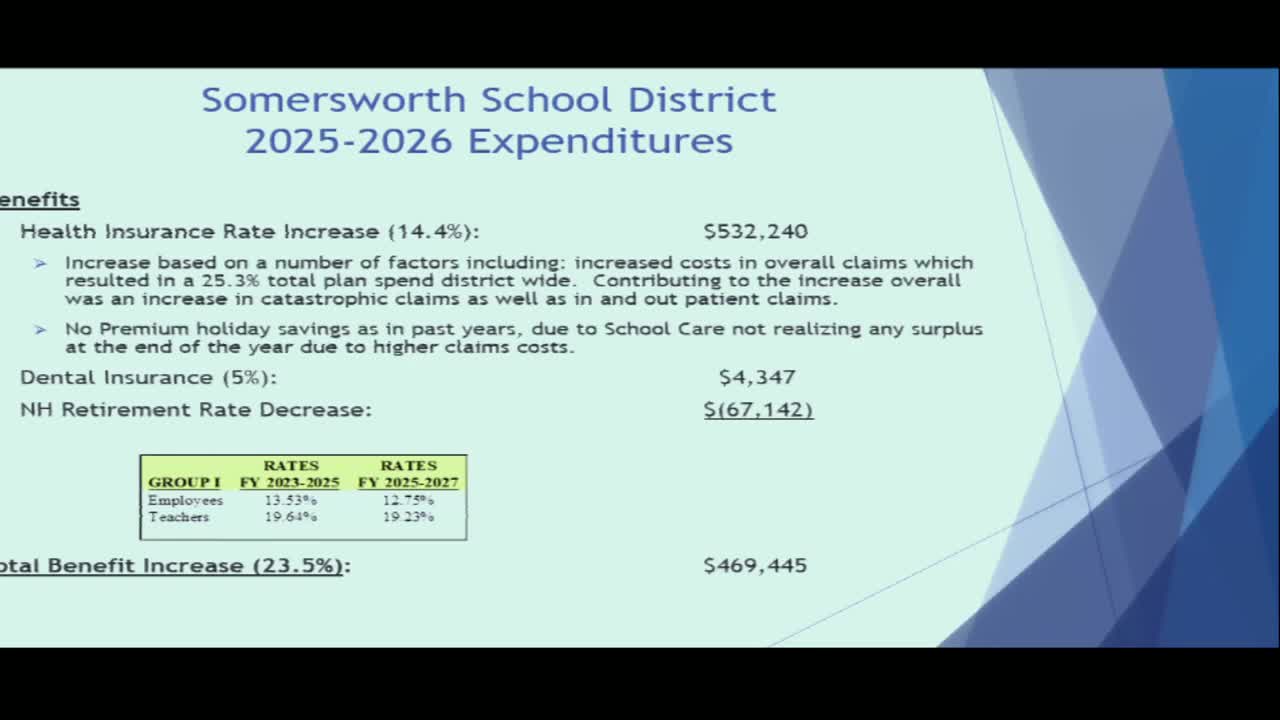
The district reported a 14.4% health-insurance rate increase and a 25.3% uptick in total plan spend for covered members; administrators warned the change is a major driver of next year’s budget pressure and described forthcoming plan design changes that will affect employee deductibles once collective-bargaining agreements allow.
District staff told the Somersworth School Board on Feb. 11 that rising health‑care costs are a key driver of the FY26 spending increase and a principal factor pushing the superintendent’s budget above the municipal tax cap.
Business Administrator Katie Krause said the district’s health-insurance premium rate rose 14.4% compared with the prior year and that the district’s total plan spend for members (employees plus dependents) increased 25.3%. She said contributors to the rise include an increase in catastrophic claims, inpatient and outpatient cost increases, and no premium-holiday surplus from School Care in the coming year.
Krause summarized the top clinical cost drivers: musculoskeletal (bone and joint) conditions, neoplasms (cancers), circulatory conditions, and newborn conditions. She described district steps to mitigate costs and support employees, including promoting School Care wellness and disease‑management programs (for example, Hinge Health for musculoskeletal care and Omada for diabetes prevention) and encouraging employees to be informed consumers of health care where appropriate.
Krause also noted School Care will sunset the district’s current medical plan and move to a revised design in 2026 with higher employee deductibles and higher out‑of‑pocket maximums. Under the sample comparison given to the board, a single deductible would rise from $1,250 to $1,500 and the out‑of‑pocket maximum would increase from $6,000 to $9,000. Krause said those plan-design changes are subject to collective-bargaining agreements; the district cannot change employee cost-sharing while a negotiated contract is in force.
Board members asked questions about timing and options; no formal action was taken that evening beyond discussing the expense drivers and employee-facing programs. Krause said the administration will continue to inform staff about wellness offerings and available programs and to track claim trends.