Get Full Government Meeting Transcripts, Videos, & Alerts Forever!
Get email alerts on the Board Procedures topic
No spam. Unsubscribe anytime.
ZBA debates bylaws changes: time limits, submission rules and chair authority under review
Summary
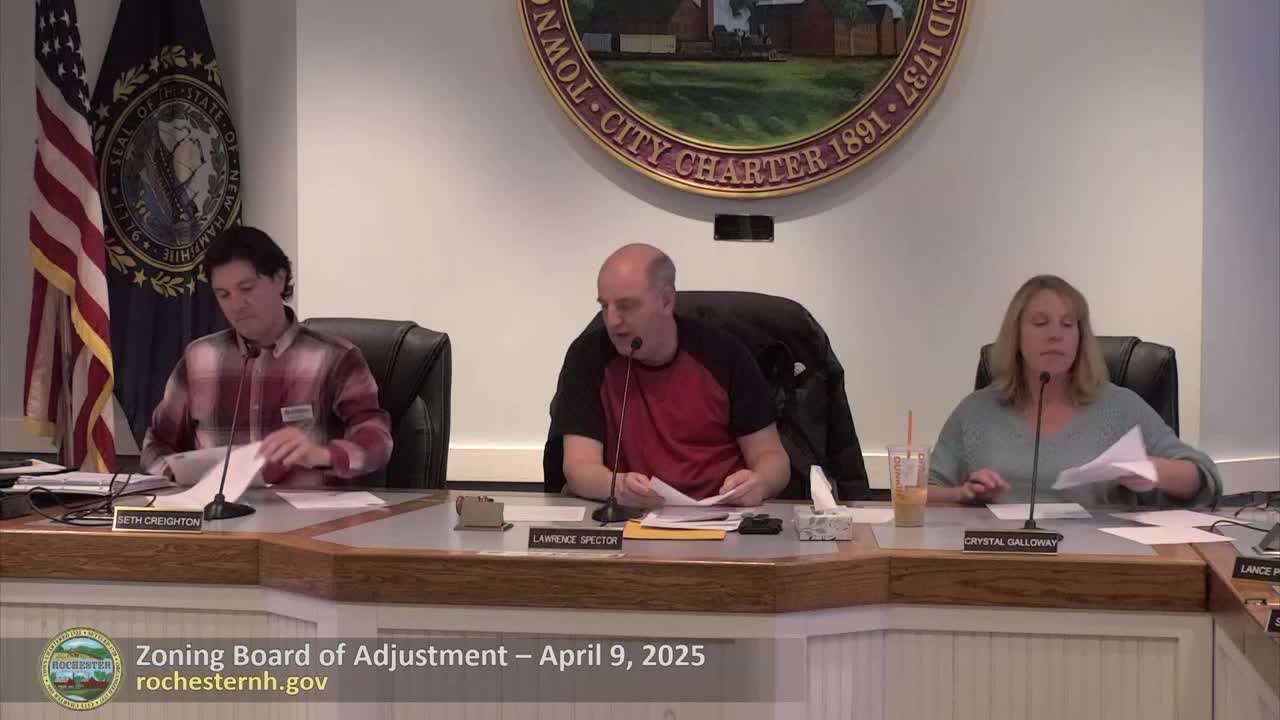
Members of the Rochester Zoning Board of Adjustment discussed proposed bylaw amendments covering meeting length, application submission deadlines, applicant presentation limits, who may speak at hearings, and chair authority to limit redundant testimony; final draft will return for legal review and a future vote.
Board members of the Rochester Zoning Board of Adjustment spent the bulk of the meeting reviewing proposed updates to the board’s bylaws, focusing on limits to the number of cases per meeting, applicant presentation time, supplemental materials deadlines, and the chair’s authority to limit redundant testimony.
The discussion began after the board completed its first agenda item, when the chair introduced the bylaws review. Members debated a proposed cap of six applications per meeting and whether the chair should be able to further limit that number during a single meeting. A board member raised concerns about statutory deadlines, pointing to the state RSA that can require hearings within a defined period after an application is submitted; city staff said the application/hearing calendar is already aligned to meet that requirement and advised legal review if the board wished to adopt formal limits.
Members also debated a proposed 10-minute limit for applicant presentations. Some members argued 10 minutes is sufficient for most applicants and would discourage lengthy backstory; others said larger or complex cases may need more time and that an applicant should be able to request extra time. Several members asked that the time limit be clearly communicated to applicants—via a fact sheet attached to the zoning application packet and repeated at meetings—so novice applicants would know to summarize their case.
On supplemental materials, city staff proposed language discouraging new material after the submission deadline and suggested a rule stating: “New material is not to be submitted between the date of submission and the date of the hearing. New material submitted at the hearing is discouraged and may be grounds for a continuance.” Board members agreed that poster boards or photos should be acceptable but that documents handed out at the meeting could be grounds for continuance to allow time for review.
Members also discussed section 9 of the draft bylaws concerning who may speak at hearings and how the board determines whether a speaker is directly affected by a proposal. City staff said the RSA narrows public comment to applicants, abutters and those who can demonstrate direct effect; the board concluded that whether an individual may speak is a board decision and that, in practice, the chair may call for a nod or consensus of those present when many people raise the same point.
The draft also included language allowing the chair to limit testimony that the board “believes to be redundant.” Some members asked whether the wording should assign that discretion explicitly to the chair or retain the board-level phrasing; members agreed to edit the clause to reference the chair and to provide that a majority of the board may overturn the chair’s limitation.
At the end of the discussion the board agreed to defer final action. Members asked staff to produce a revised draft that incorporates the agreed edits and to submit the final text to legal counsel for review; the board will take the item up again at a future meeting. Several members asked that the staff also prepare a short fact sheet for applicants summarizing presentation time limits, the supplemental-materials rule, and submission requirements.
No formal vote on the bylaws was recorded at the meeting; board members instructed staff to return a revised, legally reviewed draft for the next meeting’s consideration.