Get Full Government Meeting Transcripts, Videos, & Alerts Forever!
Get email alerts on the Veterans Tax Credit topic
No spam. Unsubscribe anytime.
Finance committee discusses raising veterans tax credit; no vote taken
Summary
The Rochester City Council finance committee reviewed the city’s veterans property tax credits, heard public appeals for larger exemptions, and agreed to continue the conversation during FY26 budget sessions; no formal change was adopted.
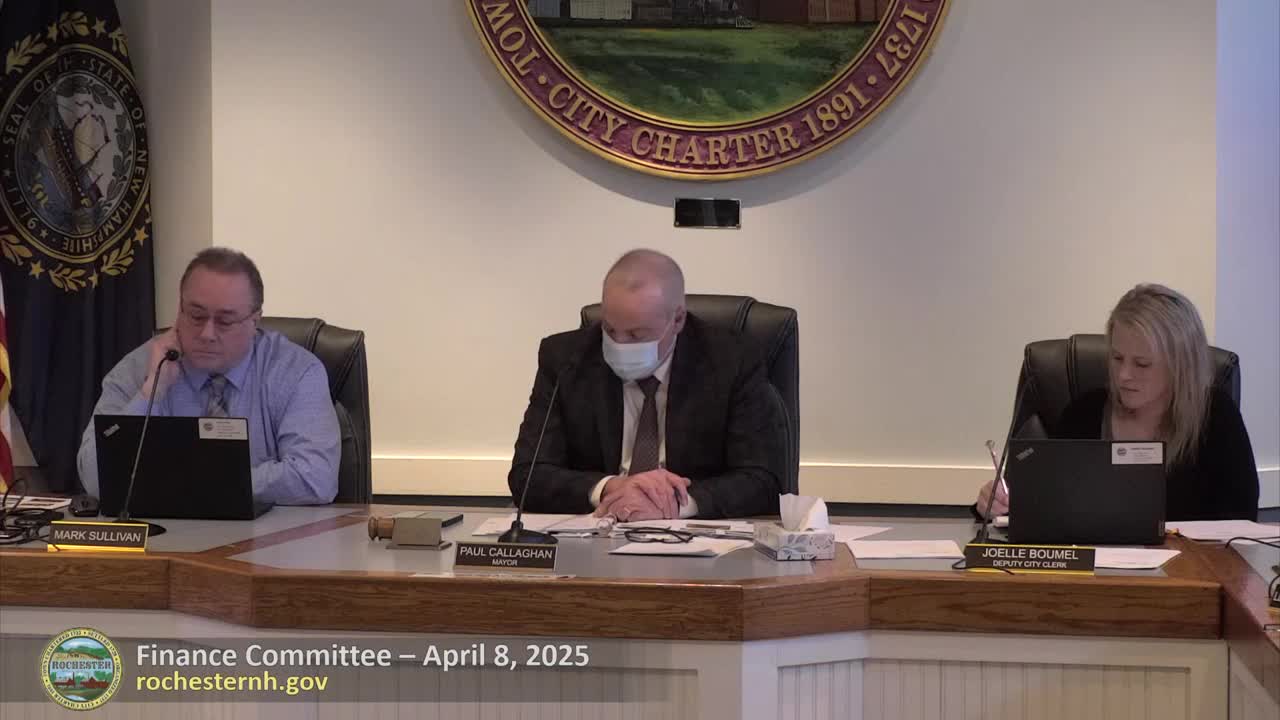
The Rochester City Council finance committee on April 8 discussed possible increases to the city’s veterans property tax credit after public commenters urged larger benefits for local veterans.
Chief Assessor Mary Beth Walker and Finance Director (Director) Sullivan presented background on the different statutory credits and how they are administered. Walker explained that credits and exemptions are handled differently: an exemption reduces assessed value before taxes are calculated, while a tax credit is applied after the tax bill is computed. She outlined the city’s current inventory of credits, noting the regular (optional) veterans credit under RSA 72:28 and the “all veterans” credit under RSA 72:28-b, plus surviving-spouse and total-disability credits under relevant RSA provisions.
The discussion drew public comment from veterans and advocates. Robin Boyer of Rochester urged a $750 exemption for veterans, saying it would “help them so much.” Jerry Vermette, speaking for the Rochester veterans group, said many local veterans are elderly and struggling after a recent reassessment, and said, “We are asking for $7.50 to be in line with most of our neighboring cities and towns.” (Transcript shows both figures during public comment; the committee did not take action to adopt a specific dollar change.)
Councilors and staff reviewed the budgetary implications. Finance Director Sullivan and Ms. Walker said increases to credits would count against the city’s tax cap and reduce the amount to be raised from property taxes. Councilors calculated rough cost scenarios during the meeting: one councilor’s back-of-envelope estimate suggested an increase could raise the city’s veterans-credit expense by several hundred thousand dollars to more than $1 million depending on the amount and which credits were changed. Ms. Walker noted there were roughly 1,317 existing regular-veteran credits in the city’s count and that new applicants could file through April 15.
Committee members did not vote on a change. Several councilors said the matter should be handled during the FY26 budget process so the full budget impact could be evaluated alongside police, fire, education and other service needs. Councilor Sullivan and others suggested phasing any increase over multiple years to reduce one-time pressure on the tax cap.
The finance committee directed staff to include the veterans-credit discussion in upcoming budget sessions and to bring additional detail on projected fiscal impacts; no ordinance or amendment was introduced or voted on at the April 8 meeting.