Get Full Government Meeting Transcripts, Videos, & Alerts Forever!
Get email alerts on the K 12 School Budget topic
No spam. Unsubscribe anytime.
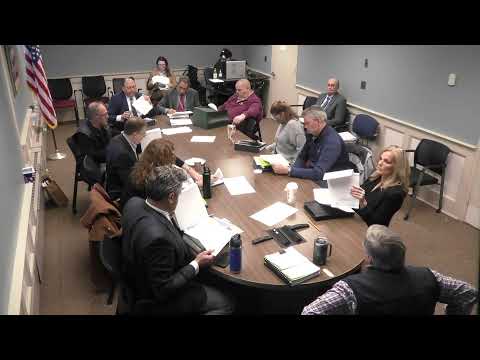
Cheshire school leaders outline $2M-plus savings plan, propose staff cuts and fee increase
Summary
Town of Cheshire school officials presented proposed cuts to the FY2025–26 education budget on April 8, including three teaching positions, elimination of up to five paraeducator positions, a $10 rise in student activity fees to generate about $12,000, and higher health-insurance and pension estimates tied to market and statutory changes.
Town of Cheshire school officials presented revised proposals April 8 to reduce the proposed FY2025–26 education operating and capital budgets by roughly $2 million, saying the package combines staffing reductions, fee increases and line-item cuts while leaving some costs — notably medical benefits and contractually committed energy improvements — largely intact.
“We're gonna continue our proposed FY2526 operating and capital budgets,” Peter Talbot said, opening the committee discussion and turning the presentation over to district staff. Jeff (school staff member) and Ben (school staff member) walked committee members through a line-by-line set of changes they said were intended to close a roughly $2 million gap from earlier figures.
The presentation lists three classroom teaching positions proposed for elimination (including a chemistry position at Cheshire High School and two additions previously included for enrollment growth and elementary physical education), a 0.5 full-time equivalent multi-language-learner position cut, and an assumption of six retirements factored at $25,000 each to reduce net payroll costs. Jeff said the draft reduces the certified-salaries subtotal by about $2.4 million and noncertified salaries by about $800,000, producing a roughly $3.2 million overall increase from the prior year that the redactions aim to temper.
Paraeducator staffing is a key area of proposed savings: the draft assumes elimination of up to five paraeducator positions, described as mostly currently vacant. Jeff said the district employs roughly 200 paraeducators in total across special-education and general-classroom roles (the staffing schedule lists 162.4 FTE overall), and that the five positions identified for potential elimination are largely unfilled now. “Potential elimination,” Jeff said repeatedly, clarifying that the cuts would reduce budgeted positions but in many cases would not immediately remove current employees because some roles are vacant.
The packet also proposes increasing the student activity fee across extracurriculars by $10 to generate an estimated $12,000 in revenue. Presenters described current caps as a $350 limit per student per year and a $550 family cap; the district’s fee schedule lists ice hockey as an outlier with a higher individual fee. The presenters said the fee increase should remain within regional norms.
Health insurance and retirement costs drove much of the budget pressure. The draft budgets use preliminary insurance and pension estimates provided by the district broker; staff budgeted roughly $1.5 million for medical benefits and used an illustrative 5% pension estimate and an 8% workers’ compensation estimate pending final actuarial numbers. Presenters warned that medical-claims timing can depress early-year totals and rise as more employees meet deductibles later in the calendar year.
The committee also discussed the district’s choice to remain self-insured. Jeff said prior comparisons showed a fully insured plan would have been roughly $3.3 million more expensive when last analyzed (April 2023) and that, for the district population, self-funding has been lower cost though it leaves the district exposed to stop-loss and claim volatility. Staff noted a common stop-loss attachment point of about $175,000 per individual claim and said the district reviews stop-loss levels each year.
Capital and contract commitments limit near-term flexibility. The draft shows a roughly $65,000 reduction in planned capital equipment purchases but retains an approximately $688,000 annual payment tied to an existing energy performance contract; presenters said the contract spans 15 years and that the district is roughly in year 12 of payments. Jeff said the energy contract is guaranteed against underperformance by the contractor, and staff offered to share the contractor’s savings report with committee members.
Transportation costs were flagged as another persistent pressure point. The district runs an in-house fleet for many special-education routes and contracts other routes to an external carrier; staff said the contractor’s contract includes a 4% market-rate increase next year and that driver shortages continue to push market pay higher than minimum wage. Committee members discussed stop consolidation and parental opt-outs at the high school as partial demand-management tools but noted limits when students are eligible for seats.
Several committee members asked how proposed reductions would affect classroom programming and special-education compliance. Jeff emphasized that some cuts are placeholders to reach the targeted savings figure and that final decisions would follow a fuller enrollment and retirement analysis; he also underscored that required services (for example, speech-language supports tied to IEPs) would be staffed through a mix of certificated clinicians and assistants to preserve legally required services while managing costs.
The meeting concluded with an adjournment motion; no formal budget adoption occurred at the session. Staff asked committee members to submit follow-up questions by email and said another budget update and the town mill-rate calculator review are planned before the next public meeting.
The district’s presentation and the union contract materials cited in the meeting are available on the district website, and staff said they will circulate the energy-performance savings report and updated insurer claims when those are finalized.