Get Full Government Meeting Transcripts, Videos, & Alerts Forever!
Get email alerts on the Municipal Budget topic
No spam. Unsubscribe anytime.
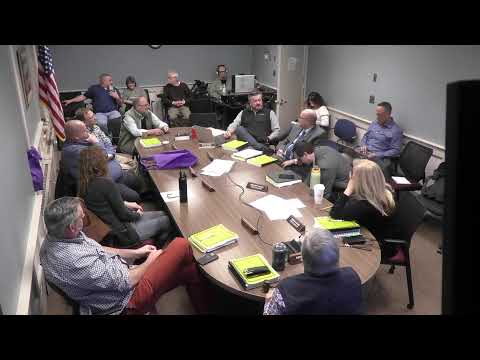
Cheshire council debates CNR cuts, revenue risks and mill-rate targets as $15 million gap looms
Summary
Town Manager Sean Kimball presented a budget that reduces capital nonrecurring (CNR) funding and relies on fund balance and projected revenues; the council ran a straw poll that centered on a 29.31 mill target (roughly a 6% average tax increase) while discussing cuts, bond proceeds and a 2-year window before major North End revenues appear.
Town of Cheshire councilors and staff spent the meeting’s main block reviewing the town manager’s proposed budget, discussing capital nonrecurring (CNR) funding levels, revenue assumptions and a near-term budget gap staff described as roughly $15 million.
Town Manager Sean Kimball said the mill rate in the proposed budget would produce a year-over-year tax-bill increase, but that the amount is an output of assumptions about non-tax revenues and the grand list. “That number is not a number I go picking,” Kimball told the council. “It’s a function of all of the non tax revenue,” he said while demonstrating the town’s mill-rate spreadsheet.
Why it matters: Staff reported multiple large revenue changes, including the town’s loss of eligibility for the state motor-vehicle tax grant (a roughly $1.046 million effect reported), an estimated drop of about $600,000 in tiered PILOT (payments in lieu of taxes) and the expiration of one-time sources such as ARPA funds. At the same time, building permit revenue and personal-property growth tied to the town’s North End development were discussed as future offsets; Kimball and staff said full annual benefit from the North End is not likely to appear for about two years and estimated steady-state tax revenue from that project in the $5–6 million range.
CNR (capital nonrecurring) funding: Councilors and staff debated the size of the annual cash appropriation to the CNR account, which pays cash for short-lived capital items to avoid 20-year bonding for those purchases. The town manager recommended reducing the CNR appropriation to $1 million; council members pushed options ranging from keeping more cash in CNR to cutting it further (several members suggested $500,000–$750,000 as discussion options). Staff noted there are some small residual balances in closed projects that could be reallocated to modestly increase available cash without raising the appropriation.
Budget balancing tools discussed: The council examined multiple levers: lowering CNR cash contributions, reducing operating expenditures, increasing fees, using additional general-fund equity (fund balance) and the effect of bond-sale premium and proceeds. Kimball recommended using $1.25 million of fund balance in the proposed plan (less than the $2.25 million used last year) and noted the town holds a AAA bond rating; the council discussed whether to use some bond premium proceeds to smooth debt service in the near term.
Mill-rate straw poll and public concerns: Staff ran scenarios in the mill-rate worksheet. In a council straw poll, members used a target mill rate of 29.31, which Kimball’s model showed as roughly a 6 percent average total tax-bill increase (Kimball stated on the spreadsheet, “That is 29.31 mils which ends up being a 6% tax increase. Dollars $5.35 per year.”). Councilors were split on how aggressive to be with cuts; several members emphasized protecting services used by residents on fixed incomes and urged that any cuts be specified and publicized so residents can weigh priorities.
Other revenue items under review: staff highlighted higher-than-expected building-permit revenues this year (building department projected permit revenue well above budgeted levels), questions about telecom/personal-property valuations, and possibilities to increase user fees (park-and-rec, permit fees) where politically feasible. Staff also flagged uncertainty in final state budget actions (ECS education funding and some state grant lines) and recommended caution in relying on those amounts until legislative action is final.
Next steps: Councilors asked staff to bring more refined expenditure adjustments and revenue updates to the next meetings (including a capital deep dive and another public hearing). Staff said they will also return with updated projections after the town’s pending bond sale and with potential CNR reallocation options. A public hearing and further department-level detail were scheduled in the coming weeks.
Ending: Councilors left the workshop with a sense that substantial reductions or revenue increases will be necessary to close the reported gap, and that staff should return with concrete options for specific lines of cuts and fee changes ahead of an April vote cycle.