Get Full Government Meeting Transcripts, Videos, & Alerts Forever!
Get email alerts on the Education Budget Staffing topic
No spam. Unsubscribe anytime.
Public speakers urge no further cuts to BOE budget as superintendent details staffing and special-education drivers
Summary
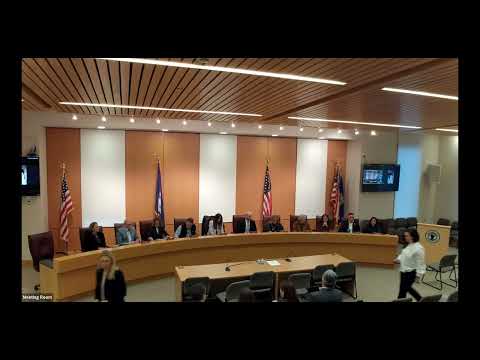
At a March 25 New Canaan Town Council meeting, dozens of residents spoke in support of the Board of Education budget. Superintendent Brian Lutze told the council staffing growth over the past decade is largely driven by special-education needs and described capital priorities including classroom audio/security upgrades.
Dozens of residents told the New Canaan Town Council on March 25 they oppose additional cuts to the Board of Education (BOE) operating budget and asked council members to specify any proposed reductions before next week’s public hearing.
Erica Schroedel of Wells Lane told the council the BOE budget the council is reviewing is already $300,000 smaller than the Board of Education's original proposal and asked the council to “please share with us the specific amount of the cuts that you may make,” so families and the BOE can assess impacts.
The request came during a lengthy BOE follow-up presentation by Superintendent Brian Lutze, who walked council members through a 10-year staffing and program analysis. Lutze said the district’s noncertified full‑time equivalents (FTEs) rose from 297.11 in 2014–15 to 333.68 in 2024–25, an increase of 36.57 FTEs. He said roughly 61 percent of that increase—about 22.38 FTEs—relates to special‑education positions, with instructional assistants and behavior‑support staff the largest categories.
"Additional staff [are] largely dedicated to meeting growing needs of our students, specifically those of special needs," Lutze said, adding the district has in many cases hired specialists in house (for example, board‑certified behavior analysts) to reduce reliance on external vendors and to retain quality control.
Lutze also described how some staffing and program shifts were intentional choices to expand student opportunities: more AP and elective sections at the high school, a financial‑literacy course required for graduation, increased computer‑science offerings and a LAUNCH transition program for older students with specialized needs. He said the district has added about 21.76 special‑education positions over the 10‑year span and that some new roles are grant‑funded (for example, a 0.6 pre‑K director paid from IDEA funds).
On funding and grants, Lutze explained the federal Individuals with Disabilities Education Act (IDEA) is the primary grant that supports special‑education staff and is intended to supplant budgeted special‑education costs; he said the district receives roughly $1 million annually from IDEA and that the two‑year grant carries some built‑in carryover. He also outlined Connecticut's excess‑cost (special‑education reimbursement) grant and the Educational Cost Sharing (ECS) state payment, noting both flow to the town and can offset outplacement or other high special‑education costs.
Council members discussed the size of any additional reduction the council might seek. Several speakers referenced direction from the Board of Finance and suggested council members consider reductions in the “several‑hundred‑thousand‑dollar” range; no council motion or final decision on cuts was made at the meeting. Council members set a process: members who plan to propose reductions should be prepared to present them at the next council meeting; a public hearing on the budget is scheduled for April 1, with a final council vote on the budget on April 3 as part of the town’s calendar the council outlined.
Lutze and staff also presented the BOE capital request: total district capital needs of about $3.32 million, led by a classroom audio/PA/security enhancement across schools, roof and elevator work at Saks Middle School, playground rubber surfacing replacement and other building repairs. Lutze said the classroom audio/security package is intended to improve daily classroom audio, enable PA and emergency communications, and may include translation features that would help multilingual students.
Council members and the BOE also discussed the board’s historical turn‑back (actuals returned to the town) and the annual variability in insurance and other large cost items. Lutze said the district manages a largely self‑insured medical plan, runs stop‑loss coverage, and monitors grant and insurance reserves; he described multi‑year trend analysis that informed the budget.
Why it matters: Council members will weigh the BOE’s requested increase against town fiscal constraints. The superintendent framed much of the operating growth as mandated or programmatic investments—especially special education—rather than discretionary line‑item increases. The council did not vote on any BOE changes March 25; it set a schedule for members to present proposed reductions and for a public hearing and final vote in the following week.