Get Full Government Meeting Transcripts, Videos, & Alerts Forever!
Get email alerts on the Cannabis topic
No spam. Unsubscribe anytime.
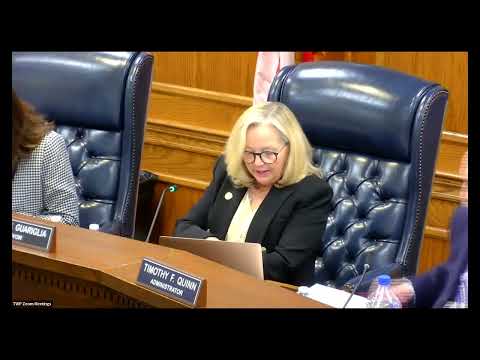
Morris Township committee adopts cannabis licensing and zoning ordinances amid heated public debate
Summary
After nearly two hours of public comment split between opponents and supporters, the Morris Township Committee adopted Ordinances O7‑25 (local cannabis regulations) and O8‑25 (cannabis overlay zoning). Votes were 4–1 on each ordinance; committee members said approvals set a local review process and do not guarantee any business will open.
The Morris Township Committee on Wednesday voted to adopt two companion ordinances that establish local regulations (O7‑25) and an overlay zoning district (O8‑25) to permit limited cannabis businesses in narrowly defined commercial areas.
After extended public comment — with residents and nonresidents both opposing and supporting the ordinances — the committee adopted O7‑25 (the licensing and regulatory ordinance) and O8‑25 (the zoning overlay) by roll call votes of 4 to 1 each. Committee member Giannada voted no on O7‑25 and the member identified as Donata voted no on O8‑25; the remaining members voted yes.
The ordinances set a process for applicants, establish an advisory review and criteria, and create an overlay along a short stretch of the Ridgedale Avenue/John Street corridor that committee members said is underused and suited for the proposed uses. Township Attorney Jared Cantor explained the multi‑step approval pathway: applicants respond to a request for proposals, the cannabis advisory board evaluates applications against criteria in the ordinance and forwards recommendations to the governing body, and the governing body may grant a conditional municipal license by resolution. Any conditional municipal approval must still clear state licensing and planning‑board site approvals.
Public commenters split sharply. Opponents argued the ordinances were advanced too quickly, that many residents were not aware of the proposals, and that the overlay zones are too close to homes and schools. Jennifer Fixter urged the committee to slow the process and questioned the assumed revenue benefits, saying: “What benefit does it bring to our township?” Other residents cited health or character concerns and urged a local referendum. A number of residents called for larger buffers from schools than the proposed 250 feet in some parts of town.
Supporters included labor and industry speakers. Hugh Giordano, a representative of the United Food and Commercial Workers Union, said the industry would create jobs with benefits and that unionized facilities offer “fair wage, health care benefits, sick time, vacation time, maternity leave, and the path to retirement.” Industry witnesses and local owners said regulated retail reduces the risks posed by an unregulated black market and pointed to state testing and strict seed‑to‑sale controls.
Committee members repeatedly noted three points: (1) legalization has occurred at the state level and home delivery is available statewide; (2) the local ordinances do not automatically approve any business — each application will be evaluated, and the governing body may reject recommendations; and (3) the town will retain discretion as to how many and which license classes it ultimately accepts.
Attorney Cantor and Administrator Quinn said the state Cannabis Regulatory Commission has significant oversight; Cantor also said the state’s drug‑free‑school‑zone statute applies differently to cannabis since cannabis is no longer a controlled dangerous substance under state law. Chief of Police Robert Shearer told the committee that the police follow state guidance on employee testing and that off‑duty lawful adult use is not broadly prohibited for officers except in limited federal roles.
The committee also outlined next steps: release an RFP for applications, convene a municipal cannabis advisory board to score and recommend applicants, and require applicants to show site control and to meet the state’s security, testing and labeling rules. Committee members emphasized they could approve zero licenses if no proposals meet local standards.
The ordinances direct the township clerk to publish notices of adoption. Any applicant will still need municipal site approval, state licensing and, for certain uses, additional operational approvals before opening.