Get Full Government Meeting Transcripts, Videos, & Alerts Forever!
Get email alerts on the Affordable Housing topic
No spam. Unsubscribe anytime.
Morris Township adopts reduced Round 4 affordable‑housing obligation, sets next steps
Summary
Morris Township Committee on Jan. 29 adopted a binding resolution setting the township's present‑need affordable housing obligation at nine units and its prospective 2025–2035 obligation at 308 units, after planners revised data used by the New Jersey Department of Community Affairs (DCA).
Morris Township Committee on Jan. 29 adopted a binding resolution setting the township's present‑need affordable housing obligation at nine units and its prospective 2025–2035 obligation at 308 units, after planners revised data used by the New Jersey Department of Community Affairs (DCA).
The adoption, made by roll call vote, moves the township to submit the resolution and the planners' memorandum to the Affordable Housing Dispute Resolution Program and post the materials on the township website within 48 hours, officials said.
Nut graf: The DCA initially assigned Morris Township a prospective obligation of 571 units when it released fourth‑round numbers on Oct. 18, 2024. Township planners at Phillips Price reviewed DCA's mapping and parcel‑level assumptions and reduced the municipality's developable acreage, lowering the land capacity factor and the township's calculated prospective need to 308 units. The change is procedural: municipalities may adopt a binding local number and submit it for dispute resolution under the amended Fair Housing Act.
Planners' findings and recommendation
Liz Laney, a planner with Phillips Price, told the committee that DCA's prospective obligation factor for Morris includes three subfactors: an income capacity factor (2.34% for Morris), an equalized nonresidential valuation factor (0.63%), and a land capacity factor. DCA initially identified about 288 developable acres in town; Phillips Price's parcel review excluded national parkland, known open space, floodways, schools, utilities, railroads and private backyards and narrowed that to just over 79 developable acres.
"We were able to estimate that Morris Township's obligation is not the 571. It's more realistically the 308‑unit obligation," Laney said.
Laney and Paul Phillips presented an Exhibit A memorandum dated Jan. 29, 2025 documenting the parcel review and calculations the committee adopted.
What the resolution does and why it matters
The adopted resolution records a present need of nine rehabilitation units and a prospective need of 308 units for 2025–2035. Township counsel said the resolution and supporting memorandum will be filed with the Affordable Housing Dispute Resolution Program; interested parties may challenge the township's adopted numbers within a statutory challenge window and the dispute program will oversee settlement or resolution.
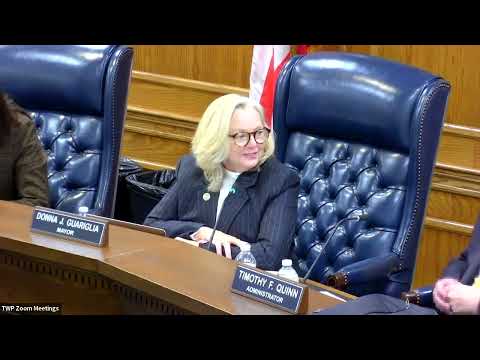
Mayor Greglia told the public the planners' report and the resolution would be posted online.
"We will be putting that on the website within 48 hours of adoption," the mayor said.
Timeline and next steps described at the meeting
Officials and counsel outlined a near‑term schedule: municipalities had until Jan. 31, 2025, to adopt a binding resolution responding to DCA's Oct. 18 release, and the township submitted its resolution that evening. Counsel and planners said challenges must be specific and, if filed, would proceed quickly through the dispute resolution program. The planners and counsel also described a separate planning‑board process: by June 30, 2025, the township's planning board is expected to adopt a housing element and fair share plan and draft implementation ordinances; interested parties would have a short challenge window thereafter, with final resolution of any challenged plans targeted by March 2026, according to statements made at the meeting.
Public questions and committee comments
Residents asked about long‑term fiscal impacts and how the township would plan for related municipal service needs. Alan McAlpin asked whether a cash‑flow analysis had been done to project ten‑ to 15‑year costs tied to new housing, noting possible impacts on schools, roads and utilities; officials said such an analysis had not yet been prepared and that planning and communication with residents would continue.
Kathy Wilson asked how the DCA's land‑capacity mapping was obtained; officials said the mapping and the DCA backup data are available on DCA's website and that the township had obtained the parcel backup used for Morris's calculation. Officials emphasized the fourth round differs from prior rounds: planning board review will shape the implementation approach rather than a negotiated settlement process.
Ending: legal context and procedural note
Township counsel and planners emphasized that adopting the locally calculated number and filing the supporting documents preserves the township's ability to maintain immunity from exclusionary‑zoning litigation while the planning board develops a housing element and implementation ordinances. If no challenge is filed, the township's adopted numbers will stand as the town's binding obligation for the fourth round.