Get Full Government Meeting Transcripts, Videos, & Alerts Forever!
Get email alerts on the Animal Control Shelter topic
No spam. Unsubscribe anytime.
Inyo County shelter reports rise in animals, seeks funds to finish new facility
Summary
Animal control officials told the Jan. 20 District 1 community meeting that intake rose to 632 animals last year, the shelter is fully staffed again, and county leaders are seeking additional grant and donation funding to complete interior work on a long‑planned replacement building.
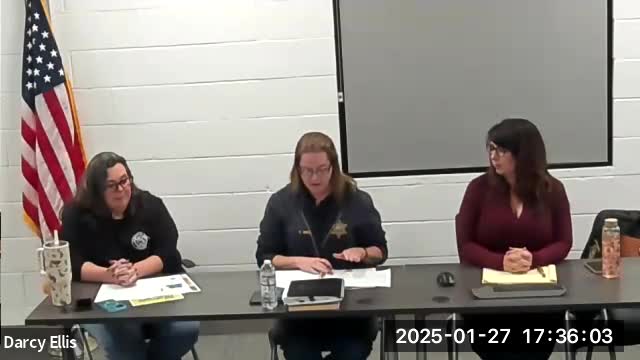
Katie Byrd, animal control and shelter director for Inyo County, told a Jan. 20 community meeting that the county animal shelter received 632 animals last year and is seeing higher intake than in recent years.
"We had a grand total of 632 animals come in last year," Byrd said, noting the shelter saw about 545 animals the prior year — an increase of roughly 87 animals. She said the spike is driven in part by heavier kitten and puppy intake during spring and by higher overall animal populations.
Byrd said staffing has improved: the department is fully staffed for the first time in years, with new field officers and shelter staff in place. She said that increased capacity has helped boost adoptions and foster placements but that the shelter still faces operational costs for vaccines, spay/neuter, microchipping and veterinary care.
The shelter recently completed a large drain repair that required temporarily placing animals with foster volunteers. Byrd said the county completed the shell of a new shelter building that was planned before the COVID‑19 pandemic but that the interior finish work remains unfunded. "The plans for that building were actually, like, in the time before COVID," she said. "We completed the shell of it, but we need to come up with the funds to complete the interior so that it can be a working building." She said the older building will be removed or repurposed once the new facility is operational.
On funding, Byrd said basic operating costs are included in the sheriff's budget; larger capital or construction needs are typically financed through fundraising, donations and grants. At the meeting Byrd provided a brief fiscal snapshot for the department: revenues listed at $452,986 and expenditures listed at $906,200, with the shortfall covered by the county general fund. She said a shelter trust fund exists but is limited in permitted uses.
Byrd described the shelter's trap‑neuter‑release (TNR) work and said the department received a $10,000 TNR grant last year that was quickly used. She encouraged residents to increase spay/neuter efforts and offered to pursue additional grant opportunities to reduce intake. On euthanasia rates, Byrd said the shelter is operating at a "no kill" level, noting that many national no‑kill standards define a 90 percent live outcome; she said Best Friends recognized the shelter in 2023 and that the shelter is on track to qualify again this year.
Several residents asked about costs. Byrd said local spay/neuter and veterinary prices have risen and that many pet owners find care increasingly expensive; she estimated typical spay/neuter fees at roughly $300 at local clinics but warned prices vary and that discounted options sometimes exist through rescue partners.
Volunteers remain important: Byrd said the shelter runs a volunteer program for dog walking, cat socialization and fosters. She said volunteers can sign up at the shelter and complete paperwork to begin. Byrd asked community members who want a full budget breakdown to provide an email address so staff can follow up with accurate figures.
The shelter director appealed for more community support for fundraising to complete the interior of the new building and to expand quarantine and care capacity. "It's an expensive operation," Byrd said. "That's what we need when we wanna provide the best care that we can: get everyone spayed, neutered, vaccinated, microchipped and out to good homes."