
Assembly considers 15-to-20-year property-tax abatement to spur multifamily rental construction
Get AI-powered insights, summaries, and transcripts
Subscribe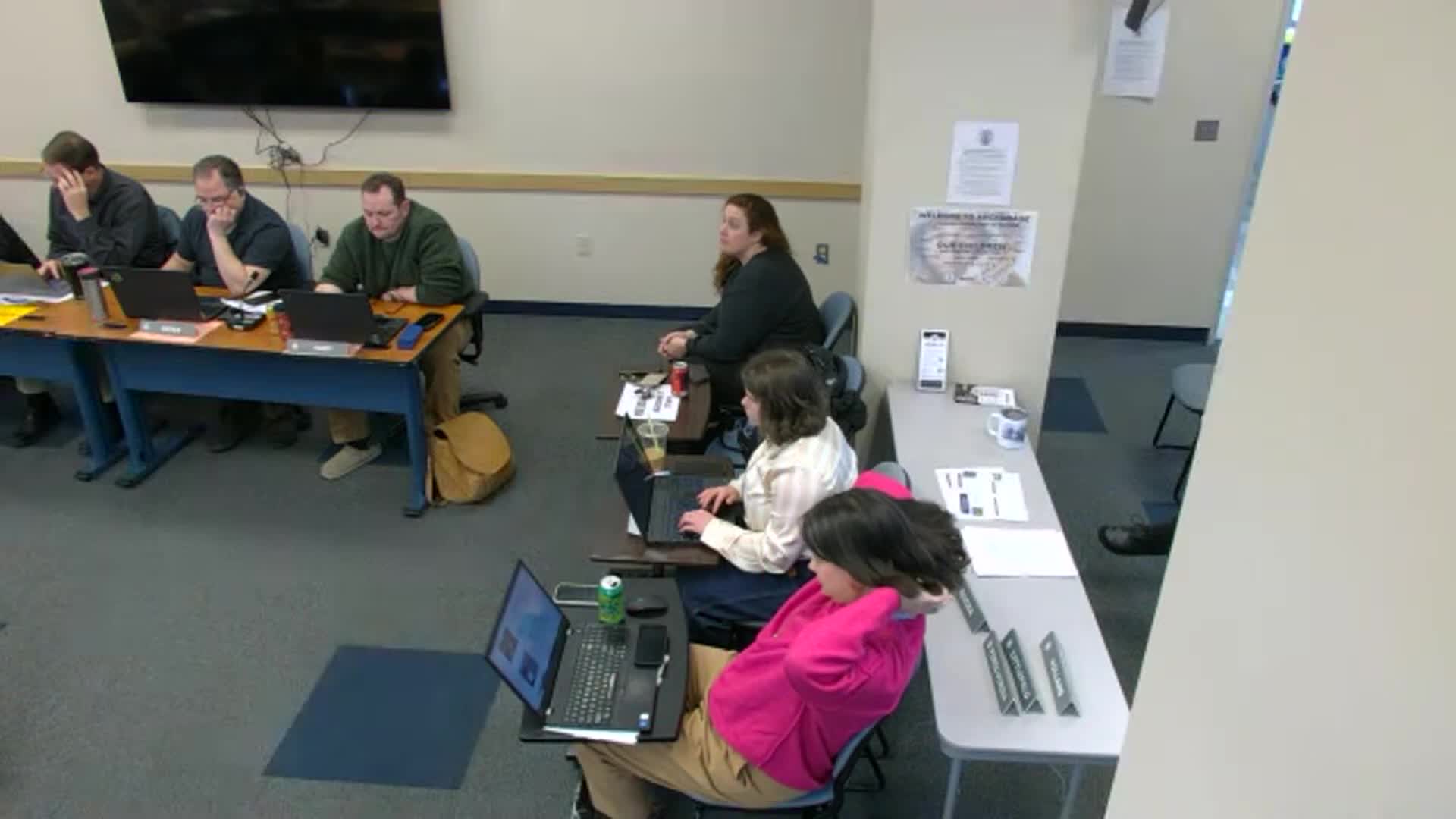
Summary
Anchorage Assembly members and administration staff used a June work session to review an administration-sponsored ordinance that would offer property-tax abatements for newly built or qualifying rehabilitated rental buildings of eight or more units, with a baseline abatement and additional bonus years for identified policy priorities.
Anchorage Assembly members and administration staff used a June work session to review an administration-sponsored ordinance that would offer property-tax abatements for newly built or qualifying rehabilitated rental buildings of eight or more units, with a baseline abatement and additional bonus years for identified policy priorities.
The measure is intended to close a documented “feasibility gap” that has limited new multifamily construction in Anchorage. Nolan Clowda of the mayor’s office said the city needs more housing and that the abatement is a tool to make larger multifamily projects “pencil.” Clowda cited an Agnew Beck analysis showing Anchorage needs roughly 9,600–10,000 new or renovated units over the next 10 years and told the Assembly the current tax incentives “are not producing enough of a result.”
Why it matters: Anchorage has seen very little multifamily development without public subsidies. Clowda said that between 2022–2024 only 356 multifamily units (four or more) were built citywide, and just 203 units in projects of eight or more — with 55 of those supported by federal funding and 48 supported by a prior downtown tax incentive. The proposed abatement aims to reduce the per‑unit development gap that developers cite as the reason projects do not move forward.
Key provisions discussed
- Eligibility and baseline: The draft ordinance would apply citywide to rental buildings of eight or more units. The administration’s initial draft sets a baseline abatement at 15 years but sponsors said they plan an S-version that would raise the baseline to 20 years because 15 years may not sufficiently close the feasibility gap. The ordinance would apply to the residential portion of a mixed-use project, not to the land itself.
- Rental requirement and leases: The abatement would apply only to rental housing, not owner‑occupied units. Buildings must maintain rental occupancy with leases of at least 30 days to qualify (Clowda: the intent is to exclude short‑term rentals such as Airbnb).
- Administration and reporting: Applications would be submitted before a certificate of occupancy and administered by the Municipal Assessor’s office. Annual reporting would be required on unit occupancy, changes to the property and exempted taxes; the assessor would report to the Assembly on exempted amounts and application status.
- Termination triggers: The abatement would terminate if qualifying units fall below eight, if units are converted to short‑term rentals, for verified unfair labor practices, or if required annual reports are not filed. Assessor staff explained Alaska tax law assesses property status as of Jan. 1 of the tax year, so changes during a year affect future years’ eligibility.
- Bonus years and priorities: The draft includes a bonus table to add abatement years for development features the Assembly favors. Proposed bonus categories discussed include location inside a designated tax-incentive area (downtown, midtown and transit corridor), presence in opportunity zones (federal), prevailing wages and a 10% apprenticeship utilization requirement, and affordability set‑asides (e.g., a workforce housing bonus for a portion of units at a specified area median income level). Clowda said meeting prevailing wage and apprenticeship standards would earn a five‑year bonus.
- Maps and target areas: The administration presented a parcel‑level tax‑incentive map that combines downtown, midtown and transit corridor areas and noted overlap with federal opportunity zones. Several Assembly members pressed whether the proposed map and bonus structure are too broad and could make incentives effectively available across much of the city.
Questions and concerns raised
Assembly members pressed several technical and policy details. Member Zolotel asked about the vintage of the Agnew Beck/Agnew Beck analysis and the exact AMI year used; Clowda said the consultant’s update was recent but the AMI year in the slide deck was not specified. Member Johnson asked whether extending the baseline from 15 to 20 years — plus bonus years — risks creating a long tax forgiveness period that shifts costs into the future. Johnson said, “I would be worried about…creating a burden for people who aren’t even born yet to have to try and figure out how to manage that.”
Members also questioned enforceability against short‑term rental conversion and how compliance would be verified. Assessor Jack Bowman explained Alaska’s Jan. 1 assessment rule and said a conversion that leaves a property below the eight‑unit threshold would terminate the abatement for subsequent tax years. Assembly members sought details on annual certification and lease audits; the administration replied landlords would be required to submit lease documentation on request as part of annual reporting.
Affordability and rehabilitation
Several members said the bonus structure may not produce deeply affordable units and asked whether the measure’s affordability incentives target the right income bands. Member Meg and others noted that a bonus tied to 20% of units at 20% AMI (as discussed) would be unlikely to produce the number of deeply affordable units Anchorage needs; Cook Inlet Housing Authority (CIHA) staff, which the administration said has given positive feedback, was referenced as needing multiple funding sources to produce deeply affordable housing.
The administration and sponsors also discussed rehabilitation. Clowda and members said rehabilitation of currently uninhabitable units is important but more complex; sponsors intend to advance a separate ordinance to address rehabilitation and habitability incentives rather than folding all rehab language into this abatement measure.
Procedural steps and next actions
Sponsors said the plan is to hold a public hearing on the measure on the sixteenth, continue that hearing to the regular meeting on the 22nd, and, if ready, take a vote on the 22nd. The administration indicated it is preparing an S-version that would raise the baseline abatement to 20 years and add strengthened labor compliance language; sponsors also expect to circulate a separate proposal addressing rehabilitation.
What remains unresolved
Multiple technical questions remain: the exact AMI year used in affordability formulas, how rehabilitation‑specific abatements would be calculated (for example whether the abatement would apply to incremental assessed value post‑rehabilitation), whether the bonus table as drafted would be too easy to reach and thereby dilute targeted goals, and how many developable parcels exist inside the proposed incentive polygons. Administration staff said they would consult planning and other departments for data on developable parcels and continue drafting the S-version to reflect labor and clarity concerns.
Ending
No vote was taken at the work session. Sponsors and administration staff said they will circulate a revised S‑version with clarified labor compliance and application language ahead of the public hearing and intend to move the ordinance to the Assembly’s regular meeting for continued public hearing and possible vote.