Get Full Government Meeting Transcripts, Videos, & Alerts Forever!
Get email alerts on the Environment topic
No spam. Unsubscribe anytime.
Walton County imposes 60-day moratorium on extractive and in‑ground activities near county water wells after monitoring results
Summary
The county adopted a temporary 60-day moratorium on extractive uses and activities that could affect groundwater or involve placing materials in the ground within a two‑mile radius of county water wells, and directed staff to coordinate with state regulators and prepare a longer ordinance if needed.
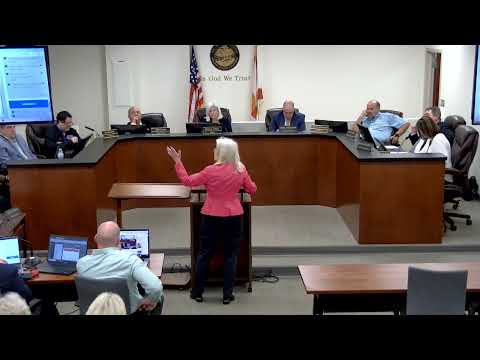
Walton County commissioners voted to impose a temporary 60‑day moratorium on new extractive uses or activities that involve ground penetration or placement of materials within two miles of any county water well. The moratorium applies to new permit processing, land-use applications, development orders and building permits for those activities while county staff coordinates testing, agency review and potential ordinance language.
The moratorium followed testimony that sampling at monitoring wells near two proposed landfill/extractive sites — Mohawk Valley and another site in Red Bay — showed contaminants of concern. Commissioners said the county received test results showing elevated levels of boron, cyanide, chromium, ammonia and aluminum in monitoring wells tied to the Mohawk Valley (also referred to as an Aslan/Mohawk monitoring area). Commissioners called the results “an existential threat” to Walton County’s public water supply if similar contamination were widespread.
Deputy county counsel and the county attorney advised that an emergency ordinance would require a strict legal showing and might not prevent future activity; instead staff recommended a time-limited moratorium tied to a staff and interagency review. County Attorney Clay Atkinson recommended a 60‑day moratorium as a legally defensible stopgap to prevent new permitting while the county gathers information, coordinates with the Florida Department of Environmental Protection and the Northwest Florida Water Management District, and prepares follow-up ordinance language for a noticed public hearing.
Commissioners voted to enact the moratorium and directed staff to notify state agencies, review monitoring data, investigate current operations at the two sites raised by speakers, and bring back a proposed ordinance or next steps after the initial review. Members of the public who packed the meeting urged immediate county action; commissioners said staff would compile contact information for concerned residents, create a central contact point and return with status reports.