Get Full Government Meeting Transcripts, Videos, & Alerts Forever!
Get email alerts on the Alcohol Policy topic
No spam. Unsubscribe anytime.
Commission adopts code amendment to allow small-scale alcohol production; High Springs businesses press municipalities on Sunday restrictions
Summary
The commission adopted a Unified Land Development Code amendment to permit small‑scale alcoholic beverage production facilities in the unincorporated county; entrepreneurs and High Springs business owners used the hearing to urge municipal leaders to lift Sunday sales and 51% food‑sales restrictions that limit local tourism revenue.
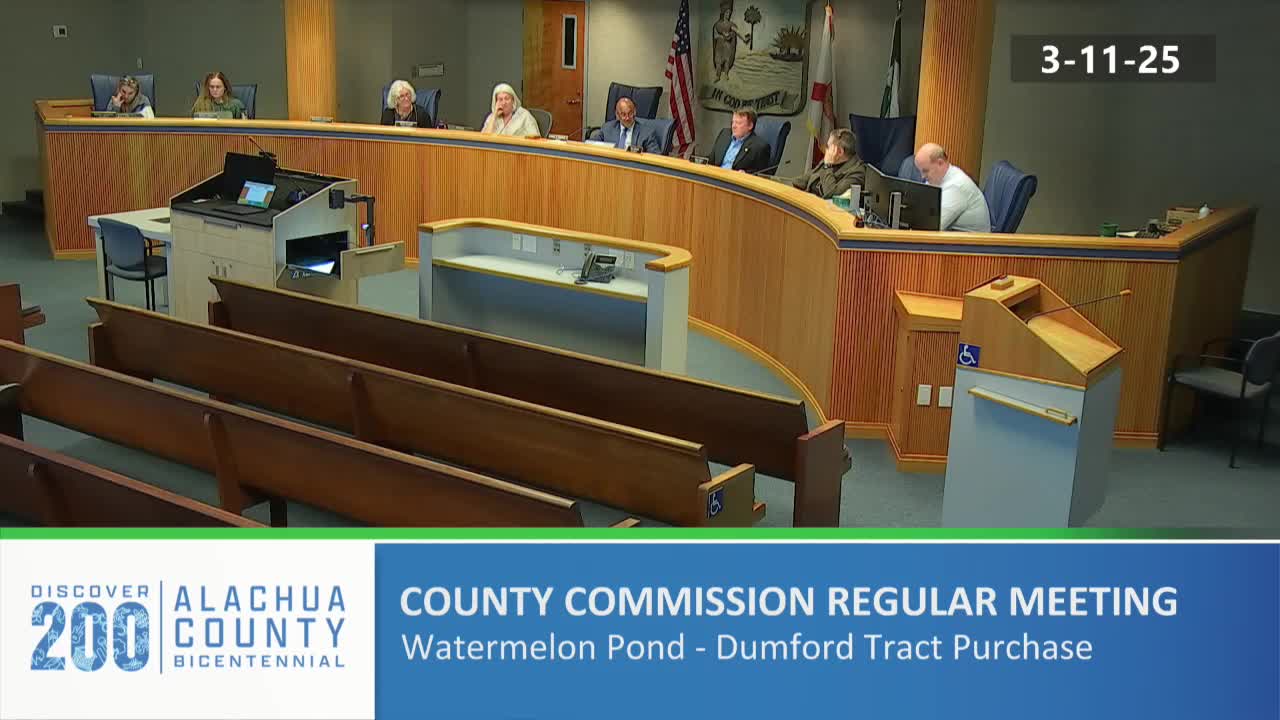
Alachua County commissioners adopted an amendment to the Unified Land Development Code on March 11 that permits small‑scale alcoholic beverage production facilities in the unincorporated county. The board first convened as the Land Development Regulation Commission, found the change consistent with the county comprehensive plan and then reconvened as the county commission to adopt the ordinance.
County principal planner Chris Olson said the amendment affects only the unincorporated area and “allows a business that produces alcohol, under the quantities that are identified in the code to locate within those jurisdictions and have those kinds of accessory uses with them.” Olson emphasized the state’s existing three‑tier alcohol regulatory framework remains in force and that the amendment does not change state licensing or distribution law.
Public commenters from High Springs said municipal rules, not county code, are preventing local businesses from benefiting from ecotourism and regional marketing. Julie Smith, who represents about 90 businesses in High Springs, said city rules prevent a local brewery from opening on Sundays and that the restriction harms partner businesses. Smith urged the county to discuss the issue with municipalities and suggested staff assistance to help cities “mirror what you guys are doing” so breweries can operate as part of local tourism.
Kimber Wickline (also cited as Kimrel Pickline in the record), manager of the Pink Flamingo in High Springs, and Kelly Potter, owner of Prohibition Pizza across from High Springs Brewing Company, told commissioners the city’s local ordinance requires either on‑site food sales to reach a 51% food‑to‑alcohol ratio or prohibits some outlets from Sunday alcohol sales entirely. Potter and Wickline said the rule was limiting weekend brunch and ecotourism revenue and could create loopholes or distribution complications if not addressed in coordination with municipalities.
Commissioner Prizia moved to adopt the ordinance and authorize the chair’s signature; the motion was seconded and passed. Commissioners noted the county change applies to unincorporated areas and does not supersede municipal Home Rule that governs city alcohol rules; they said they would raise the issue at upcoming joint meetings and encouraged municipal engagement on Sunday‑sales policies.
Ending: The ordinance was adopted for unincorporated Alachua County. High Springs business owners were directed to seek municipal action and to engage county staff and commissions at joint meetings and tourist‑development discussions.