Get Full Government Meeting Transcripts, Videos, & Alerts Forever!
Get email alerts on the Land Use Monster Houses topic
No spam. Unsubscribe anytime.
Walton County planners workshop ‘monster houses’; no rule change yet, staff to return with options
Summary
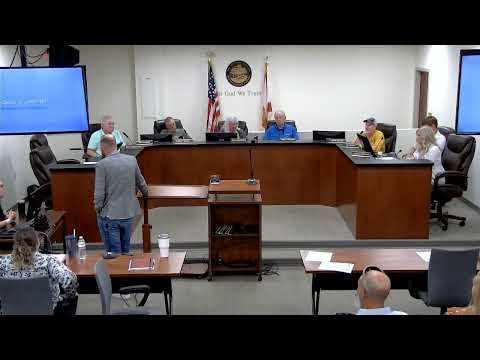
The Walton County Planning Commission on Thursday held a public workshop to gather input on so-called “monster houses,” large single-family dwellings that residents say are being used like small hotels and are changing neighborhood character in South Walton.
The Walton County Planning Commission on Thursday held a public workshop to gather input on so-called “monster houses,” large single-family dwellings that residents say are being used like small hotels and are changing neighborhood character in South Walton. Planning staff presented draft compatibility thresholds and other code changes under consideration, but commissioners did not take formal action and directed staff to return with refined options at a follow-up meeting.
The discussion, prompted by the Board of County Commissioners, focused on draft Land Development Code (LDC) language that would evaluate a new home’s compatibility with its immediate surroundings using metrics such as gross floor area, structure height and parking counts. “Short term vacation rentals can go anywhere,” Steven, a planning staff member, said during the presentation, noting state limits on prohibiting STRs and the need to approach changes carefully. Staff also highlighted recommendations from DPZ’s evaluation and appraisal report, including a suggested 40-foot height limit for single-family homes in South Walton.
The draft compatibility approach described three classes — compatible, moderately compatible and incompatible — with specific thresholds (for example, a building up to 25% larger than the surrounding average would be “compatible”). Moderately compatible projects could face mitigation such as increased setbacks, buffering, fencing or massing limits; developments found incompatible would be required to reduce floor area, parking or bulk to gain approval. Staff also discussed alternative tools including plot-coverage or impervious-surface limits and a possible commercial-use designation triggered by size or bedroom count.
Residents and neighborhood representatives urged quicker action and stronger enforcement. “We are also in the process of hiring additional staff to help with the registration process and inspectors that will be coming out to inspect these units,” Matt Carpenter, planner for the Walton County Planning Department, told the commission, saying the county currently has roughly 900 unregistered short-term rental violations and that magistrate hearings and additional inspections are being scheduled. Several speakers said advertised occupancy and frequent turnover create the nuisance many neighbors want addressed; others emphasized that large houses built as single-family residences can later be operated as STRs and thus any size limits would apply to all new single-family permits.
Public commenters suggested a range of options: limiting height (the DPZ recommendation of 40 feet was mentioned repeatedly), restricting the number of bedrooms or bathrooms, capping advertised occupancy, tightening parking rules, using lot coverage or floor-area-ratio (FAR) limits, and creating overlay districts tailored to specific beach communities. Architects and developers warned of unintended consequences: if compatibility is measured against nearby homes that have already redeveloped upward, it can lock in higher scale and discourage replacement of unsafe older dwellings. Some speakers pressed for civil-enforcement tools such as deed restrictions and stronger follow-through on covenants, while staff clarified the county cannot enforce private covenants — those would require private legal action by parties to the covenant.
Staff and many public speakers called for clearer, measurable standards rather than vague language. Commissioners and staff said any code changes would be reviewed by the county attorney before proceeding to avoid state-law conflicts (several speakers noted Florida limits on outright bans of STRs in districts that allow single-family homes). The Planning Commission agreed to reconvene the discussion in a future workshop (staff suggested May as likely) and asked planning staff to present specific, legally-checked options for measurable standards and implementation steps.
No ordinance, motion or regulatory change was adopted at the workshop.
Ending: Planning staff will refine the compatibility draft, develop additional options (including possible height limits, FAR/lot-coverage approaches and thresholds based on size or bedrooms), and return with materials for a future public workshop; the commission and members of the public said they expect follow-up focused both on code language and on stepped-up enforcement.