Get Full Government Meeting Transcripts, Videos, & Alerts Forever!
Get email alerts on the Soil Remediation topic
No spam. Unsubscribe anytime.
Concord oversight committee urges EPA comments on 2290 Main Street remedial design, declines to delay work for extra pre‑excavation sampling
Summary
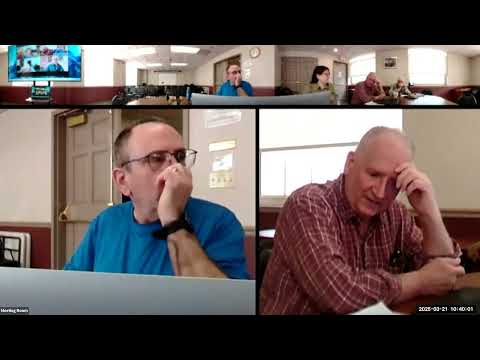
The 229 Main Street Oversight Committee on March 1 reviewed the EPA remedial design for soils at the former NMI Starmet site, agreed to prepare written comments asking for clarifications on maps, schedules and sampling, and declined to request additional pre-excavation sampling that would delay work.
The 229 Main Street Oversight Committee on March 1 reviewed the U.S. Environmental Protection Agency(EPA) remedial design (RD) for sitewide soils at the former NMI Starmet property at 2290 Main Street and agreed to prepare and send written comments to EPA while not requesting additional pre-excavation sampling that would delay the start of field work.
Committee members said the RD raised multiple technical and administrative questions: inconsistent depth language for excavation under the Butler Building (a 2to10-foot plan in one section versus text describing 2to6 feet of removal in another), unclear sampling density in some building footprints (notably Building C), the recent discovery of asbestos-containing pipe that must be removed, and whether appendices (transportation routes, contractor contact lists, and repository references) remain current. The committee also flagged the institutional controls document for lacking a clear map showing areas where digging is restricted.
Caroline Reed, a member of the Concord Finance Committee who offered public comment, noted public-facing materials elsewhere on town pages and said, "there's a lot of, interesting, dirt screening removal cost information that's on the natural resources web page now as part of the Warner's Pond task force." Reed urged committee members to keep public information up to date.
Why it matters: the RD governs how soil excavation, off-site disposal and asbestos removal will proceed at a high-profile contaminated property the town has signaled interest in acquiring. The committee's comments could influence EPA clarifications about timing, disposal routing and how much site characterization must be completed before slabs are removed and excavation begins.
Discussion and next steps
Committee members asked EPA to clarify the schedule (the RD references work in the 2025 construction season and lists overlapping "phase" dates for different buildings), to confirm whether work listed as completed in the schedule has actually been completed, and to update contact lists and transportation routing in the appendices. The group asked staff to forward a set of comments to EPA and to request an extension of the comment deadline if EPA will accept one. Committee members said they would submit preliminary comments before the stated deadline so the committee is on record while Len continues reviewing technical sampling-grid details.
On sampling the committee debated whether to ask EPA for additional pre-slab, fine-grid sampling under some buildings. Several members cautioned that asking for more sampling now could delay cleanup by weeks or months and that EPA has previously declined similar requests. Others said the lack of existing sampling under portions of Building C and the inconsistent stated excavation depths justified asking for additional characterization. The committee ultimately agreed not to press for more pre-excavation sampling and to rely on the confirmatory sampling that follows slab removal, while explicitly requesting clarification in the RD about sampling density and remedial action limits (RALs) used to set cleanup targets.
Other technical points recorded in the discussion included: confirmation that asbestos removal will be handled by a separate contractor; a question about the on-site screening method and who performs pre-load radiological screens before trucks depart the site; concerns that some RD appendices still name phone contacts or route directions that may be out of date (committee members asked EPA to confirm and update them); and a request that the institutional controls response include maps showing areas and depth restrictions for digging.
Actions and timing
Committee members asked staff to collect and submit written comments to EPA addressing: sampling-grid density and consistency; the apparent 6-foot versus 10-foot excavation-depth discrepancy for portions of the Butler Building; clarity about remedial-action levels versus cleanup levels and how RALs will be chosen; confirmation that asbestos removal plans and the transportation/disposal appendices are up to date; and how documents are being posted in the public repository and the town library. Staff said preliminary comments would be compiled and sent prior to the immediate RD deadline; the committee also said it would ask EPA for an extension if EPA will accept one. Len requested an extension to complete a more detailed technical review of the sampling grid; staff agreed to contact EPA.
The committee closed the meeting after public comment; the chair said there is no meeting currently scheduled for April and the next full meeting is listed for May 16, though members said they will schedule an additional meeting if EPA issues materials or if an on-site meeting is arranged.
Ending
The meeting ended with routine adjournment. Committee members agreed to follow up with EPA contacts (Cara and Tara were named in the RD) and with the town library to confirm which historical and technical documents are available in the public repository. The committee asked staff to notify members if the repository or EPA postings change within about three weeks so the public-facing information can be corrected.