Get Full Government Meeting Transcripts, Videos, & Alerts Forever!
Get email alerts on the Dam Removal topic
No spam. Unsubscribe anytime.
Town of Concord dam‑removal subcommittee finalizes April 3 presentation and poster
Summary
Subcommittee members refined slides and a poster for an April 3 public presentation of the dam‑removal proposal, agreed a set of content priorities (removal scope, adaptive management, access), set deadlines for draft updates and assigned a primary Q&A lead; minutes from the previous meeting were approved unanimously.
Members of the Town of Concord dam‑removal task force subcommittee met virtually to refine the slide deck and poster they will use for an April 3 public presentation of the dam‑removal proposal. The group agreed on content priorities, clarified budget scenarios, flagged necessary legal reviews and set deadlines for final materials and staffing for questions at the event.
The subcommittee prioritized front‑loading the presentation with the core proposal — dam removal, channel design toward Scout Island and Commonwealth Avenue, and immediate improvements to public access — while treating adaptive management, recreational amenities and trail work as add‑ons that can be costed in scenario layers. The draft slide deck will present a base “A” removal option (the document shows a base removal cost of about $1,100,000) and progressively add scope in scenario B (adaptive management), C (hierarchical recreational amenities) and D (trail network). The group discussed an upper budget range that would add roughly $6.7 million for expanded channel establishment and related design/permit work.
Why it matters: the presentation and poster are the subcommittee’s primary public outreach tools; the materials will be used to explain expected environmental changes, costs and trade‑offs and to answer public questions about access and habitat outcomes.
Most important decisions and clarifications
- Content priorities: The subcommittee agreed the presentation should plainly state the proposal (remove the dam, design channel to Scout Island/Commonwealth Avenue, improve immediate access) and then use scenario layers to show how costs and scope increase if adaptive management, amenities (interpretive panels, parking, a small launch/viewing platform) or a more extensive trail network are added.
- Adaptive management: Members agreed adaptive management (measures to address bank erosion, invasive plants and other issues that may arise after removal) should be included as a distinct component of the proposal rather than relegated to a later, unspecified stage. The group noted that some items (invasives management, short‑term bank stabilization) were touched on in the report but not described in depth.
- Ecological benefits and metrics: The group discussed water‑quality effects and emphasized dissolved oxygen and temperature as the clearest, communicable metrics. Members referenced an OARS mussel survey of the Asabet that found few mussels upstream of the dam; the subcommittee noted that a change of about 1° Celsius was regarded by some technical reviewers as ecologically meaningful for oxygen availability and some aquatic species. The draft slides will mention projected, marginal decreases in greenhouse‑gas emissions (as included in the report) but will not expand technical detail on the fast presentation slides.
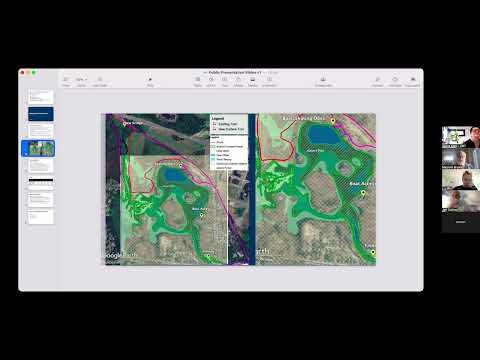
- Reference channel and visuals: The subcommittee asked that the poster/slide graphics label Neshoba Brook and Fort Point Brook and show a proposed channel route (the dam‑removal subcommittee’s proposed channel) rather than a detailed engineered plan. Members agreed to use upstream sections of Neshoba Brook as a visual reference for likely channel form and to include one or two larger photos or renderings (e.g., images of upstream brook conditions or a simple wooden viewing platform at Commonwealth Avenue) to help nontechnical audiences visualize outcomes.
- Poster design and text: The group agreed the poster must use much less text and larger images than the current draft. Recommendations included: four clear top bullets stating the proposal, one‑sentence problem/risk items, habitat photos (marsh, shrub swamp, emergent marsh, deep marsh) with short captions, an abbreviated cost table, and a short “for more information” reference pointing to the full report. The subcommittee agreed the poster should show the proposed trail loop and the proposed channel and label access points.
Legal, permitting and title issues
- DOC agreement/license: The presentation will note that an agreement or license from DOC is required before work can proceed; the subcommittee discussed that the arrangement resembles the type of written approvals others have used (for example, a license) and that formal, written approval will be needed.
- Land title review: Members flagged that some title language could create conflicts if exposed land would change ownership or surface conditions after dam removal. The group said legal advice and a review of titles will be necessary and that mutually acceptable agreements will need to be reached before construction.
Outreach logistics and roles
- Deadlines and deliverables: Jeff (slide lead) will update the slide deck and circulate it by Sunday for review; Malcolm and Liz will consolidate poster text and images and aim to send a revised poster by late Sunday so the subcommittee can provide final edits to Toby by the end of Monday.
- Event staffing and Q&A: The subcommittee agreed to designate a single primary question deflector at the public presentation to reduce overlapping answers. Jeff agreed to serve as the primary responder (deflector) and to direct follow‑up to other team members (Liz, Malcolm) for topic‑specific questions.
- FAQs and partner materials: The subcommittee noted that Friends of Warner’s Pond has been preparing FAQs and that friends or partners may publish supplemental material; the slide/poster will point audiences to the full report for technical detail.
Materials, images and copyright
Members discussed using renderings and photos. The group agreed to rely on public‑domain or permissioned imagery (examples cited: US Fish and Wildlife Service image libraries and National Park Service photos) and to claim fair‑use for in‑presentation images that will not be published commercially.
Formal action
- Approval of minutes: A motion to approve the previous meeting’s minutes passed unanimously (mover and seconder not specified in the record). No other formal votes were recorded during this meeting.
Next steps and close
The subcommittee closed after confirming the deadlines: Jeff will circulate revised slides by Sunday, Malcolm and Liz will redraft the poster for circulation over the weekend, and Toby asked for final poster edits by end of day Monday. The group will staff or coordinate presentation roles ahead of the April 3 event and will note that legal and title reviews, as well as the DOC agreement, are prerequisites to carrying work into design and permitting phases.