Get Full Government Meeting Transcripts, Videos, & Alerts Forever!
Get email alerts on the Diving Safety topic
No spam. Unsubscribe anytime.
Escambia County symposium urges stronger dive safety planning, highlights hyperbaric access gap
Summary
Local and regional dive operators, emergency responders and medical specialists discussed prevention, emergency action plans and delayed access to hyperbaric treatment at an Escambia County diving safety symposium.
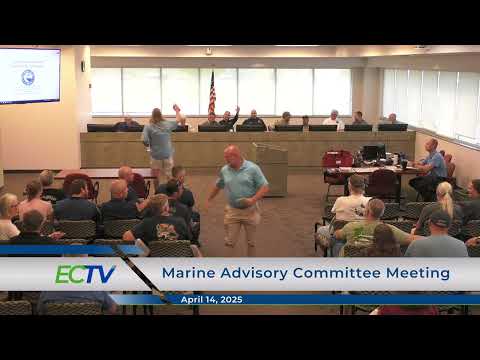
PENSACOLA, Fla. — Local dive operators, public-safety teams and medical specialists meeting under the auspices of the Escambia County Marine Advisory Committee on June 9 urged stronger on‑site planning, routine checklists and clearer evacuation routes for diving incidents, while several speakers warned that gaps in access to hyperbaric chambers can lengthen time to definitive treatment.
The symposium, organized and opened by Robert Turpin, marine resources division manager for Escambia County, brought together dive-shop owners, charter operators, Coast Guard and Fish and Wildlife representatives, law-enforcement dive teams, hyperbaric physicians and representatives from Divers Alert Network (DAN) to discuss prevention, preparedness and response for diving emergencies. “I hope that with the people here in the audience and the panel up there, that we can engage in a very thorough and robust discussion over the challenges and the resources for the prevention, preparation, and the potential response to, to diving incidents,” Turpin said.
Speakers described a chain of prevention and response that begins with diver training and pre-dive checklists and extends through vessel-level emergency action plans, coordinated on-scene communications and prompt transfer to a medical facility and, when needed, to a hyperbaric chamber. Several panelists and audience members said the system frequently breaks down after a diver reaches a local emergency room because not all chambers are willing or available to receive diving patients.
“We spend a good bit of time giving a really good briefing to make sure that the divers that do come out, are reminded of their skill levels,” said Steve Emert, co-owner of MBT Divers and an instructor, describing the operator role in preventing incidents. Emert and other dive-business representatives urged consistent pre-dive equipment and buddy checks.
Physicians and medical responders emphasized that diagnosis and stabilization at the nearest emergency department typically come before any transfer to a recompression chamber. Michael Lott, a physician with Air Force undersea and hyperbaric experience, said oxygen and early triage are critical: “The first thing we know is that, that we need oxygen. So, if you're on a commercial boat, verify that they have it. They should.”
Divers Alert Network representatives described their 24/7 clinical hotline and chamber‑availability database. Matias Nochetto, DAN vice president for medical services, said DAN receives about 5,000 emergency calls a year and helps clinicians triage suspected decompression illness and identify operational, staffed chambers. He warned that DAN may recommend the most appropriate chamber operationally rather than simply the closest physical chamber.
County and regional emergency responders described operational constraints. Lieutenant Commander Mike Francis, response department head at U.S. Coast Guard Sector Mobile, told the audience that search-and-rescue response is constrained by “the tyranny of time and the tyranny of distance” and that timely, accurate information from the dive site helps responders locate and prioritize assets. Master Deputy Ken Bull of the Escambia County Sheriff’s Office said the sheriff’s marine dive unit functions principally as a recovery, not a dedicated rescue, team because of staffing patterns.
Panelists and audience members recounted cases in which hospital staff did not recognize a diving emergency or were unsure how to proceed. One symposium participant, identified only as Elizabeth, described a prior diving injury and how she was treated in multiple counties: “It could have cost me my life,” she said, calling for better coordination between training environments and medical facilities.
Speakers described local and neighboring-county responses that attempt to shorten time to recompression. Dr. Lott cited Okaloosa County efforts to train volunteer captains to act as patient advocates and to help coordinate secondary transfer to hyperbaric care; the county’s historical average time from injury to recompression was described during the symposium as roughly 12 hours. Several presenters said chambers sometimes decline to accept patients when hospital beds or operational staff are unavailable, creating regional diversion and long transfers.
Audience members and industry representatives urged routine, visible on-boat documentation and planning: signed slates or emergency forms listing diver profile and medical information; standardized neuro checklists that can be read by DAN and by receiving hospitals; and surface marker buoys and personal locator beacons for faster locating. Paulo Guill, a scientific dive master who inspects artificial reefs for Escambia County, said protocols aim to “be as conservative as possible” and to prioritize getting divers back to the boat and shore safely.
Brady Hale, a local dive pro and VISIT Pensacola board member, pressed for a stronger local policy response: “We need a call to action tonight,” he said, urging the marine advisory committee and county commissioners to pursue a multi‑county approach and to press hospitals and chambers to ensure reliable availability for divers. Committee members responded that the chamber access issue would be added to future agendas for follow-up.
The panel also emphasized practical, low‑cost prevention strategies: consistent pre-dive checklists (many presenters compared checklists to airline or military briefings), periodic practice of perishable skills such as air-sharing and weight-belt ditching, ensuring on‑board oxygen and first-aid equipment are functional, and that dive operators and charters maintain an executable emergency action plan that includes DAN contact procedures.
No formal votes were taken at the symposium portion of the meeting. The Marine Advisory Committee said it would place chamber‑access and interagency coordination on a future agenda and that meeting materials and the symposium checklist would be posted with the committee minutes.
The symposium was attended by dive-business operators, law-enforcement dive teams, Coast Guard and state Fish and Wildlife staff, EMS and emergency physicians, Divers Alert Network representatives, university scientific divers and members of the public. Organizers invited continued public comment and said the committee meets monthly on the second Monday at 5:30 p.m. in the same venue.