Get Full Government Meeting Transcripts, Videos, & Alerts Forever!
Get email alerts on the Tac Cac Collaboration topic
No spam. Unsubscribe anytime.
TAC and Climate Action Committee members seek aligned mobility goals; propose joint statement and phased approach
Summary
TAC and Climate Action Committee members agreed to coordinate on revising the plan’s mobility section, emphasizing near‑term active‑transportation projects alongside a longer-term study of financially sustainable transit.
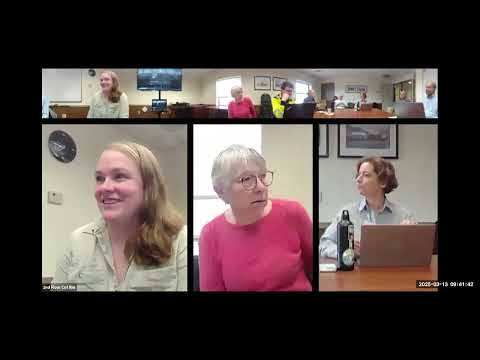
Members of Concord’s Transportation Advisory Committee and the Climate Action Committee discussed closer coordination on the mobility portion of the town’s Climate Action and Resilience Plan during the March 13 TAC meeting.
Brad Hubbard Milson (Climate Action Committee member) and other CAC participants told TAC that the 2020 plan generated many mobility ideas but that staff, committees and residents need to reassess progress and set realistic near‑term goals. Brad said any updated plan should “reflect the people with specific knowledge” — meaning TAC members and other local stakeholders — and that the CAC wants the revised mobility plan to be achievable and implementable.
TAC members and CAC representatives discussed a phased approach: prioritize active‑transportation and safety projects that can deliver near-term benefits (sidewalks, bike connections, school-access projects), while simultaneously initiating a longer-term process to study financially sustainable public-transit models. Participants agreed a consultant might be needed to assemble evidence, cost estimates and to assist public engagement.
Committee members suggested practical first steps: TAC volunteers review the current Climate Action Plan dashboard and action list, identify completed and uncompleted items, and flag topics where TAC’s operational knowledge can help. CAC members proposed a joint, short statement of shared intent to guide staff and signal unified committee support for sustained multi-year work on sustainable mobility.
Operational details raised included timeline and funding: CAC representatives said they hope an update could be substantially advanced within about a year and that consultant funding could be available starting in July if grant or capital allocations are approved. TAC members urged clear deliverables, metrics that are relatable to residents (for example, safe routes to schools or trail connections), and better communications and public engagement.
Why it matters: coordinated committee work could make the Climate Action Plan’s mobility recommendations easier for staff to implement, strengthen grant applications and create public-facing, measurable steps that residents can evaluate.
What’s next: committee members agreed to review the plan dashboard, consider small working tasks for TAC to help audit the mobility section and asked staff to circulate any draft joint statements for committee discussion.