Get Full Government Meeting Transcripts, Videos, & Alerts Forever!
Get email alerts on the Athletics Fields topic
No spam. Unsubscribe anytime.
Concord hearings weigh turf, grass and recycling options for Doug White Field replacement
Summary
Concord Recreation Commission Chair Phil Griffiths opened an information session and public hearing on replacement options for the artificial turf at Doug White Field on the Concord‑Carlisle Regional High School campus, saying, "Time is of the essence here, for replacing the fields. We do not want to lose a season of playing fields if the field has become unplayable."
Concord Recreation Commission Chair Phil Griffiths opened an information session and public hearing on replacement options for the artificial turf at Doug White Field on the Concord-Carlisle Regional High School campus, saying, "Time is of the essence here, for replacing the fields. We do not want to lose a season of playing fields if the field has become unplayable."
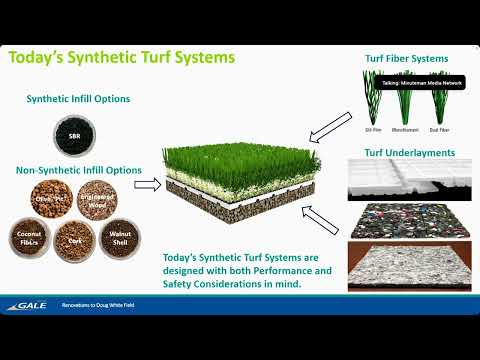
The session featured a technical presentation by Gale Associates project manager Kyle Rowan and public comment from residents, the Friends of CC Fields, the Concord-Carlisle Regional School Committee and town staff. The consultants presented four principal options: replace the synthetic turf "in kind" with a new carpet and SBR crumb rubber infill; replace in kind but add a shock pad; replace the carpet with a synthetic turf using a non-synthetic (organic) infill plus a shock pad; or remove the system entirely and convert the site to natural grass.
Why it matters: Doug White Field is the town's highest-use recreation surface, hosting high school teams and youth and adult soccer, lacrosse and football. The facility was installed about 16 years ago through a public–private partnership and is nearing the end of its useful life. Choices now affect field availability, annual maintenance costs, long‑term replacement funding and how the town will dispose of or recycle the existing turf system.
Gale Associates outlined the technical tradeoffs. Kyle Rowan, Gale Associates project manager, told the commission the existing field is approximately 200,000 square feet and described the four options and their relative construction scopes. He said options 1 and 2 (rubber infill with and without a shock pad) require removing the existing carpet, regrading the stone base and installing the new carpet and infill; option 3 (organic infill) would also require a shock pad; and option 4 (natural grass) would require removal of the stone base and drainage components and installation of a new root zone and drainage system.
Cost and maintenance figures provided by Gale Associates: construction estimates for the paired fields ranged roughly as follows: $1.3 million to replace in kind without a shock pad; $1.5 million with a shock pad (shock pads estimated at about $100,000 per rectangular field); about $1.6 million to $2.1 million for synthetic turf with an organic infill (variation depends on which organic product is selected); and about $1.8 million to convert to natural grass (higher because existing subsurface infrastructure must be removed). The consultants estimated annual maintenance at roughly $30,000 for a single grass rectangular field versus $4,000–$7,000 for a single synthetic turf field. The consultants said synthetic fields can sustain roughly 750 uses per year versus about 250 uses for a well‑maintained grass field.
Health, environmental and disposal questions dominated public comment. Rowan summarized recent federal work, noting the U.S. Environmental Protection Agency published a multi‑year study on crumb‑rubber infill in April 2024 and that the study concluded "no significant difference in the exposure from chemicals found between players who played on synthetic turf fields that used crumb rubber infill and those who played on grass fields." He also described testing options for PFAS (including EPA method 1633 for solids), and said Gale can require third‑party testing of incoming materials before shipment. Rowan added that recycling and repurposing markets are expanding and that bid documents can require chain‑of‑custody certification showing repurposing of removed material.
Speakers raised multiple concerns. Residents asked for a list of actual recycling/repurposing plants and for independent health studies; Pamela Drit asked specifically for names of facilities and whether EPA studies included longitudinal health outcomes. Charlie Parker and other commenters pressed about groundwater risk and wellhead protection; Public Works Director Alan Cathcart said the site is within zone 2 of the Hugh Cargill well and noted that Hugh Cargill is already slated for treatment, while also urging perspective that PFAS sources are widespread. Janet Rothrock and other climate/health‑focused speakers emphasized microplastic loss, fungicide and PFAS risk, and asked for stricter, independent testing beyond manufacturer statements.
Friends of CC Fields and athletic stakeholders urged preserving playability and availability. Seth Vanderfahl, president of the Friends of CC Fields, said the Friends have raised funds over 15 years and that the fields support high levels of use (the Friends estimated roughly 1,500 hours per year and about 1,500 hours of organized use). Tracy Marano, speaking for the Concord‑Carlisle Regional School Committee, said the committee supports replacing the turf with turf given operational needs and the existing contract's provisions (she referenced section 22 on alterations and improvements).
Procurement and next steps. Consultants and town staff (including CFO Antonine Insaldi and assistant town manager Jess Porter) said the project will proceed through public procurement: bid specifications can require PFAS testing, require recycling/repurposing and require proof of chain of custody for removed material. Consultants said contractors will propose manufacturers and infill; Massachusetts public‑bid rules prevent specifying a single manufacturer. The commission collected clarifying questions and asked Gale Associates to provide a list of recycling/repurposing plants and to provide additional specification language and testing protocols for review. No formal vote or decision was taken at the hearing.
What remains unsettled: stakeholders asked for independent PFAS testing protocols and for clearer data on long‑run disposal costs (the consultant estimated disposal at about $0.50 per square foot today and roughly $50,000–$100,000 for the existing turf removal), life‑cycle and carbon‑emissions comparisons of turf versus grass, manufacturer lead times, and a funding plan for future replacements. Several residents urged delaying replacement until more robust cradle‑to‑cradle recycling was available, while athletic groups stressed the risk of losing playing hours.
The Recreation Commission will compile the consultants' written responses to the public questions, circulate them to the town manager and the public, and forward recommendations to the town manager and the team overseeing procurement and design (which includes Public Works, the school department, the CFO and recreation staff). No change to field use or construction contracts was approved at the session.