Get Full Government Meeting Transcripts, Videos, & Alerts Forever!
Get email alerts on the Residential Tax Exemption topic
No spam. Unsubscribe anytime.
Concord forms tax-relief evaluation task force, assigns interim chair and clerk
Summary
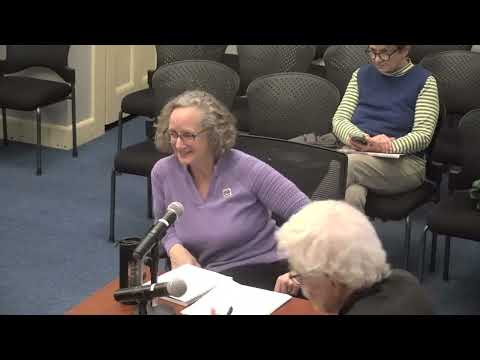
The Town of Concord convened a new task force to evaluate the residential tax exemption (RTE), named an interim chair for the night and appointed a clerk with rotating minute-taking; the group will build a data-driven model to test whether the RTE meets the select board’s goals.
The Town of Concord on Tuesday convened a Tax Relief Evaluation Task Force to assess whether the town’s residential tax exemption (RTE) is meeting Select Board goals to “support economic diversity and allow elderly residents to continue living in Concord,” select board liaison Wendy Ravelli said.
The group’s immediate work is to build a model to measure whether the exemption is achieving those goals, and to compare the RTE with other available local and state tax-relief mechanisms, Ravelli said. She told the new members the committee’s charge is evaluative — to develop measurement criteria and report back to the Select Board — not to implement policy itself.
Members debated what data are available and what additional resources they might need. Meredith Stone, Concord’s town assessor and president of the Essex County Assessor’s Association, walked the group through the assessor’s public materials, how to apply for the residential exemption, and the limits of local data. Stone explained that the exemption applies only to primary-dwelling owners who file taxes from that domicile and that applications must be filed with the assessor’s office (deadline for FY25 applications: April 1). She urged committee members to review the assessor website materials, including a 15-minute state Department of Revenue video that details the exemption math.
Stone reviewed how the exemption is calculated and how the Select Board sets the percentage applied to the residential tax class. She noted that the percentage may range from 1% to 35% and that Concord’s most recent Select Board vote set the RTE at 10%. Stone also outlined related programs that the task force should consider, including a state-set 41C program and the town’s senior means-tested relief (which Concord has locally capped by an asset limit), the Hugh Cargill Trust relief, and a newer state program aimed at incentivizing landlords to offer permanently affordable rental units.
Committee members raised limits on the data available to measure the exemption’s effects. Several members pointed out the town lacks household-level income or asset data and that assessed value is not identical to current market sale price (assessments are typically two years behind market values). Members discussed doing cohort or scenario analysis — for example, looking at whether seniors or other groups targeted by the Select Board are actually receiving the intended benefit — and whether the committee would need funded surveys or external analytic support to draw meaningful inferences.
On procedural items, the group nominated rotating minute-taking with a single clerk to edit and submit minutes. Rich Feely volunteered to serve as clerk (editing rotating drafts from members); the committee then voted unanimously to appoint Feely to that clerk role with rotating note-takers. Lynn Salinger agreed to serve as chair for the evening’s meeting but said she was reluctant to accept a standing chair commitment given personal constraints; the committee agreed the next meeting will revisit a permanent chair selection.
The task force set near-term meeting dates and logistics: the group agreed to meet next on March 30 at 8:15 a.m. (public posting and agenda to follow) and tentatively again two weeks later for planning and brainstorming. Members discussed using smaller subgroups to research specific questions (for instance, data pulls from the assessor’s downloadable ResCom files and cross-referencing town census data) while being mindful of open-meeting rules and quorum limits for subcommittees.
The committee’s next steps include: (1) cataloguing possible metrics and hypotheses for whether the RTE is meeting its stated goals; (2) inventorying available assessor and town data (ResCom downloads, tax commitments, town census) and identifying data gaps; (3) determining whether survey or contracted analytical support is needed and, if so, identifying a funding path through the town manager or Select Board; and (4) preparing an interim progress report to the Select Board, with a fuller deliverable expected about one year after the committee’s start, per the Select Board charge.
Votes at a glance: The committee recorded a formal, unanimous vote to appoint Rich Feely as clerk to receive and edit rotating draft minutes and submit them to the town clerk. No other formal board votes took place during this meeting.
Members and staff emphasized that the committee’s work will be evaluative: defining the Select Board’s measurement criteria, cataloguing what data exist and what do not, and recommending whether further study, program changes, or resource requests are warranted. "The goal behind the RTE was to support economic diversity and allow elderly residents to continue living in Concord," Ravelli said, framing the task force’s remit.