Get Full Government Meeting Transcripts, Videos, & Alerts Forever!
Get email alerts on the Higher Education topic
No spam. Unsubscribe anytime.
Princeton University president warns of federal funding cuts and threats to academic freedom during annual town-gown meeting
Summary
Princeton University President Christopher L. Eisgruber told Princeton’s Mayor and Council that cuts to federal research funding and tax changes to endowment returns threaten university research, financial aid and academic freedom, and urged continued local partnership between town and university.
Christopher L. Eisgruber, president of Princeton University, told the Princeton Mayor and Council on Tuesday that two interlocking threats — potential cuts to federally funded research and proposed taxes on endowment returns — pose “serious” risks to university research and, by extension, to the nation’s scientific leadership.
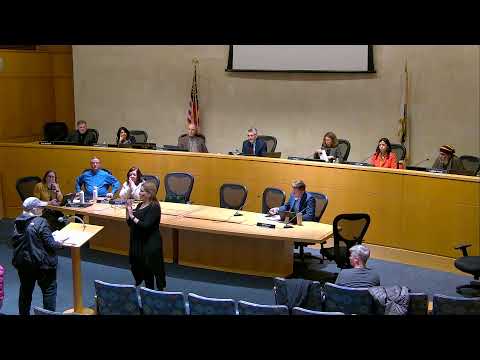
Eisgruber made the remarks during the university’s annual town‑gown meeting at the municipal building, where he also described the university’s ongoing campus projects and urged continued collaboration with the town. “We are cutting the ribbons on projects,” he said, adding that the art museum reopening in October will strengthen ties between campus and community.
Why it matters: Eisgruber framed the federal threats as both fiscal and constitutional. On the fiscal side, he said rescissions and staffing cuts at federal research agencies — including the National Institutes of Health — and reductions to facilities and administration (F&A) reimbursements would remove recurring revenue that universities use to run labs and shared infrastructure. He offered rough annual figures for Princeton’s federally funded research and associated indirect cost recoveries — saying “about $250,000,000 annually in federally funded research” and roughly $60,000,000 in indirect cost recovery for the university — and warned that proposed changes could reduce these recurring streams.
On the policy side, Eisgruber said he had spoken publicly about threats to academic freedom after what he described as government pressure on Columbia University. He said the use of grant rescissions or threats of lost funding to influence university operations — such as faculty hiring or admissions — would undermine independent scholarly inquiry.
Council questions focused on transparency about the university’s finances and on practical town‑university cooperation. Councilmember Brian McDonald asked about endowment flexibility; Eisgruber explained that Princeton’s endowment functions like an annuity designed to support the university in perpetuity and is not a discretionary savings account. He described the endowment’s typical payout rate (more than 5 percent annually) and said that additional taxes on returns would force difficult choices between preserving financial aid and new initiatives.
Local collaboration: Councilmembers and Mayor Mark Frieda used the session to underscore the town‑gown partnership on matters such as transit, public safety planning, and the university’s involvement in community events for Princeton’s 250th anniversary. Eisgruber praised the “strong” relationship and highlighted specific shared initiatives, including a five‑year transit agreement and student participation in community programs.
Community requests and next steps: Councilmembers urged continued coordination on transit, parking and long‑range planning as the campus expands. Eisgruber said the university would rely on clear priorities and a five‑year framework for joint projects, and encouraged continued two‑way communication. He also invited councilors and residents to use established channels — including the university’s Regional and Community Affairs office — to pursue proposals such as commemorative naming requests.
Eisgruber declined to speculate on whether Princeton’s campus culture made it less likely to be targeted by federal action, saying he couldn’t be certain but that a tradition of viewpoint diversity “helps create a stronger community on the campus.”
The meeting proceeded into a question‑and‑answer period after Eisgruber’s remarks; no formal vote or council action resulted from the presentation.