Get Full Government Meeting Transcripts, Videos, & Alerts Forever!
Get email alerts on the Affordable Housing topic
No spam. Unsubscribe anytime.
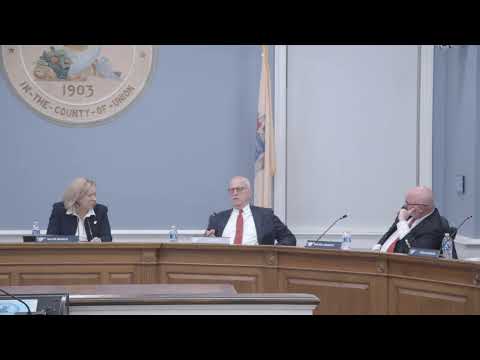
Westfield council adopts interim affordable‑housing obligation and opens public planning process
Summary
The Town Council adopted a resolution setting Westfield’s fourth‑round present and prospective need obligation at 364 units (revising the Department of Community Affairs advisory figure of 397) and launched a public planning process that will include a vacant‑land inventory and a planning‑board housing element and fair‑share plan.
The Westfield Town Council adopted a resolution at its meeting to set the town’s fourth‑round present and prospective affordable‑housing obligation at 364 units, revising an advisory number published by the New Jersey Department of Community Affairs (DCA).
The adopted resolution — introduced by the council’s affordable‑housing subcommittee and supported by town planning staff and outside consultants — begins a multi‑step public process that will move from adoption of the obligation number to a vacant‑land inventory and a planning‑board housing element and fair‑share plan.
Why it matters: Adopting a number by the statutory deadline preserves the municipality’s immunity from builder’s‑remedy lawsuits while the town proceeds through a public planning process to refine how much housing can realistically be built, which parcels are suitable, and what portion becomes unmet need.
Town Planner Don Salmon told residents that "The council has to authorize a submission of the cross acceptance response before it's sent to the county." That submission is part of the state’s cross‑acceptance process for a new State Development and Redevelopment Plan and runs in parallel with the housing obligations work.
Graham, the town’s redevelopment planner engaged for the analysis, told the council the DCA published an advisory, nonbinding figure based on statewide datasets and mapping and that municipalities can provide more detailed local data. "Municipalities may use the calculations to inform their process, and that's what we've done here this evening," he said, explaining the subcommittee and consultants reviewed parcel‑level constraints such as prior approvals, topography and landlocked sites.
At public comment, resident Carla Benacci said she had expected earlier public engagement and criticized the timing: "In transparency, I think you failed," she said. Council members responded that the council subcommittee had worked with staff and outside professionals and that a detailed report would be posted online with the resolution.
The timeline outlined during the meeting: the council must adopt an obligation number by Jan. 31 to preserve immunity; a one‑month challenge period in February allows interested parties to contest the adopted number; the state’s dispute resolution program is expected to issue a final number in March or April; and the town must complete a housing element and fair‑share plan, including a vacant‑land adjustment, by the June 30 statutory deadline. Council members and consultants emphasized that the adopted 364 figure will be refined during the planning process and that the final number of units that Westfield must construct or accommodate will likely change after the vacant‑land inventory and further review.
The resolution before the council included the consultants’ report as an attachment; council members said that report will be posted on the town website for public review. The planning board will lead preparation and adoption of the housing element and fair‑share plan; the governing body will endorse the planning board’s adoption.
The council approved the resolution by roll call. The subcommittee members who worked on the report were Councilmembers Linda Hapgood, Jim Healy, Mike Damodala and Todd Saunders, and consultants present included the town planner and affordable‑housing counsel.
Next steps: staff and consultants will post the detailed report and mapping online, the planning board will begin the vacant‑land inventory and public hearings, and the council will monitor the dispute resolution timeline if any challenges are filed.