Get Full Government Meeting Transcripts, Videos, & Alerts Forever!
Get email alerts on the Health And Human Services topic
No spam. Unsubscribe anytime.
Rockford Health & Human Services reports wide use of Head Start, LIHEAP and homelessness programs; officials warn of federal funding risk
Summary
Director Aquanette Parham presented a year‑end review showing Head Start enrollment, large LIHEAP demand, homelessness prevention work and a new mental‑health‑focused outreach program (IMPACT); staff warned a potential federal freeze or cuts to key programs could harm hundreds to thousands of households.
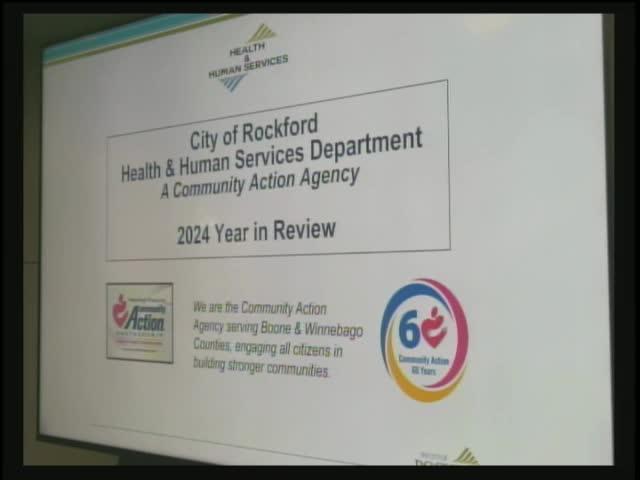
Aquanette Parham, director of the City of Rockford Health & Human Services Department, delivered a 2024 year‑end review at the March 31 strategic planning session, describing the department’s role as the community action agency for Winnebago and Boone counties and summarizing Head Start, energy assistance, homelessness prevention and other community services.
The presentation matters because the department runs high‑demand, federally funded programs (Head Start, LIHEAP, CSBG and others) that serve thousands locally; Parham warned that a possible federal funding freeze or cuts could significantly reduce services for low‑income households and seniors.
Parham told the council that the city is the grantee for Head Start and early Head Start and that funded Head Start enrollment for 2025 is 714 children; the department runs center‑based options and partnerships with Rockford Public Schools (Summerdale Early Childhood Center), Hand in Hand Child Care and the YMCA. She said the program employs 42 staff and currently has about 13 vacancies and that a change‑in‑scope application to the Office of Head Start was due April 16.
On energy and utility assistance, Parham said the department served more than 13,000 households through LIHEAP in program year 2024, many headed by seniors or people with disabilities, and highlighted the percentage‑of‑income payment (PIP) program as an option that aims to cap utility payments near 6% of income; Parham cautioned that monthly assistance caps (about $50 for NICOR, $150 for ComEd) limit the program’s reach and that new state low‑income discount rules are changing how PIP operates. She said the department completed about 31 weatherization jobs in the last program year and has an ongoing partnership with the Rockford Housing Authority to expand weatherization in scattered‑site homes.
Parham described homeless prevention and housing‑stability work: using Illinois Department of Human Services homeless‑prevention funds the department assisted 344 households with placement or eviction prevention; 83 households were helped to fully use Section 8 vouchers and 93% of assisted households maintained housing after help. She said city‑run internal homeless programs served 76 households (322 individuals) and that HUD’s single‑point‑of‑entry process resulted in housing for 247 households; about 476 households were moved to an inactive list for reasons including relocation or institutionalization.
The department also highlighted a new program called IMPACT (Integrated Partners Action Crisis Team), funded by the Winnebago County Community Mental Health Board and started in June 2024. Parham said IMPACT provides one‑on‑one mental‑health navigators for people who are seriously mentally ill, addicted and unhoused; staff secured five transitional housing units so far out of a goal of eight, and had 53 adults enrolled in the program.
Parham said CSBG funds supported skills training for 31 households and college scholarships for seven households totaling $16,500; the department’s community garden network served 12 gardens, producing 4,654 pounds of produce using 2,001 volunteer hours. She also noted high marks from state and federal monitors: “we received positive feedback with no programmatic findings across our programs,” she told the council.
Mayor and council members asked how the department tracks clients after housing placement and how long staff follow up; Parham said follow‑up varies by program and funding source — some HUD programs may provide assistance and follow‑up for up to two years, while other programs have shorter timelines. She and the mayor also discussed contingency planning and state and national lobbying; Parham said the department participates in state and national community‑action networks and is coordinating messaging and advocacy efforts to defend funding.
Councilors and the mayor called attention to the high local reliance on federal programs and asked staff to work with local partners and legislators to protect the funding stream. The meeting concluded with a voice vote to adjourn recorded as in favor.