Get Full Government Meeting Transcripts, Videos, & Alerts Forever!
Get email alerts on the Roofing topic
No spam. Unsubscribe anytime.
Commission approves asphalt shingle replacement for deteriorating slate roof on Main Street property
Summary
Power Construction received approval to replace a failing slate roof with an architectural asphalt shingle (slate-look option) after the Historic Districts Commission concluded the existing slate and sheathing were deteriorated beyond practical repair.
The Town of Concord Historic Districts Commission voted to approve an application to replace a failing slate roof on a Main Street property after contractors told the commission the existing slate and roof sheathing are deteriorated and repairs were insufficient to stop interior leaks.
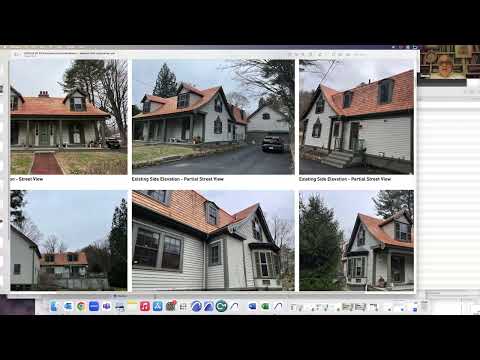
The applicant, represented by Power Construction manager Bruce Barbee and crew member Manuel (Manny) Hernandez, presented photos showing broken and missing slates, compromised roof boarding and repeated patch repairs. Barbee said a full re-slating would be prohibitively expensive and difficult to schedule; he presented two asphalt-based alternatives: a standard architectural shingle in a slate color and a thicker “slate-look” architectural shingle intended to visually approximate slate.
Why it matters: Commissioners said they prefer preserving original slate where feasible but acknowledged that many historic roofs reach a point where repeated repairs and failing substrate make full replacement with modern, more durable materials the only practical solution for owners who cannot bear the cost and ongoing maintenance of real slate.
Manuel Hernandez, who has performed multiple repairs at the property, told the commission slates and fastenings are failing and that flashing and valley conditions also contributed to leaks. He said the combination of old, thin slates and failing supporting roof sheathing meant the roof will continue to require frequent repairs unless replaced. Commissioners asked questions about flashing, underlayment and how much of the existing slate (if any) could be salvaged; the project team said salvage was likely limited and that removing the slate to reinstall would still require substantial sheathing and flashing work.
After discussion, a commissioner moved to approve the application as submitted; the commission voted unanimously in favor. Roll-call votes were recorded as: Melinda Shumway—Aye; Tim Whitney—Aye; Walter Clay—Aye; Dennis Fiore—Aye; Chair Kate Chartner—Aye. The record notes commissioners’ preference, stated during debate, that slate roofs be preserved when feasible; several commissioners nonetheless supported approval given documented material deterioration and owner hardship. The minutes show the commission encouraged applicants to consider salvage or donation of removed slate where possible and to document roofing materials and fastening details for future stewardship.
The applicant may proceed with the approved asphalt shingle replacement (applicant indicated preference for the thicker slate-look architectural shingle), and commissioners asked for typical product samples, manufacturer warranties and final color/texture samples to be submitted to staff for file and implementation review.